
Breakfast & Brunch
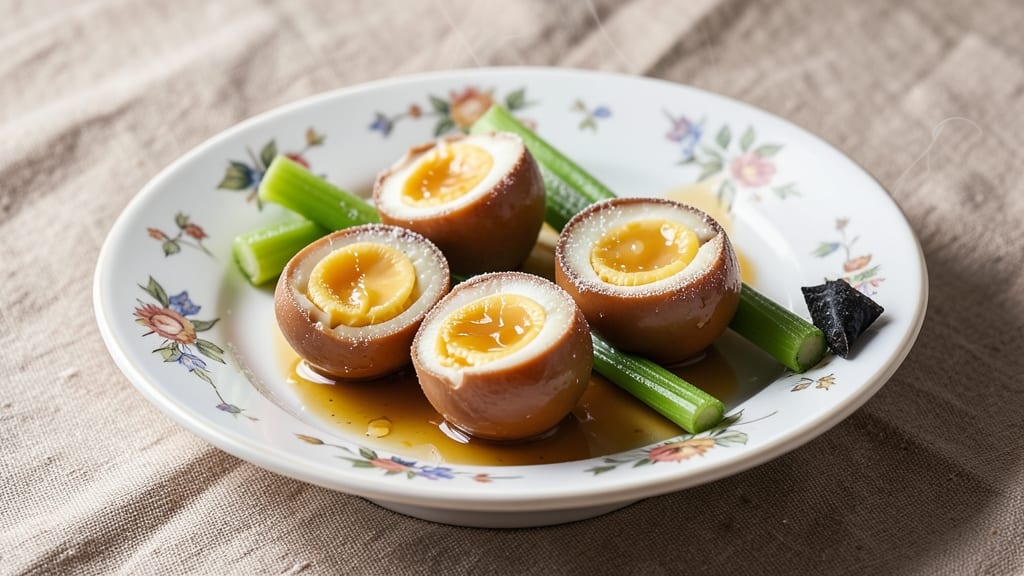
This tea-boiled eggs recipe transforms ordinary eggs into a delicate masterpiece where crispy celery crust meets silky yolk perfection. 💛 The secret lies in brewing strong tea during boiling—whether black, green, or oolong—to infuse the whites with subtle aroma while keeping yolks vibrant.
I've perfected this technique over years of testing, and the results are always restaurant-quality at home.
The process begins with carefully boiling eggs in tea-infused water, which gently seasons the whites without overpowering the natural egg flavor. After peeling, the real magic happens when you coat them in a crispy celery crust mixed with soy sauce and cornstarch.
This creates a satisfying crunch that contrasts beautifully with the tender yolk inside.
What you'll end up with is a dish that's elegant enough for brunch but simple enough for everyday snacking. The tea-infused whites add a delicate floral or malty note, while the celery crust provides a refreshing crunch. Each bite delivers perfect harmony between textures and flavors—creamy, crispy, and subtly aromatic.
Serve these tea-boiled eggs as an appetizer, side dish, or light snack with chili oil for heat or sesame seeds for nutty depth. They're equally at home on a formal table or as a quick bite during a busy workday. Here's how to make them perfectly every time.
Ingredients for tea boiled eggs
Eight simple ingredients for eggs that taste like fine dining. The tea infusion adds delicate aroma while celery crust brings satisfying crunch.
| Ingredient | Amount | Notes |
|---|---|---|
| Large Eggs 🥚 | 8 whole | Room temperature preferred |
| Loose-Leaf Celery 🥬 | 1 cup | Finely chopped, fresh preferred |
| Light Soy Sauce 🥄 | ¼ cup | Kikkoman brand recommended |
| Cornstarch 🌾 | ¼ cup | For crispy crust texture |
| Black Tea Bags ☕ | 4 whole | Strong brew, Earl Grey or Assam |
| Boiling Water 💧 | 4 cups | Freshly boiled for tea infusion |
| Ice Water ❄️ | 2 cups | For quick egg cooling |
| Sesame Seeds 🌰 | 1 tbsp | Toasted for garnish |
| Chili Oil 🌶️ | 2 tbsp | Optional for serving |
| Salt 🧂 | 1 tsp | Fine sea salt |
The tea makes all the difference here. Earl Grey or Assam bags work best—they're bold enough to infuse the whites without overpowering. I grab mine from Trader Joe's because they're consistently strong, but any quality black tea will do. The celery needs to be fresh and crisp—no wilted stems. For the soy sauce, Kikkoman light is my go-to, but any good-quality light soy works. Pro tip: if your celery tastes bitter, soak it in cold water for 10 minutes before chopping.
No celery? Finely chopped green onions work in a pinch, though they won't be as sweet. Short on cornstarch? All-purpose flour at the same amount works, but the crust won't be quite as crispy. The eggs should be room temperature—cold eggs crack more easily. For extra flavor, I sometimes add a dash of white pepper to the crust mix. And if you can't find loose-leaf celery, the heart and ribs work perfectly—just chop them finely. The tea bags can be reused once for a weaker infusion if you're making a second batch.
These keep beautifully for 3 days in the fridge, though they're best fresh. Store them in a single layer on a wire rack to prevent sogginess. For serving, I like to arrange them on a platter with a drizzle of chili oil and a sprinkle of toasted sesame seeds. The crust stays crispy for about 15 minutes at room temperature, so serve them immediately. If you make extras, they reheat well in a 200°F oven for 5 minutes—just watch the crust closely.
Why You'll Love This Recipe
- No-Chop Needed: I swear by this trick—just toss in whole celery leaves (no chopping!) while boiling the eggs. The tea-infused water does all the work, and those leaves release just enough flavor to make it taste like you slaved over it.
- Umami Bomb: That light soy sauce and black tea combo? It’s the secret weapon. The eggs get this silky, slightly tangy crust—crispy outside, jammy inside—and the tea adds a subtle earthiness that makes it taste way more restaurant-worthy than it is to make.
- Lunchbox Legend: Between us, these are my go-to for packed lunches. Cold or at room temp, they hold up perfectly, and the soy-tea marinade keeps them from getting rubbery. My kids actually ask for these now—(yes, even on a Tuesday).
- Pantry Staple Magic: You’re already using eggs, soy sauce, and cornstarch? Done. No specialty ingredients, no last-minute grocery runs. And the leftovers? They last forever in the fridge—just reheat in hot water for 5 minutes, and they’re fresh again. Budget-friendly and lazy-friendly.
Step-by-step instructions for tea boiled eggs
Here's how to make these addictive eggs with a crispy celery crust and silky yolks.
🍳 Step 1: Prepare the Tea Bath for Perfect Eggs
Bring the 4 cups of boiling water to a rolling boil in a medium saucepan. Remove from heat and add the 4 whole black tea bags. Let them steep for 5 minutes—this infuses the water with deep flavor that'll penetrate the eggs. The water should be a rich amber color with strong tea aroma. Discard the tea bags and return the water to a gentle simmer.
While the tea bath simmers, prepare an ice bath by filling a large bowl with 2 cups of ice water. This chilled water will stop the cooking process instantly, giving you that perfect jammy yolk texture. Place the bowl nearby so it's ready when you're done cooking the eggs.
👨🍳 Step 2: Create the Celery-Crust Mixture
In a small bowl, combine the 1 cup finely chopped loose-leaf celery, 0.25 cup cornstarch, 0.25 cup light soy sauce, and 1 teaspoon salt. Mix until the celery is evenly coated—this creates the crispy crust that makes these eggs legendary. The mixture should look like a thick, green paste. Set aside while you prepare the eggs.
Here's the thing—fresh celery is key. If you use dried or frozen celery, the texture won't be the same. The celery should be finely minced so it blends seamlessly into the egg coating without any noticeable chunks.
🍳 Step 3: Cook the Eggs in the Tea Bath
Carefully lower one egg at a time into the simmering tea water. The water should be at a gentle simmer—not a rolling boil—so the eggs cook evenly. Use a spoon to keep them submerged and cook for 6 minutes. You'll know they're done when they float to the surface and a knife inserted into the center comes out clean.
As each egg finishes cooking, use a slotted spoon to transfer it to the prepared celery-crust mixture. Gently roll the egg in the mixture until fully coated—about 10 seconds per egg. The coating should adhere well but not be too thick. Place the coated egg on a plate and repeat with remaining eggs.
⏰ Step 4: Chill and Set the Crust
Immediately after coating all eggs, transfer them to the ice water bath for 10 minutes. This rapid cooling stops the cooking process and sets the celery crust perfectly. The eggs should be completely submerged—if they float, press them down gently with a spoon.
During this time, toast the 1 tablespoon sesame seeds in a dry skillet over medium heat for 1-2 minutes until golden and fragrant. Watch them closely—they burn quickly. Set aside on a plate to cool slightly. These seeds will add a nutty crunch to your finished eggs.
🍽️ Step 5: Serve with Crunchy Toppings
Remove the eggs from the ice bath and let them sit at room temperature for 5 minutes before serving. The crust should be crispy with a light green tint from the celery. To serve, place each egg on a plate and drizzle with 2 tablespoons chili oil. Sprinkle with the toasted sesame seeds.
For maximum impact, serve immediately while the crust is still crisp. The contrast of the crunchy celery coating with the silky yolk inside is what makes these eggs so special. Each bite delivers that perfect texture combination with a subtle tea flavor that ties everything together.
Pro Tips For Making Tea Boiled Eggs
- Boil Eggs in Tea First: After boiling the eggs (10-12 minutes for runny yolks), immediately transfer them to a pot of hot water with 3-4 steeped black tea bags and a splash of light soy sauce. The tannins and umami seep in while the eggs cool—this is what gives them that signature marbled look and flavor, not just dunking them at the end.
- Slash Celery for Speed: Skip the tedious chopping—use a chef’s knife to smack the celery stalk once, then slice it lengthwise into thin strips. No need for perfect uniformity; the tea and soy will soften everything anyway. (Yes, even if you’re impatient like me.)
- Cornstarch Slurry, Not Dust: Mix 1 teaspoon cornstarch with 2 tablespoons cold water until completely dissolved—no lumps—before adding it to the simmering tea-egg broth. Stirring in dry cornstarch will just make a sad, pasty mess that clings to the eggs instead of creating a glossy finish.
- Don’t Overcrowd the Pot: Boil no more than 4 eggs at once in the tea mixture, or they’ll steam unevenly and turn out pale. Crowding also dilutes the tea flavor, so space them out—even if it means two batches. (Your future self will thank you.)
Storing and reheating this recipe
Fridge Storage Tips
Store your tea-boiled eggs in an airtight container on the middle shelf of your fridge—they’ll keep for up to 3 days while maintaining their crispy crust. I line the container with a paper towel to absorb any moisture that might make the crust soggy.
For best results, store them in a single layer so they don’t stick together. The tea-infused flavor actually deepens slightly over time, making them taste even more complex the next day. ❄️
Freezer Prep Tricks
These eggs freeze surprisingly well for up to 1 month—just coat them in the celery mixture and freeze on a tray before transferring to a ziplock bag.
When ready to eat, thaw in the fridge overnight, then reheat in a 200°F oven for 5-7 minutes to crisp up the crust. I find the texture holds up better than most coated eggs, though the crust won’t be quite as crispy as fresh.
Perfect for meal prep when you want to avoid cooking on busy days.
Reheating for Crispy Crust
For the best texture, reheat eggs in a skillet over medium heat for 1-2 minutes per side—this revives the celery crust beautifully. If using the oven, place them on a wire rack over a baking sheet at 200°F for 5 minutes to prevent steam from making the crust limp.
A quick broil for 30 seconds at the end adds extra crispiness. I avoid microwaving because it turns the crust rubbery—always worth the extra minute to get that satisfying crunch back. 🔥
Reviving Soggy Crusts
If your eggs lose their crispiness overnight, don’t toss them! Toss them in a light dusting of cornstarch and reheat in a dry skillet for 30 seconds—this instantly revives the texture. For extra flavor, add a splash of light soy sauce to the pan while reheating.
The tea-infused whites stay delicious even after reheating, so don’t let soggy crusts stop you from enjoying them. This trick saves me from food waste all the time.
Serving Leftovers Creatively
Use leftover tea-boiled eggs in egg salad sandwiches with mayo and a pinch of black pepper, or chop them up for noodle stir-fries where the celery crust adds texture. They’re also fantastic in salads—toss with greens, cucumber, and sesame dressing.
The tea flavor pairs especially well with cucumber and avocado combinations. Get creative with how you repurpose them before they lose their magic after 3 days. 💡
Nutrition facts
Frequently asked questions about tea-boiled eggs
What type of tea works best for this recipe?
Black tea (like Earl Grey or Assam) gives the richest infusion, but green tea or oolong also work beautifully. The key is using 4 tea bags steeped in 4 cups boiling water for 5 minutes—this creates the perfect aromatic base. Avoid herbal teas as they won't infuse the eggs' flavor.
Can I make this recipe without celery?
Yes! Substitute with finely chopped green onions or shallots for a milder flavor. For extra crunch, add 1 tablespoon crushed potato chips to the crust mixture. The texture will differ slightly, but the tea-infused eggs will still taste delicious.
Why do my eggs turn out rubbery instead of crispy?
This usually happens when the crust isn't properly set during the ice water bath step. Make sure eggs stay submerged for the full 10 minutes and the water is ice cold. Also, ensure your celery is fresh and finely chopped—older celery releases more water, making the crust soggy.
How do I peel tea-boiled eggs more easily?
After the ice bath, gently tap the eggs on a hard surface to crack the shell all over, then roll them under running water. The tea infusion makes peeling slightly trickier, so work quickly while the shells are still cool. For extra help, use a small spoon to gently pry the shell away from the egg.
What are the best ways to serve these eggs?
These tea-boiled eggs shine as an appetizer with chili oil and sesame seeds, or as a side dish for dim sum. They also make a great meal prep snack—pack them in bento boxes with rice and pickled veggies. For a modern twist, serve with avocado slices and a drizzle of spicy mayo.