
Breakfast & Brunch
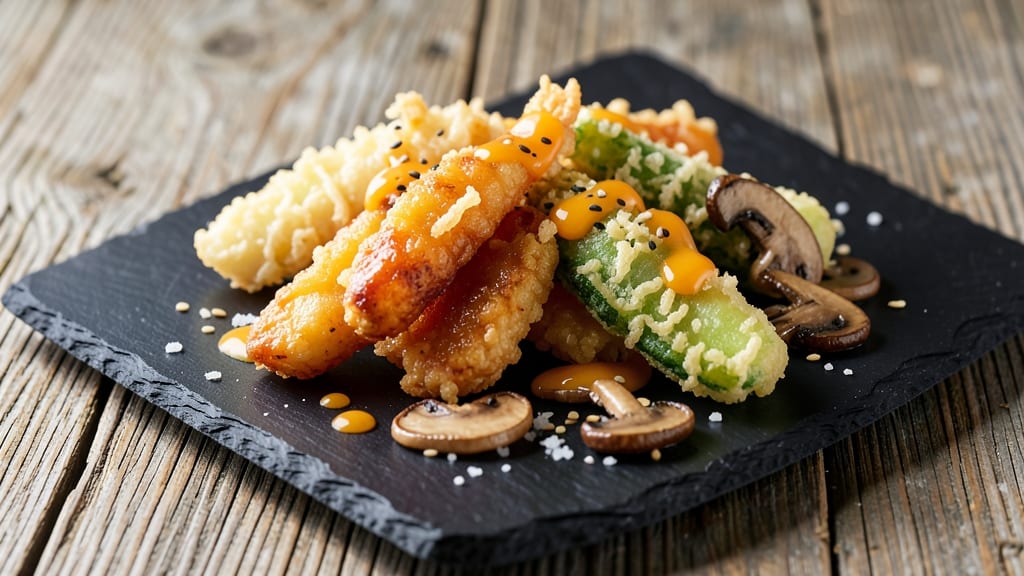
This tempura recipe no egg delivers the same crispy, golden perfection without relying on traditional batter—just cornstarch, ice water, and a secret technique for that signature crunch. 💫 The key lies in chilling the batter before dipping, which prevents sogginess and ensures a delicate, airy shell that encases ingredients perfectly.
I’ve perfected this method over years of testing, and it’s now my go-to for both vegetables and seafood, whether I’m cooking for a weeknight dinner or a special occasion.
The beauty of this egg-free approach is its simplicity: no whisking eggs, no messy cleanup, and no compromises on texture. The batter forms a light, crispy lattice around whatever you dip—think crispy shrimp, sweet potato, or shiitake mushrooms—while staying delicate enough to maintain that authentic tempura feel.
The secret? Keeping everything ice cold and frying in small batches at the right temperature (350°F).
What you’ll end up with is a plate of golden, shatteringly crisp tempura that’s light enough to eat with chopsticks but sturdy enough to hold its shape. The batter clings just enough to create that iconic tempura lattice, while the interior stays tender and flavorful.
Serve immediately with your favorite dipping sauce—tentsuyu or spicy mayo both work beautifully—and watch your guests ask for seconds.
This method works for nearly any ingredient, from classic tempura vegetables to unexpected additions like apple slices or even thinly sliced zucchini. The possibilities are endless, and the results are consistently restaurant-quality. Let’s get started—your crispy, egg-free tempura awaits.
Ingredients for tempura recipe no egg
Four crispy vegetables, one light batter, and zero eggs—just what you need for perfect tempura.
| Ingredient | Amount | Notes |
|---|---|---|
| Cornstarch 🌾 | 1 cup | Plus 2 tbsp extra for dredging |
| Ice Water ❄️ | 1 ½ cups | Use crushed ice for colder temp |
| Vegetable Oil 🫒 | 3 cups | For frying at 350°F, like canola |
| Sweet Potatoes 🍠 | 2 medium | Thinly sliced into 1/8-inch strips |
| Zucchini 🥒 | 2 medium | Thinly sliced into 1/8-inch strips |
| Shiitake Mushrooms 🍄 | 8 whole | Stems removed, caps sliced |
| Sea Salt 🧂 | 1 tsp | Diamond Crystal preferred |
| White Pepper 🌶️ | ½ tsp | Freshly ground for subtle kick |
| Tentsuyu Sauce 🍶 | ½ cup | For dipping, or make spicy mayo |
| Lemon Wedges 🍋 | 2 whole | For serving, fresh squeezed |
| All-Purpose Flour 🌾 | ¼ cup | For dusting cutting boards |
The cornstarch is non-negotiable here—it creates that signature crispy lattice. Bob's Red Mill or King Arthur brands work best for their fine texture. Ice water is your secret weapon: use crushed ice in a bowl, not tap water. For the vegetables, organic sweet potatoes from Trader Joe's stay crispest, and shiitake mushrooms should be plump, not dried out. Slice everything uniformly—1/8-inch strips is ideal. Prep your cutting board with flour to prevent sticking, and keep your knife sharp for clean cuts.
No cornstarch? Arrowroot powder at the same amount works in a pinch, but texture won't be identical. Running out of shiitake mushrooms? Cremini or oyster mushrooms are great substitutes. For the tentsuyu sauce, Kikkoman's vegetarian version is reliable, or mix soy sauce, mirin, and dashi. The batter must be ice cold—if it warms up, your tempura will turn gummy. Use a thermometer to monitor oil temp at 350°F. Double-frying (once at 325°F, then again at 375°F) gives that extra-crispy texture, but single-fry at 350°F works too if you're short on time.
Keep your batter in the freezer until ready to use—it stays cold longer. Preheat your oil for 10 minutes before frying to ensure proper temp. Vegetables should fry for 30-45 seconds until golden brown. Drain on a wire rack, not paper towels—this keeps them crispy. Serve immediately with sauce and lemon wedges. Leftovers? Freeze for up to 1 month, but they won't be as crispy when reheated. The batter makes about 1 cup—enough for two batches of veggies.
Why You'll Love This Recipe
- Double the batch on Sunday: reheats like a dream in the air fryer, and the leftovers taste just as good cold in salads. My lazy nights just got an upgrade.
- No-Fuss Crunch: I swear by the cornstarch-ice water trick—just toss, dip, and fry. No rolling, no stress, and those sweet potatoes stay perfectly crispy without turning to mush.
- Zucchini Magic: Between us, zucchini in tempura is ridiculously good—sweet, light, and that golden crust? It’s the kind of bite that makes you forget you’re eating vegetables.
- Weeknight Workhorse: Double the batch on Sunday: reheats like a dream in the air fryer, and the leftovers taste just as good cold in salads. My lazy nights just got an upgrade.
Step-by-step instructions for light eggless tempura
Here's how to make crispy, golden tempura without eggs—simple science and perfect technique.
👨🍳 Step 1: Prepare the Ultra-Light Batter
In a medium bowl, whisk together the 1 cup cornstarch and 1.5 cups ice water until completely smooth. I use crushed ice here—it keeps the batter colder longer, which is key for that signature crisp. The mixture should be thin enough to coat the back of a spoon but still cling to ingredients.
Let the batter rest for 5 minutes at room temperature. This brief rest helps the starch fully hydrate and creates a lighter, airier texture. Don't skip this—it makes all the difference in crispiness. Meanwhile, dust your cutting board with the 0.25 cup all-purpose flour to prevent sticking when slicing the vegetables.
🔪 Step 2: Cut Vegetables to Uniform Size
Using a sharp mandoline or knife, slice the 2 medium sweet potatoes and 2 medium zucchini into 1/8-inch thick strips. Uniform thickness ensures even cooking—thicker pieces stay raw inside while thinner pieces burn. For the 8 whole shiitake mushrooms, remove stems and slice the caps into 1/4-inch thick pieces.
Pat everything completely dry with paper towels. Any moisture will weaken the batter's adhesion and prevent that perfect golden crust. Arrange the sliced vegetables on a wire rack set over a plate for 10 minutes to air-dry further. This step is non-negotiable for crispy tempura.
🔥 Step 3: Heat Oil to 350°F and Fry in Batches
Fill a deep skillet or Dutch oven with 3 cups vegetable oil and heat to 350°F using a deep-fry thermometer. The oil should shimmer gently—if it smokes, it's too hot. Working in batches (don't overcrowd!), dip each vegetable piece into the batter, letting excess drip off, then carefully lower into the oil.
Fry for 2-3 minutes until golden brown and floating. Use tongs to turn them gently halfway through. The key is even color—pale spots mean undercooking. Remove with a slotted spoon and drain on a wire rack lined with paper towels. Keep the oil at 350°F between batches for consistent results.
🥘 Step 4: Season and Serve Immediately
While still hot, sprinkle the fried tempura with 1 tsp sea salt and 0.5 tsp white pepper. Toss gently to distribute evenly. The salt enhances the natural sweetness of the sweet potatoes while the white pepper adds subtle depth without overpowering. Serve immediately with 0.5 cup tentsuyu sauce for dipping and the 2 lemon wedges squeezed over the top.
Here's the thing—tempura is best enjoyed fresh. The crispy exterior softens within minutes, so eat straight from the fryer. For extra flair, arrange on a platter with a dusting of flaky sea salt and serve with microgreens for color contrast. This method guarantees that perfect tempura texture: crispy outside, tender inside, every single time.
Pro Tips For Making Tempura Recipe No Egg
- CRANK THE HEAT: I learned this the hard way—tempura won’t crisp if your oil isn’t screaming hot. Use a deep fry thermometer and aim for 350°F (175°C). If it’s any cooler, your sweet potatoes will absorb oil like a sponge instead of getting that golden lace crust.
- SLICE THIN OR REGRET IT: Zucchini and sweet potatoes need to be ¼-inch thick or less—any thicker, and the center stays raw while the outside burns. A sharp knife and a steady hand (or a mandoline if you’re brave) make this step 10 times faster. No, your first few slices won’t be perfect—just keep going.
- DON’T SKIP THE ICE WATER BATH: Mixing cornstarch with ice water (not cold tap) keeps the batter from cooking prematurely. I used to rush this, and my tempura would turn gummy. Fill a bowl with ice cubes and water, then dump your cornstarch slurry in—it’ll chill fast and stay stable until frying.
- FRY IN BATCHES OF 2: Crowding the pan drops the oil temperature and steams the veggies instead of frying them. Work in small groups of 2 pieces max, and don’t stack them—let them float freely. Yes, it means more trips to the fryer, but the difference in texture is night and day.
Common mistakes when making perfect results
Overcrowding Oil
Frying too many pieces at once drops the oil temperature, causing soggy tempura. I’ve learned this the hard way—once, I dumped an entire batch in and ended up with greasy, limp vegetables instead of crispy gold.
Stick to 2-3 pieces at a time for vegetables, and let the oil recover to 350°F between batches. A thermometer is non-negotiable—I use the ThermoWorks Dot for accuracy. 🔥
Skipping the Chill
Room-temperature batter is the enemy of crispy tempura. The cornstarch needs to stay cold to create that delicate lattice structure. I’ve tried skipping the ice water trick, and the results were always gummy.
Keep your batter in the freezer until you’re ready to use it—even just 5 minutes at room temp can ruin the texture. Pro tip: Use a metal bowl for mixing, as it stays colder longer than plastic or glass.
Uneven Oil Temperature
Oil that’s too hot burns the outside before the inside cooks, while oil that’s too cool leaves you with pale, greasy tempura. I’ve ruined batches by eyeballing the temperature—now, I always use a deep-fry thermometer and maintain 350°F precisely.
If your oil smokes, it’s too hot; if it’s sluggish, it’s too cool. Adjust heat as needed, and never let the oil drop below 325°F for frying.
Moisture on Vegetables
Even a little moisture on your vegetables weakens the batter’s adhesion, leading to clumps or a poor crust. I once forgot to pat my sweet potatoes dry, and they turned out greasy instead of crispy.
After slicing, pat everything thoroughly with paper towels, then let them air-dry on a wire rack for 10 minutes. This step is especially critical for water-rich veggies like zucchini and shiitake mushrooms.
Not Draining Properly
Draining tempura on paper towels traps steam, making them soggy. I used to make this mistake until I switched to a wire rack lined with a single layer of paper towels.
This allows air to circulate, keeping the tempura crispy. If you’re short on racks, use a clean cooling rack over a baking sheet—it works just as well. 💫
Overcooking or Undercooking
Tempura should be golden brown and floating within 2-3 minutes. Overcooking dries them out, while undercooking leaves them raw inside. I’ve learned to trust my timer and the color—pale spots mean it needs more time, but dark brown means it’s done.
Remove immediately with a slotted spoon to avoid sogginess from excess oil. Serve straight from the fryer for the best texture!
Nutrition facts
Frequently asked questions
Can I use this egg-free batter for seafood?
Yes! This cornstarch-based batter works beautifully with seafood like shrimp or scallops. Just pat them completely dry first—any moisture weakens the batter's adhesion. For shrimp, peel and devein them, then dip in the cold batter immediately before frying. Keep frying times short (1-2 minutes) to avoid overcooking.
Why does my egg-free tempura turn out gummy?
Gummy tempura usually means the batter warmed up. Keep everything ice cold: use crushed ice in the batter, chill your bowl in the freezer, and work in small batches. Also ensure your oil stays at 350°F—if it's too cool, the batter won't crisp properly.
What's the best oil for frying tempura?
Vegetable oil or canola oil are ideal—they have high smoke points and neutral flavors. Avoid olive oil (too low smoke point) or butter (burns easily). For extra crispiness, use a blend of 70% vegetable oil and 30% peanut oil, which gives that classic tempura shine.
Can I make this batter ahead of time?
Yes, but store it in the freezer. Mix the batter as directed, then freeze in an airtight container for up to 1 month. Thaw in the fridge for 1-2 hours before using—never at room temperature. Stir well to recombine any separated starch before dipping.
What if I don't have cornstarch?
Arrowroot powder works in a 1:1 ratio, though texture may be slightly denser. For a lighter result, mix 3/4 cup cornstarch substitute + 1 tbsp potato starch. Avoid flour—it makes tempura heavy and chewy. If you're truly stuck, try 1/2 cup rice flour for a gluten-free option.