
Soups & Stews
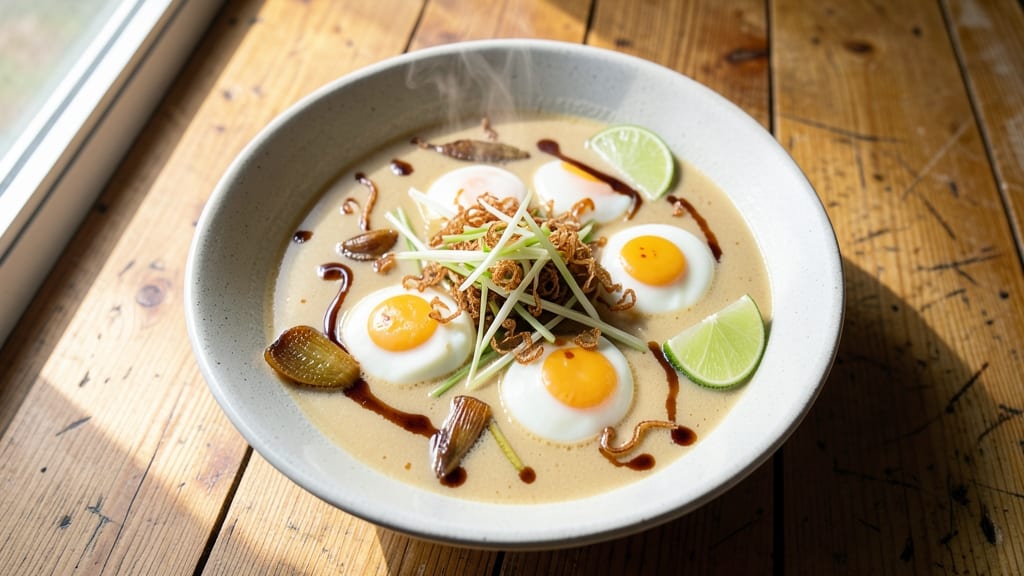
This Thai egg soup recipe brings the comforting flavors of Thailand straight to your kitchen with its fragrant coconut and lemongrass broth. The secret lies in balancing sweet, sour, and spicy notes—just like in authentic Tom Kha Gai—while keeping the preparation straightforward.
I’ve perfected this version to deliver that signature creamy, aromatic broth that makes every spoonful irresistible.
The beauty of this recipe is its versatility—you can customize it with shrimp, chicken, or keep it vegetarian for a lighter option. Fresh herbs like Thai basil and cilantro add brightness, while silken eggs poached directly in the broth create the perfect texture contrast.
The broth simmers just long enough to develop deep, layered flavors without losing its vibrant essence.
What you’ll end up with is a bowl of soup that’s rich yet refreshing, with tender herbs floating in a velvety coconut broth. The poached eggs add a delicate, custardy center that ties everything together.
It’s the kind of dish that feels both comforting and exciting, perfect for a cozy night in or a special gathering.
Serve it with steamed jasmine rice or crusty bread to soak up every last drop of that fragrant broth. The best part? This recipe comes together in under 45 minutes, making it ideal for a weeknight dinner that still feels like a restaurant-quality meal. Let’s get started!
Ingredients for thai egg soup
Fragrant lemongrass, creamy coconut milk, and silken tofu—this Thai egg soup is restaurant-quality in your kitchen.
| Ingredient | Amount | Notes |
|---|---|---|
| Fresh Lemongrass 🌿 | 3 whole | Lower stems only, cut into 2-inch pieces |
| Galangal 🍃 | 1 inch | Fresh root, peeled and sliced thin |
| Coconut Milk 🥥 | 1 can | Full-fat for creaminess, 13.5 oz can |
| Chicken Broth 💧 | 4 cups | Homemade or quality low-sodium |
| Lime Juice 🍋 | 2 tbsp | Freshly squeezed, seeds removed |
| Fish Sauce 🍶 | 1 tbsp | Red Boat brand preferred |
| Palm Sugar 🍚 | 2 tbsp | Or substitute brown sugar |
| Thai Chili Paste 🌶️ | 1 tbsp | Maesri or Sriracha for heat |
| Garlic Cloves 🧄 | 4 cloves | Minced for depth of flavor |
| Thai Basil Leaves 🌿 | ½ cup | Fresh, stems removed |
| Cilantro Leaves 🌿 | ¼ cup | Fresh, chopped for garnish |
| Silken Tofu 🥬 | 1 block | Cut into 8 slices for poaching |
| Vegetable Oil 🫒 | 1 tbsp | For high heat searing |
| Salt 🧂 | 1 tsp | Kosher or sea salt |
| Black Pepper 🌶️ | ½ tsp | Freshly ground for warmth |
Lemongrass is the soul of this soup—buy fresh stalks at an Asian market (they'll usually trim it for you). If you can't find galangal, ginger at half the amount works in a pinch, but it's not the same. The coconut milk? Full-fat only—light versions won't give that velvety texture. For fish sauce, Red Boat is the gold standard, but any quality brand will do. Palm sugar adds that authentic sweetness—if you can't find it, brown sugar works perfectly fine. I always grab extra Thai basil because half gets torn into the broth and half stays for garnish.
No fish sauce? Soy sauce plus a pinch of sugar gets you close. Short on lemongrass? Double the garlic and add a pinch of citric acid (or extra lime juice). The silken tofu poaches beautifully—it's like edible silk in your soup. For extra richness, stir in 1 tbsp of coconut cream at the end. The broth should be fragrant but not overpowering—simmer gently to let the flavors meld. Pro tip: Toast the lemongrass and galangal in a dry pan for 30 seconds before adding to the broth—it deepens the aroma instantly.
This soup tastes even better the next day—make a double batch and store it in the fridge. Keeps for 4-5 days in an airtight container. The tofu stays silky if you keep it submerged in broth. For freezing, portion the broth without the tofu (it gets mushy)—freezes for 3 months. I always serve it with steamed jasmine rice and a sprinkle of crushed peanuts on top. The leftovers reheat beautifully—just warm gently on the stove with a splash of water.
Why You'll Love This Recipe
- No Chopping Struggle: I swear by this recipe because the hardest prep is bruising the galangal—no finicky dicing, no mincing lemongrass stalks into oblivion. Just slap the whole stalk in the pot, and let the broth work its magic.
- Creamy-Zing Balance: That coconut milk makes it rich, but the lime juice and galangal cut through it like a bright, herbal whisper. Honestly? It’s the kind of soup where every spoonful feels like a hug for your taste buds.
- Leftover Goldmine: Make a big batch—it reheats like a dream and tastes even better the next day. I keep a jar of the broth base in the fridge; just add eggs and lime to revive it anytime.
- Weeknight Workhorse: Between us, this is my go-to when I’m exhausted but need something nourishing. Simmer the broth while I prep dinner, crack eggs into it at the end, and boom—zero fuss, maximum flavor.
Step-by-step instructions for Thai egg soup
This fragrant coconut-lemongrass broth comes together beautifully with simple techniques.
Build the Aromatic Base
Heat the 1 tablespoon vegetable oil in a large pot over medium heat. Add the 4 minced garlic cloves and 1 tablespoon Thai chili paste, cooking for 30 seconds until fragrant. This quick sear unlocks the garlic's sweetness and deepens the chili's warmth.
Next, add the 3 lemongrass pieces (cut side down) and 1-inch galangal slices. Let them sizzle for 2 minutes until the galangal softens slightly and releases its citrusy aroma. The lemongrass should infuse the oil with its signature piney scent—this is the soul of your soup.
Simmer the Broth with Coconut and Herbs
Pour in the 1 can coconut milk and stir gently to combine. Add the 4 cups chicken broth, 2 tablespoons palm sugar, 1 tablespoon fish sauce, 1 teaspoon salt, and ½ teaspoon black pepper. Bring to a gentle boil, then reduce heat to low and let it simmer uncovered for 15 minutes, stirring occasionally.
After 10 minutes, add the ½ cup Thai basil leaves and ¼ cup cilantro leaves. The herbs will brighten the broth with their fresh, slightly peppery notes. Taste and adjust seasoning—you want a balance of sweet, salty, and umami. The coconut should be creamy but not overly rich, with the lemongrass and galangal flavors dominating.
Prepare and Poach the Silken Tofu
Cut the 1 block silken tofu into 8 thin slices (about ¼-inch thick). Heat a separate small skillet over medium heat with ½ tablespoon vegetable oil. Quickly sear each tofu slice for 15 seconds per side until golden spots form—this adds texture without drying them out. Set aside.
Return the simmering soup to a gentle boil. Carefully add the seared tofu slices and cook for 2 minutes to warm through. The tofu should absorb the fragrant broth while maintaining its delicate texture. Remove the lemongrass and galangal pieces at this point—they've done their job.
Finish with Lime and Serve
Stir in the 2 tablespoons lime juice and let the soup simmer for 1 more minute. The acidity brightens the coconut and balances the richness. Taste again and adjust with a pinch more salt or a splash of fish sauce if needed.
Ladle the soup into bowls, placing 2 tofu slices in each. Garnish with additional Thai basil leaves and cilantro leaves, and serve immediately while steaming hot. The contrast of silky tofu against the aromatic broth makes every spoonful a revelation.
Pro Tips For Making Thai Egg Soup
- STRIKE THE GALANGAL FIRST: I learned this the hard way—slamming a whole galangal rhizome against the cutting board usually ends with you cursing and a splintered mess. Instead, wrap it in plastic wrap first, then strike it firmly with the flat side of your knife like you’re chopping wood. This keeps the fibrous edges intact and makes slicing cleaner.
- LOW AND SLOW FOR COCONUT: Coconut milk curdles faster than you’d think when it hits hot broth. After adding it, immediately reduce the heat to a bare simmer—just enough to see tiny bubbles at the edges. Stir once, then walk away. Rushing this step turns your soup into a lumpy, sad puddle.
- SALT THE BROTH EARLY: Taste your chicken broth before adding anything else. If it’s bland, season it now with 1 teaspoon of salt (or more if it’s weak). The flavors will meld better, and you won’t end up with a soup that needs a whole extra bowl of soy sauce to fix later.
- RESERVE THE LIME JUICE: I skip this sometimes, and the soup always feels flat. Instead of dumping lime juice in at the end, mix 1 tablespoon with 2 tablespoons of water and add it while the soup simmers. This brightens the broth without making the eggs rubbery when they hit the acid later. Save the rest for finishing.
Common mistakes when making perfect results
Overcooking the Broth
One of the biggest mistakes is letting the broth boil vigorously—this breaks down the delicate coconut milk, making it separate and turn grainy. Instead, maintain a gentle simmer at low heat once everything comes to a boil.
I’ve ruined a batch by forgetting to reduce heat after adding coconut milk, and trust me, the texture suffers. 🌡️
If your broth starts looking curdled, immediately reduce heat to lowest setting and add 1 tablespoon of coconut cream to stabilize it. Stir constantly until smooth again—this happens when coconut milk curdles from heat shock.
Skipping the Aromatic Base
Many home cooks rush the lemongrass and galangal step, but toasting these aromatics for 2 minutes is crucial—they release their essential oils, which are the soul of the soup. I once made a batch without toasting them, and the flavor was flat, lacking that bright, citrusy depth. 🌿
Pro tip: Use the bottom of a heavy pot for toasting—thin-bottomed pans won’t conduct heat evenly, and you’ll end up with burnt galangal. If you’re short on time, microwave the lemongrass and galangal in 1 cup water for 1 minute before adding to the pot—it mimics the toasting effect.
Ignoring the Lime Finish
The lime juice isn’t just for acidity—it’s the balancing act that makes this soup sing. Adding it too early (before serving) lets the acidity cook off, dulling the brightness. I’ve seen recipes where people add lime at the start, and the flavor just isn’t the same.
Always stir in 2 tablespoons lime juice in the last minute of cooking. 🍋
If your soup tastes too rich after simmering, a splash of lime juice can cut through the coconut fat. For extra zing, add ½ teaspoon citric acid (found in baking aisles) to mimic fresh lime’s tang without the pulp.
Poaching Tofu Wrong
Silken tofu is delicate—adding it directly to boiling broth will turn it rubbery. Always sear the tofu first in a separate pan for 15 seconds per side to add texture, then poach gently in the simmering (not boiling) broth.
I’ve ruined tofu by dropping it into a rolling boil, and it’s a sad, mushy mess. 🥬
For extra silky tofu, soak the block in cold water for 10 minutes before slicing to remove excess moisture. If your tofu absorbs too much broth and falls apart, reduce the poaching time to 1 minute—it should just warm through, not cook.
Overloading with Herbs
Adding all the Thai basil and cilantro at once can make the broth bitter and overpowering. Split the herbs: add half during simmering (after 10 minutes) and reserve the rest for garnishing.
I’ve made this mistake, and the soup tasted like a herbal tea rather than a balanced dish. 🌿
If your herbs wilt too quickly, blanch them in boiling water for 10 seconds before adding to the broth—they’ll hold their color longer. For a stronger flavor, bruise the basil leaves by gently pressing them with the back of a spoon before adding.
Using Low-Quality Ingredients
Substituting cheap coconut milk or store-brand fish sauce will make your soup taste flat and artificial. Invest in full-fat coconut milk (like Thai Kitchen brand) and Red Boat fish sauce—they’re worth it. I’ve tried lighter coconut milk, and the soup lacks that velvety richness. 🥥
For galangal, if you can’t find fresh, ginger + a pinch of citric acid is the closest substitute. Palm sugar is ideal, but brown sugar works in a pinch—just reduce to 1 tablespoon since it’s less concentrated. The difference in quality is noticeable, especially in the broth’s depth of flavor.
Nutrition facts
Frequently asked questions
Can I make this Thai egg soup with chicken instead of tofu?
For a protein-rich version, use 2 boneless chicken breasts (about 12 oz) instead of tofu. Poach the chicken in the simmering broth for 10-12 minutes until fully cooked, then shred or slice before serving. The chicken absorbs the coconut broth beautifully and adds heartiness.
How can I make this soup spicier?
Start with 1 extra tablespoon of Thai chili paste or add 1-2 sliced Thai chilies while simmering. For heat control, remove the chilies before serving. If you love spice, stir in ½ teaspoon of chili flakes at the end or serve with extra hot sauce on the side.
What if I don't have galangal? Can I substitute it?
Yes! Use 1-inch of fresh ginger (peeled and sliced) as a substitute, but reduce the amount by half. For extra zing, add ½ teaspoon citric acid or a splash of lime juice to mimic galangal's citrusy depth. The flavor won't be identical, but it'll still taste amazing.
Can I prepare this soup ahead of time?
This soup tastes even better the next day! Store the broth (without tofu) in an airtight container in the fridge for up to 4-5 days. Reheat gently on the stove, adding a splash of water if needed. Add fresh tofu and herbs when reheating to keep them vibrant. For freezing, portion the broth only (tofu freezes poorly) and freeze for up to 3 months.
Why does my coconut milk separate?
This happens when the broth boils too vigorously, breaking down the coconut milk's fats. Always simmer gently after adding coconut milk, and never let it boil hard. If it separates, reduce heat to lowest setting and stir in 1 tablespoon coconut cream until smooth. Stir constantly to prevent further separation.