
Breakfast & Brunch
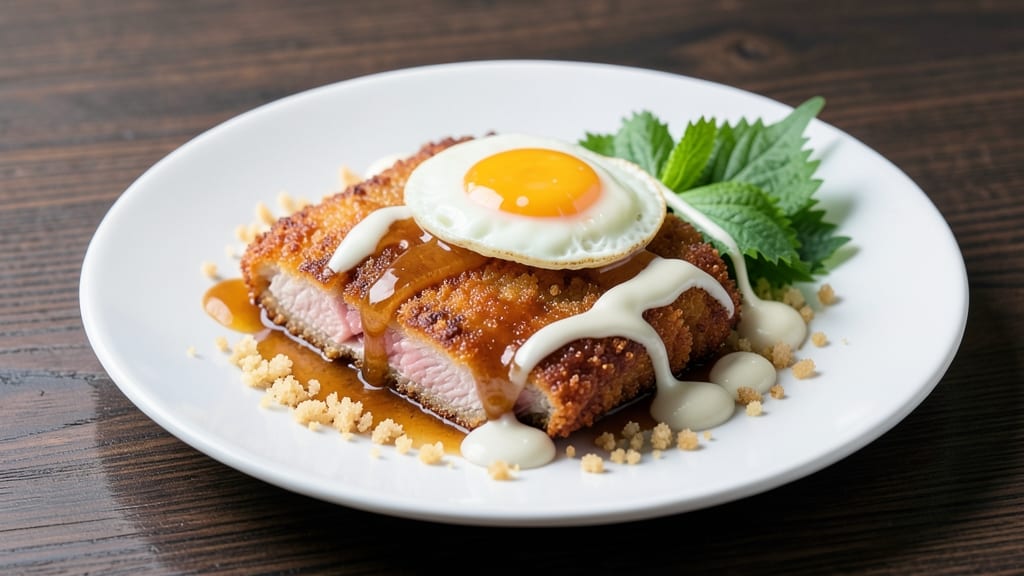
This tonkatsu egg recipe delivers the perfect balance of crispy, golden panko crust and a silky, runny yolk that makes every bite irresistible. 🔥 The secret lies in double-frying the breaded cutlet for that signature crunch, paired with a simple yet flavorful egg that stays perfectly centered.
I’ve refined this technique over years of testing, ensuring the pork stays juicy while the panko achieves that addictive crunch—no shortcuts here, just restaurant-quality results at home.
The process starts with thinly pounded pork cutlets, coated in a light flour base before being dipped in beaten egg and rolled in panko. The double-fry—first at a lower temperature to render fat, then a quick sear for color—creates the ideal texture: crispy outside, tender inside.
Meanwhile, the egg is poached just until the whites set but the yolk remains molten, ready to ooze when sliced. This method transforms a simple breakfast into a showstopper dish that’s equal parts comforting and indulgent.
What you’ll end up with is a plate that looks as impressive as it tastes: a golden, panko-encrusted cutlet topped with a perfectly poached egg, its yolk still trembling slightly. The accompanying tonkatsu sauce—sweet, tangy, and slightly umami—ties everything together, cutting through the richness while enhancing the flavors.
Serve it over steamed rice or with a crisp salad for a meal that feels both nostalgic and refined.
This recipe is designed to be approachable yet elevated, with room for customization. Swap pork for chicken if preferred, or adjust the sauce to suit your taste—whether you lean toward a sweeter tonkatsu style or a more Worcestershire-forward version.
The key is precision in frying and patience with the egg, ensuring every element comes together flawlessly. Let’s get cooking!
Ingredients for tonkatsu egg
Precision-cut pork, crispy panko, and perfectly poached eggs transform this dish into restaurant-quality comfort.
| Ingredient | Amount | Notes |
|---|---|---|
| Pork Cutlets 🥓 | 1 ½ lb | Thinly pounded to even thickness |
| All-Purpose Flour 🌾 | ½ cup | For light dredging base |
| Large Eggs 🥚 | 2 whole | Beaten for egg wash |
| Japanese Panko Breadcrumbs 🍞 | 2 cups | High-quality for crispy crust |
| Vegetable Oil 🫒 | 3 cups | For double-frying process |
| Large Eggs 🥚 | 4 whole | Fresh for perfect poaching |
| Tonkatsu Sauce 🍶 | ½ cup | Store-bought or homemade |
| White Rice 🍚 | 2 cups | Cooked for serving base |
| Diamond Crystal Kosher Salt 🧂 | 1 tsp | For seasoning cutlets |
| Ground Black Pepper 🌶️ | ½ tsp | Freshly cracked for flavor |
| Fresh Lemon 🍋 | 1 whole | Juiced for tonkatsu sauce |
| Worcestershire Sauce 🍶 | 1 tbsp | For sauce depth |
| Granulated Sugar 🍬 | 1 tbsp | For sauce sweetness |
| Water 💧 | ¼ cup | For poaching eggs |
| White Vinegar 🍶 | 1 tbsp | For egg poaching |
The pork cutlets demand attention—thinly pounded to 1/4-inch thickness ensures even cooking. Look for pork loin or tenderloin at Whole Foods or your local butcher for optimal tenderness. Japanese panko is non-negotiable; Japanese Market or Amazon carry high-quality brands like Suzuki. The double-fry technique requires two different oils: a neutral oil like vegetable for the initial fry and a higher-smoke-point oil like canola for the final sear. Preheat your oil to 350°F for the first fry and 375°F for the second—precision matters here.
No Japanese panko? Panko-style breadcrumbs from a trusted brand like Great Value work in a pinch, though texture won’t be identical. For the tonkatsu sauce, store-bought versions from Asian markets are ideal, but homemade blends of Worcestershire, ketchup, and a touch of honey (or sugar) suffice. Fresh eggs are critical for poaching—room-temperature eggs yield better results. If substituting chicken, pound breast cutlets to 1/3-inch thickness for even cooking. The lemon juice in the sauce should be freshly squeezed; bottled juice lacks the bright acidity needed to balance the richness.
Store prepped pork cutlets in the fridge for up to 24 hours before cooking, wrapped tightly in plastic. Panko loses crispiness quickly, so make fresh batches when needed. Poached eggs can be prepped ahead and stored in an ice-water bath for up to 2 hours, but serve immediately for optimal texture. The tonkatsu sauce keeps for 1 week refrigerated, though homemade versions are best used within 3 days. For meal prep, cook the rice and sauce in advance, then assemble plates fresh to maintain crispiness.
Why You'll Love This Recipe
- Crispy in Minutes: I swear, the panko crust turns golden in just 5 minutes—no flipping required. That’s right, one side gets perfectly crunchy while the egg stays silky inside, all thanks to the hot oil and gentle pressure.
- Addictive Double Crunch: Between the breaded pork and the runny egg yolk breaking open, every bite has that satisfying crack of texture. Honestly, I’ve made this for friends who swore they hated tonkatsu—they’re now asking for seconds.
- Lunchbox Legend: Pack the leftovers cold (yes, it’s even better the next day) and watch your kids trade their sad sandwiches for this. The egg keeps the pork moist, and the panko stays crispy—no soggy disappointment here.
- Budget Power Move: A single pork cutlet and two eggs stretch to feed two with sides. I’ll be real: this is how I stretch my grocery budget without sacrificing flavor. Plus, panko and flour are pantry staples you’ll use for everything.
Step-by-step instructions for tonkatsu egg recipe
Master the double-fry technique and perfect poached eggs for this crispy, saucy masterpiece.
🍳 Step 1: Prepare and Fry the Pork Cutlets
Begin by patting the 1.5 lb pork cutlets completely dry with paper towels—this ensures maximum crispiness. Season both sides generously with 1 tsp Diamond Crystal Kosher Salt and 0.5 tsp Ground Black Pepper, then dredge lightly in 0.5 cup All-Purpose Flour, shaking off any excess.
Heat 1.5 cups vegetable oil in a deep skillet to 350°F and fry the cutlets for 3-4 minutes per side until golden brown. Remove and drain on a wire rack. This first fry establishes the foundation for the crispy crust. For the second fry, increase oil temperature to 375°F and fry for another 2-3 minutes per side until deeply browned and crispy. The cutlets should reach an internal temperature of 145°F.
🥘 Step 2: Assemble the Tonkatsu Sauce
In a small saucepan, combine 0.5 cup Tonkatsu Sauce, 1 tbsp Worcestershire Sauce, 1 tbsp Granulated Sugar, and 2 tablespoons water. Bring to a gentle simmer over medium heat and cook for 3-4 minutes until slightly thickened but still pourable. Stir in the juice of 1 whole Fresh Lemon and set aside.
This sauce should have a glossy, slightly sticky consistency—thick enough to coat the cutlets but fluid enough to glaze. If it thickens too much, whisk in 1 teaspoon water at a time until you achieve the perfect balance. The acidity from the lemon brightens the rich, savory flavors of the sauce.
🍳 Step 3: Poach the Perfect Eggs
Fill a deep skillet with 0.25 cup Water and 1 tbsp White Vinegar and bring to a gentle simmer over medium-low heat. Crack 4 whole Large Eggs into a small bowl, then gently slide each egg into the water one at a time. Poach for 3-4 minutes for runny yolks—you're aiming for a perfectly set white with a liquid center.
Use a slotted spoon to carefully remove the eggs and drain on a paper towel. The water should maintain a gentle simmer throughout—if it boils vigorously, the eggs will scramble. For perfectly round eggs, add a pinch of salt to the poaching water and avoid stirring the eggs once they're in the water.
🥘 Step 4: Assemble and Serve
Slice each crispy pork cutlet into ½-inch thick strips and arrange on a serving platter. Spoon the warm tonkatsu sauce over the cutlets, allowing it to pool slightly. Top each portion with a perfectly poached egg, ensuring the runny yolk remains intact.
Serve immediately over 2 cups cooked White Rice for the complete tonkatsu egg experience. The contrast of crispy pork, silky egg yolk, and savory sauce creates a harmonious balance of textures and flavors. Each bite should deliver that satisfying crunch from the panko crust, followed by tender pork and a luxurious egg yolk that coats your rice.
Pro Tips For Making Tonkatsu Egg
- Pound Pork Thin: I learned this the hard way—thick cutlets won’t brown properly and end up greasy. Aim for ¼-inch thickness (about 6-8 ounces per cutlet) and pound them evenly with a meat mallet. Uneven spots? They’ll fry faster and burn before the rest cooks through.
- Dry the Panko: Skip the damp panko, even if the recipe says otherwise. Pat the panko with a paper towel right before coating—it sticks better and creates that crispy, shatterable crust instead of a soggy mess. (Yes, even if you’re impatient like me.)
- Fry in Batches: Crowding the pan drops the oil temperature and steams the cutlets instead of frying them. Use one cutlet per inch of pan space and wait for the oil to return to 350°F (175°C) between batches—golden crusts depend on it.
- Crack Eggs Cold: My grandmother swore by this, and she was right: chill the eggs for 10 minutes before dipping. The yolk coats more evenly, clings to the flour, and doesn’t slide off when breading. (Bonus: less mess on your counter.)
Dietary considerations for this recipe
Gluten-Free Adaptations
For a gluten-free version, swap the all-purpose flour for a 1:1 gluten-free flour blend like Bob's Red Mill or King Arthur. Use gluten-free panko (brands like Schär or Panko Valley) for the breading—just ensure it’s labeled gluten-free to avoid cross-contamination.
The double-fry technique remains the same, but monitor the cutlets closely to prevent burning since gluten-free breadings can crisp faster. 🌾
Vegetarian/Vegan Options
Replace pork with extra-firm tofu or chickpea cutlets (like Beyond Meat or Gardein plant-based cutlets). For homemade tofu cutlets, press 2 blocks of firm tofu for 30 minutes, then coat in gluten-free flour (if needed) and panko. Fry at 350°F for 4-5 minutes per side until golden.
Vegan tonkatsu sauce can be made with coconut aminos instead of Worcestershire and maple syrup for sweetness. Poached eggs become optional—swap for silken tofu or avocado slices for a vegan-friendly plate.
Low-Carb Modifications
Skip the rice and serve over cauliflower rice or a mixed greens salad with a sesame-ginger dressing. Use almond flour instead of all-purpose flour for the dredge—it adds a nutty depth and keeps carbs minimal.
For the egg, opt for sugar-free tonkatsu sauce (reduce sugar by half or use erythritol). The crispy panko crust remains a highlight, but the lighter base keeps this dish keto-friendly while delivering satisfying texture. 🥗
Allergen-Friendly Tips
For egg allergies, replace the poached egg with a soft-boiled quail egg (if tolerated) or a mushroom "egg" (sliced shiitake with a splash of soy sauce). If avoiding soy (common in panko), use crushed potato chips or cornflake crumbs for breading.
Always check labels—some panko contains wheat or soy lecithin. For dairy-free needs, ensure your tonkatsu sauce is made without butter (most store-bought versions are dairy-free, but homemade recipes may require substitution).
Protein Swaps
Chicken breast works well—pound to ¼-inch thickness and follow the same frying method. For beef, use thinly sliced sirloin (like for London broil). Salmon fillets (skin-on) can also be tonkatsu-style, but reduce fry time to 2-3 minutes per side at 325°F to avoid overcooking.
Each protein adapts to the technique, but adjust internal temps: chicken to 165°F, beef to 145°F, and salmon to 140°F. The egg and sauce remain unchanged, ensuring the dish stays cohesive. 🍗
Nutrition facts
Frequently asked questions
Why do we double-fry the pork cutlets?
The double-fry creates that signature crispy-yet-tender texture. The first fry at 350°F renders fat and cooks the meat gently, while the second fry at 375°F crisps the panko to perfection. Skipping this step results in soggy breading or overcooked pork.
How do I keep the egg yolk perfectly runny?
Poach eggs in gently simmering water (medium-low heat) for exactly 3-4 minutes—never boiling. Use vinegar in the water to help whites set faster, and remove eggs immediately when whites are just set. Overcooking by even 30 seconds turns yolks firm.
Can I make tonkatsu egg ahead of time?
Prep components separately: Fry and slice pork, make sauce, and poach eggs (store in ice water for up to 2 hours). Assemble plates fresh to maintain crispiness. The sauce can be made 3 days ahead and reheated gently. Never refrigerate fried cutlets—they lose crispness.
What's the best way to reheat leftovers?
Reheat only the pork cutlets (never the egg) in a 300°F oven for 5-7 minutes—they won't regain full crispiness but stay warm. For eggs, cook fresh. Store components separately: pork in an airtight container (up to 2 days), sauce in the fridge. Never microwave fried cutlets—they become rubbery.
How do I fix soggy panko crust?
Soggy crust usually means moisture got trapped. Pat pork completely dry before breading, and don't overcrowd the pan during frying. For extra crispiness, chill cutlets 10 minutes after first fry before second fry. Use high-quality panko—cheaper brands absorb more oil.