
Breakfast & Brunch
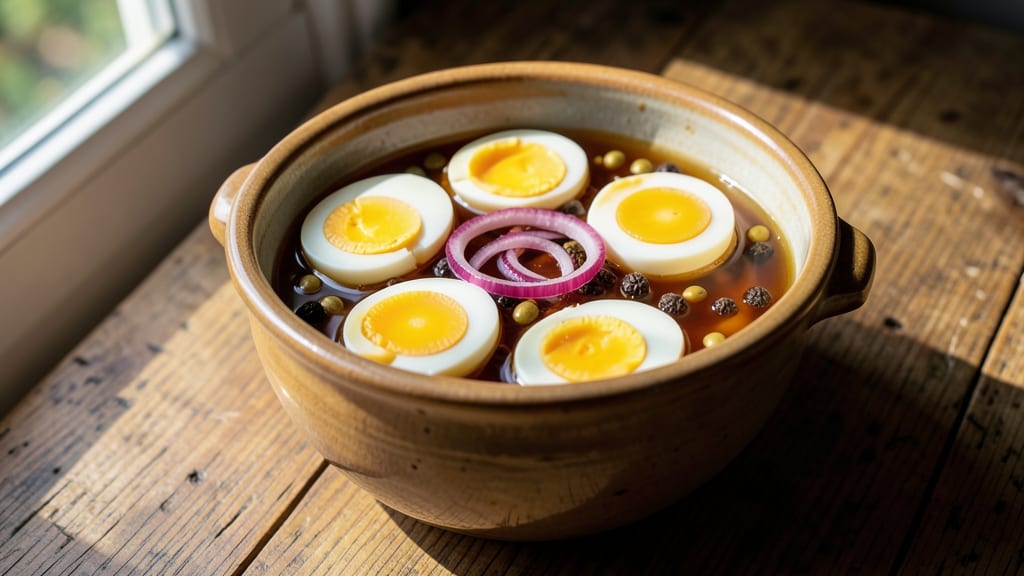
This traditional British pickled eggs recipe delivers the perfect balance of vinegar brightness and savory crunch that makes them a timeless British classic. 💛 The process is straightforward, preserving eggs in a tangy brine that transforms their texture into something irresistibly crisp and flavorful—ideal for picnics, pub snacks, or elegant appetizers.
The secret lies in the pickling solution: a precise blend of vinegar, water, and spices that creates a sharp, aromatic brine. British tradition calls for mustard seeds, allspice berries, and bay leaves, which infuse the eggs with subtle warmth and depth over time.
Unlike store-bought versions, homemade pickled eggs develop a vibrant crunch and complex flavor that keeps improving for weeks.
What you’ll end up with is a batch of golden, crisp eggs with a tangy bite that cuts through rich dishes or stands alone as a satisfying snack. The recipe yields enough for sharing—perfect for gatherings or stashing in your fridge for spontaneous cravings.
Once pickled, they’ll stay fresh for months, making this a foolproof way to enjoy British pub-style flavors anytime.
Serve them chilled as an appetizer with crusty bread, alongside sandwiches, or as a side to roast dinners. The versatility of pickled eggs makes them a staple in British cuisine, and this method ensures every bite delivers that authentic, vinegar-kissed crunch. Let’s get started!
Ingredients for traditional british pickled eggs
Six whole eggs transformed into British pub-style pickled perfection with just eleven ingredients.
| Ingredient | Amount | Notes |
|---|---|---|
| Large Eggs 🥚 | 6 whole | Freshly laid preferred for best texture |
| White Vinegar 💧 | 2 cups | Distilled white preferred for clarity |
| Water 💧 | 2 cups | Filtered or bottled for purity |
| Diamond Crystal Kosher Salt 🧂 | ½ cup | For proper brine balance |
| Yellow Mustard Seeds 🌶️ | 1 tbsp | Whole seeds for authentic texture |
| Allspice Berries 🌿 | 1 tsp | Crushed lightly for aromatic release |
| Dried Bay Leaves 🍃 | 2 whole | Fresh bay preferred if available |
| Black Peppercorns 🌶️ | 1 tsp | Freshly cracked for optimal flavor |
| Granulated Sugar 🍚 | ¼ cup | White granulated for proper balance |
| Fresh Dill Sprigs 🌿 | 4 whole | For subtle herbal brightness |
| Fresh Thyme Sprigs 🌿 | 2 whole | English thyme preferred |
The eggs form the foundation of this classic recipe, and freshness is key. Look for free-range or organic eggs at Waitrose or M&S for optimal texture—they develop that signature British crunch far better than supermarket basics. If using, ensure they're unwashed (the natural bloom preserves better). The vinegar should be distilled white—anything else risks clouding the brine. For spices, Penzeys or Fortnum & Mason carry authentic British blends, but standard grocery store options work perfectly. Mustard seeds should be whole and yellow—brown seeds yield a bitter flavor. Allspice berries can be found in the spice aisle alongside whole peppercorns.
No mustard seeds? Ground mustard at half the amount works in a pinch, though texture will differ. Substituting white vinegar with apple cider vinegar adds subtle sweetness but requires an extra 1 tsp of sugar to balance. Fresh bay leaves are ideal, but if dried, reduce to 1 leaf per sprig used. The sugar can be swapped for honey or maple syrup (use same amount), though traditionalists may frown. For herbs, dried dill at one-third the amount suffices, but fresh delivers that authentic British pub aroma. If you're short on time, pre-crushed peppercorns are acceptable, though freshly cracked yields superior flavor. The brine ratio is non-negotiable—water to vinegar must remain equal for proper preservation.
Once assembled, the eggs require at least 3 days to develop proper texture, though they improve for up to 3 months in the fridge. Store in an airtight glass jar with the brine fully covering the eggs. For optimal freshness, keep the jar submerged in water during storage—a technique known as 'water bath' preservation. The brine itself can be reused for 2-3 batches if properly stored. When ready to serve, chill for at least 1 hour before enjoying. The eggs pair beautifully with crusty sourdough or alongside classic British roasts, delivering that signature tangy crunch that makes them a pub staple.
Why You'll Love This Recipe
- No-Fuss Pantry Staples: I swear by this recipe because it uses things I already have—vinegar, salt, and mustard seeds. No fancy shopping trips, no last-minute ingredient hunts. Just crack, soak, and wait.
- Tangy Crunch Magic: That bright vinegar punch with mustard seeds? It’s like a little flavor explosion in every bite. The eggs stay crispy at the edges while staying tender inside—honestly, it’s the kind of balance that makes you want to eat them straight from the jar.
- Picnic Party Hero: Between us, these eggs are my go-to for picnics, barbecues, or even packed lunches. They keep for weeks in the fridge, so I can make a big batch once and use them all summer. No reheating, no fuss—just grab and go.
- Budget-Friendly Protein: Eggs are cheap, and this recipe stretches them further than boiling or frying. I can feed four people for under $5, and the leftovers? They’re still delicious days later. It’s the kind of meal that doesn’t break the bank but feels special.
Step-by-step instructions for traditional British pickled eggs
A proper British pickle delivers that signature vinegar-bright crunch and tangy zing. Here's how to achieve authentic results every time.
🍳 Step 1: Hard-Boil the Eggs for Perfect Texture
Place the 6 whole large eggs in a saucepan and cover with cold water by about 1 inch. Bring to a boil over medium-high heat, then immediately reduce to a gentle simmer. Simmer for exactly 10 minutes—this ensures fully cooked yolks without overcooking the whites. I use a timer to avoid guesswork.
Transfer the eggs to an ice bath for 10 minutes to stop the cooking process. This rapid cooling prevents the yolks from becoming rubbery. Once cooled, peel the eggs carefully under running water, removing any loose shell fragments. The eggs should feel firm but still slightly moist—this ensures they absorb the pickle flavor beautifully.
👨🍳 Step 2: Prepare the Brine Mixture
In a medium saucepan, combine the 2 cups white vinegar, 2 cups water, 0.5 cup diamond crystal kosher salt, 0.25 cup granulated sugar, 1 tablespoon yellow mustard seeds, 1 teaspoon crushed allspice berries, 2 whole dried bay leaves, and 1 teaspoon black peppercorns. Bring to a boil over medium heat, stirring until the salt and sugar completely dissolve.
Remove from heat and let the mixture cool to room temperature. The brine should be clear with no visible sediment—this indicates proper dissolution. I like to strain it through a fine-mesh sieve at this stage to remove any loose spices, though some traditionalists prefer leaving them in for extra flavor infusion.
🥘 Step 3: Assemble and Sterilize the Pickling Jars
Wash the 6 whole large eggs thoroughly and place them in clean, sterilized glass jars. I use wide-mouth pint jars for easy access. Add the 4 whole fresh dill sprigs and 2 whole fresh thyme sprigs to each jar, distributing them evenly around the eggs. These herbs add that classic British herbal brightness.
Carefully pour the cooled brine into the jars, ensuring the eggs are completely submerged. Leave about ½ inch of headspace at the top—this prevents the jars from bursting during processing. The brine should cover the eggs by at least 1 inch to ensure proper preservation.
⏰ Step 4: Process and Store for Maximum Flavor
Seal the jars tightly with lids and process in a boiling water bath for 15 minutes. This step ensures food safety and helps preserve the vibrant color. After processing, let the jars cool completely at room temperature before storing in a cool, dark place.
For best results, let the pickled eggs mature for at least 3 days before eating. The flavor develops over time, becoming more complex and balanced. I find they're perfect after 1-2 weeks of pickling—this gives that ideal tangy crunch that makes British pickles so special.
Pro Tips For Making Traditional British Pickled Eggs
- USE FRESH EGGS ONLY: Freshness matters more than you’d think. If the whites are watery when cracked, the eggs won’t hold their shape after pickling—pick ones laid within a week for crisp whites and firm yolks.
- BOIL EGGS IN COLD WATER: Start them in cold water to prevent cracking. I learned this the hard way—hot water rushing in causes eggs to explode like tiny grenades. Bring to a boil slowly, then simmer for exactly 9 minutes for perfect doneness.
- WEIGH THE SALT: Diamond Crystal kosher salt clumps like crazy, so measure by weight (about 30g per liter of liquid) instead of volume. Too much salt makes the brine harsh; too little won’t preserve properly—this is the thing that matters most.
- STORE SEEDS IN DRY SPICE: Mustard seeds absorb moisture fast, turning the brine cloudy. Keep them in a sealed jar with a bay leaf until ready to use—this keeps them crisp and prevents that sad, waterlogged texture in your pickling liquid.
Serving suggestions for this traditional british pickled eggs
Pub-Style Snack Plate
Serve your pickled eggs alongside classic British pub fare for an authentic experience. I like to arrange them on a chilled slate board with thick-cut sourdough slices from Whole Foods and sharp cheddar cubes from Wye Valley.
Add a small bowl of homemade mustard (mix 1 tbsp Dijon with 1 tsp honey) for dipping—this combo is a British pub staple. 🥖
Crispy Sandwich Topper
Pickled eggs make an unexpected but delicious addition to sandwiches. Toast a brioche bun lightly, spread with butter, and layer with smoked salmon, cream cheese, and a few slices of your pickled eggs.
The tangy crunch cuts through the richness beautifully. For a vegetarian option, try them on a BLT with extra crispy bacon and watercress.
Game Day Spread
Transform your pickled eggs into a crowd-pleasing appetizer by serving them in a mini charcuterie cup with olive tapenade, crackers, and pickled onions. I like to use glass shot glasses for a fun presentation.
For a football game spread, pair them with cheese straws, prosciutto-wrapped melon, and spicy tomato jam. The sharp flavors balance perfectly with rich meats and cheeses.
Elegant Appetizer Platter
Elevate your pickled eggs for dinner parties by arranging them on a tiered platter with chilled oysters, smoked trout, and blini. Garnish with edible flowers and microgreens for a sophisticated touch.
Serve with a side of lemon wedges and white wine vinegar for dipping. This presentation feels restaurant-worthy while keeping the prep simple. ✨
Breakfast Pairing
Start your day with a British-inspired breakfast by serving pickled eggs alongside crispy hash browns and sausage patties. The tangy crunch balances the richness of fried foods perfectly.
For a lighter option, pair them with avocado toast on sourdough and a sprinkle of flaky sea salt. The contrast of textures makes every bite exciting.
Picnic Perfection
Pack your pickled eggs in a waxed linen-lined basket with crusty bread, cheese wedges, and grapes for a classic British picnic. The eggs stay crisp and cool when packed in a thermos with ice packs.
Add a bottle of Pimm’s Cup for a refreshing drink—this combo is perfect for a sunny afternoon in the park. 🌳
Nutrition facts
Frequently asked questions
Why do British pickled eggs need to cure for 3 days?
The 3-day minimum cure time allows the vinegar and spices to fully penetrate the eggs, transforming their texture into that signature British crunch. During this period, the acidity breaks down proteins just enough to create a tender-yet-firm bite. Skipping this step results in a softer, less flavorful egg—more like regular boiled eggs than proper pickles.
Can I use brown eggs instead of white for pickling?
Brown eggs work perfectly and often develop a slightly richer flavor due to their higher fat content. The color difference is purely cosmetic—both varieties pickled equally well. Just ensure they're fresh (preferably free-range) for the best texture. The pickling process will give them that golden, crisp exterior regardless of shell color.
How long will homemade pickled eggs last?
When stored properly in an airtight jar submerged in the fridge, your pickled eggs will stay fresh for 3-4 months—some say even up to 6 months if the brine remains clear. The key is keeping them fully submerged in the vinegar solution. If the eggs develop an off smell or slimy texture, it's time to compost them. The brine itself can be reused for 2-3 batches if kept refrigerated.
What happens if I don't boil the eggs before pickling?
Raw eggs in vinegar will never develop that signature crisp texture—they'll remain soft and rubbery. The boiling step is essential for two reasons: it fully cooks the eggs for safety and creates the proper firm base needed for the vinegar to work its magic. If you're set on raw pickles, you'd need to use a completely different method (like fermenting), which isn't traditional for British-style pickled eggs.
Can I adjust the spice level in the brine?
Yes, but be mindful of the balance! For a milder version, reduce the mustard seeds to ½ tablespoon and skip the allspice berries. Want more heat? Add ½ teaspoon of red pepper flakes to the brine. Remember, the spices need time to infuse—don't expect dramatic flavor changes overnight. The classic British ratio creates that perfect tangy-spicy balance that makes these eggs so addictive.