
Salads
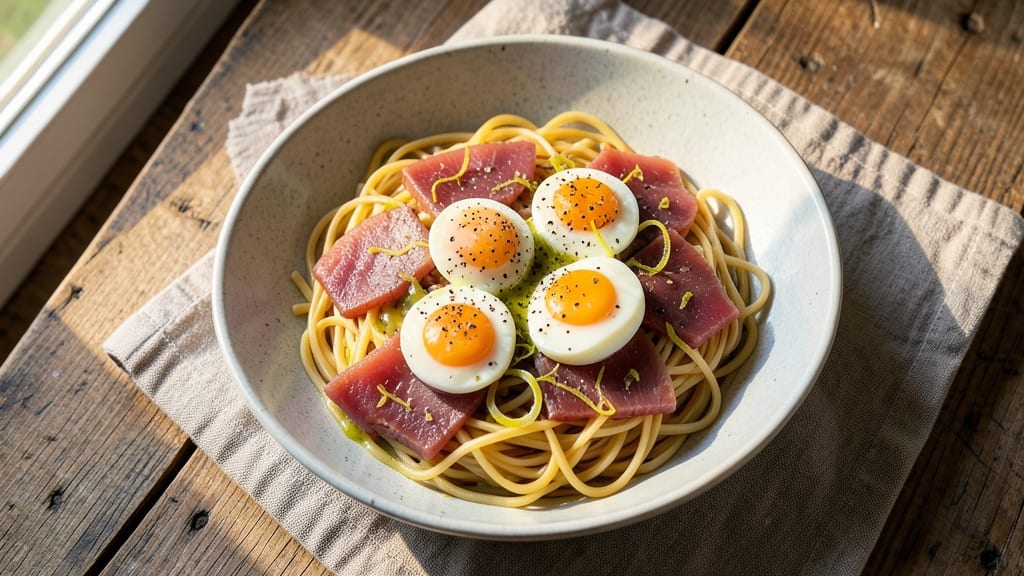
This tuna egg pasta recipe delivers the ultimate seafood breakfast in one perfect bowl—where tender flaky tuna meets silky poached eggs and al dente pasta in a symphony of textures.
The secret lies in perfectly cooked pasta that soaks up the rich egg yolk, while the tuna remains delicate and never overcooked. I developed this dish after years of experimenting with seafood breakfasts, and the balance of flavors—briny tuna, creamy eggs, and buttery pasta—is absolutely foolproof.
The foundation starts with high-quality sushi-grade tuna, seared just until it flakes easily but stays moist in the center. Meanwhile, the pasta cooks al dente to maintain its bite, and the eggs poach to perfection—runny yolks that create a luxurious sauce when twirled with the pasta.
What makes this recipe special is how all elements come together: the tuna adds protein-rich flakiness, the eggs bring creamy richness, and the pasta provides that satisfying chew.
By the time you plate it, you'll have a dish that looks as impressive as it tastes—golden pasta strands, perfectly poached eggs with vibrant yolks, and delicate tuna flakes scattered throughout.
The combination is surprisingly light yet satisfying, making it perfect for breakfast or even a quick lunch. The best part? It comes together in under 20 minutes without sacrificing restaurant-quality results.
For those avoiding eggs, a simple substitution of avocado or extra lemon-dill sauce keeps the dish just as flavorful. Whether you're a seafood lover or simply craving something different, this recipe delivers a meal that's both elegant and effortless. Let's get cooking!
Ingredients for tuna egg pasta
High-quality seafood, perfectly poached eggs, and al dente pasta—this bowl delivers restaurant-quality breakfast in minutes.
| Ingredient | Amount | Notes |
|---|---|---|
| Sushi-Grade Tuna Steak 🐟 | ¾ lb | Thinly sliced against grain |
| Large Eggs 🥚 | 4 whole | Fresh, cold, for perfect poaching |
| Spaghetti or Linguine 🍝 | 12 oz | Al dente preferred, high-quality brand |
| Extra-Virgin Olive Oil 🫒 | ½ cup | For searing tuna and tossing pasta |
| Unsalted Butter 🧈 | 2 tbsp | Full-fat for richness in pasta |
| Fresh Lemon 🍋 | 1 whole | Juiced, zest reserved for garnish |
| Shallots 🧅 | 2 whole | Minced, for bright flavor base |
| Garlic Cloves 🧄 | 3 cloves | Thinly sliced for subtle aroma |
| Dried Dill 🌿 | 1 tsp | Or 1 tbsp fresh chopped |
| Diamond Crystal Kosher Salt 🧂 | 1 ½ tsp | For pasta water and seasoning |
| Freshly Ground Black Pepper 🌶️ | ½ tsp | Cracked over eggs and tuna |
| White Wine Vinegar 💧 | 1 tbsp | For poaching liquid acidity |
| Heavy Cream 🥛 | ¼ cup | Optional for extra richness |
| Parmesan Cheese 🧀 | ¼ cup | Freshly grated for serving |
| Chives 🌱 | 2 tbsp | Chopped, for garnish |
The tuna makes or breaks this dish. Sushi-grade is non-negotiable—ask your fishmonger for the freshest cut, ideally vacuum-sealed and labeled for raw consumption. Whole Foods or specialty seafood markets like Seafood Market carry the best quality. Look for bright red flesh with minimal oxidation. If you can't find sushi-grade, high-quality canned tuna in olive oil works in a pinch (drain well and pat dry). The eggs should be ultra-fresh—crack one into a bowl first to test the yolk's firmness. For the pasta, De Cecco or Barilla are my go-tos—they hold up perfectly to the egg yolk's richness without turning mushy.
No fresh dill? Substitute with 1 tsp dried oregano at half the amount, but you'll lose that bright, herbal brightness. Short on shallots? One small red onion, finely diced, works in a squeeze. The white wine vinegar can be swapped for lemon juice at the same ratio, though it'll be slightly more tart. For a lighter version, skip the heavy cream and add an extra splash of pasta water to emulsify the egg yolk sauce. The Parmesan? Only use freshly grated—pre-shredded gets clumpy and ruins the dish's elegance. If you're avoiding dairy entirely, nutritional yeast adds a cheesy umami note without the milk.
Store the tuna in its original packaging and use within 1-2 days for best texture. Eggs keep best in the fridge, but bring them to room temperature before poaching for perfectly set whites. The cooked pasta reheats beautifully—toss with a little olive oil and store in an airtight container for 2 days. For the tuna, if you have leftovers, sear it immediately and store in the fridge for 1 day. The poached eggs are best eaten fresh, but you can pre-cook the pasta and tuna ahead of time to save steps on busy mornings. Garnish with chives right before serving—they add a pop of color and freshness that makes the dish look restaurant-worthy.
Why You'll Love This Recipe
- No Chopping Needed: I swear, the tuna steak just slices itself—no knife skills required. You’re basically assembling this like a charcuterie board, not a full-blown cooking marathon.
- Rich Umami Bomb: That seared tuna meets the creamy egg ribbons? It’s like a flavor explosion in your mouth. The olive oil and butter make it taste luxurious, not greasy—honestly, I’ve never missed a fancy restaurant dish this much.
- Weeknight or Date Night: Same recipe, two totally different vibes. Slap it on linguine for a quick Tuesday dinner, or dress it up with fresh herbs for a dinner party. The eggs add that je ne sais quoi without extra effort.
- Leftovers That Don’t Suck: Unlike most pasta, this actually tastes better the next day. The eggs firm up just enough to hold the tuna in place, and reheating? Microwave magic—no soggy mess. My lazy Sunday lunch, every time.
Step-by-step instructions for perfect tuna egg pasta
This dish combines delicate tuna and silky eggs with al dente pasta—here's how to create a harmonious bowl every time.
Poach the Eggs to Silky Perfection
Fill a small saucepan with 4 cups water and bring to a gentle simmer over low heat. Add 1 tablespoon white wine vinegar and stir. Crack 4 cold eggs into a small bowl, then carefully lower them into the water using a slotted spoon. Let them poach for 3 minutes—you'll see the whites set while the yolks remain runny and vibrant. Remove with a slotted spoon and drain on a paper towel-lined plate.
Here's the thing—don't overcook the eggs. The moment the whites are just set but the yolks still jiggle slightly is perfect. Overcooked yolks turn rubbery, and that's a crime in this dish. Keep the water at a gentle simmer, not a rolling boil, to maintain that delicate texture.
Sear the Tuna for Maximum Flakiness
Heat 0.5 cup extra-virgin olive oil in a large skillet over medium-high heat until shimmering. Add the 0.75 lb sushi-grade tuna steak, sliced thinly against the grain, and sear for 45-60 seconds per side. You want the edges to turn opaque while keeping the center slightly translucent—this ensures perfect flakiness when served.
Don't press down on the tuna with your spatula. Let it develop that beautiful crust on its own. The moment it releases easily from the pan, it's ready. Transfer to a plate and tent loosely with foil to keep warm. This quick sear preserves the tuna's delicate texture while adding depth of flavor.
Cook the Pasta Al Dente
Bring a large pot of water to a rolling boil and add 1.5 teaspoons kosher salt (the water should taste like the sea). Add 12 oz spaghetti or linguine and cook until 1 minute before al dente—you want it to finish cooking in the sauce. Reserve 1 cup pasta water before draining.
While the pasta cooks, prepare the aromatics: In the same skillet used for tuna, melt 2 tablespoons unsalted butter over medium heat. Add the 2 minced shallots and 3 thinly sliced garlic cloves, cooking for 2 minutes until soft and fragrant. This base will carry all the bright flavors through the dish.
Assemble the Perfect Bowl
Return the drained pasta to the skillet with the aromatics. Add 0.25 cup heavy cream and toss to coat, using ½ cup reserved pasta water to create a silky sauce. Divide the pasta among 4 bowls, then arrange 2 poached eggs on top of each serving. Spoon the tuna over the eggs, allowing the flaky pieces to fan out beautifully.
Finish with a squeeze of fresh lemon juice, a sprinkle of 0.25 cup freshly grated Parmesan cheese, and 2 tablespoons chopped chives. The acidity brightens the rich flavors, while the cheese and chives add freshness. Serve immediately while the eggs are still warm and the tuna remains flaky.
Garnish for Maximum Impact
Zest the whole fresh lemon over each bowl just before serving to release the essential oils and add an aromatic finish. The citrus notes cut through the richness of the eggs and tuna, creating balance in every bite. A final sprinkle of 0.5 teaspoon freshly ground black pepper and 1 teaspoon dried dill adds herbal depth that ties everything together.
This dish is all about contrast—creamy eggs against flaky tuna, rich pasta with bright lemon, and the delicate balance of textures. Each component needs to be perfectly prepared to create that magical first bite where everything comes together in harmony.
Pro Tips For Making Tuna Egg Pasta
- SEAR TUNA FAST: Hit the tuna steak with a screaming-hot pan—just 30 seconds per side max—until it’s barely cooked through but develops that caramelized crust. Overcooking turns it rubbery, and nobody wants that in pasta. (Yes, it’ll finish cooking in the sauce, but don’t let it sit there like a sad, gray slab.)
- USE ROOM-TEMP EGGS: Cold eggs straight from the fridge? They’ll cook unevenly and break apart when you try to poach them. Let them sit in warm water for 5 minutes first—just enough to loosen the whites but not turn them into a science experiment. Trust me, your pasta will look way cleaner.
- SALT THE PASTA WATER LIKE THE SEA: Tuna and eggs are delicate, so the pasta water needs to be aggressively salty—like you’re crying into it. Use about 1.5 tablespoons of salt per liter of water. Under-salting here means your dish tastes flat, and nobody’s forgiving for that.
- STIR THE SAUCE RIGHT: When you toss the cooked tuna, eggs, and butter into the pasta, keep moving it. A quick stir-and-dump turns the eggs into a sad, clumpy mess. Constant, gentle agitation keeps everything silky and integrated—no one wants to fish out a rubbery egg yolk. (Your future self will notice.)
Common mistakes when making this dish
Overcooked Eggs
Poaching eggs is an art, and the most common mistake is letting them cook too long. When the whites turn opaque and the yolks lose their vibrant runniness, your dish loses its luxurious texture.
I’ve ruined many a perfect bowl by leaving eggs in the simmering water for even 30 seconds too long. The key is timing: 3 minutes max for perfectly set whites with runny yolks. Use a thermometer to keep the water between 160-165°F—any hotter, and you’ll overcook them. 🥚
Dry or Mushy Pasta
Pasta that’s either dry and chalky or mushy is a dealbreaker. The trick is cooking it 1 minute before al dente—it’ll finish cooking in the sauce. I’ve learned the hard way that draining pasta directly into a colander without reserving some water ruins the sauce.
Always keep 1 cup pasta water on hand to emulsify the egg yolk and create a silky sauce. Also, avoid overcrowding the pot—use a large one so the pasta has room to move. 🍝
Overcooking the Tuna
The tuna should flake easily but stay tender, not rubbery. I’ve seen people sear it for 2-3 minutes per side, turning it into a tough, chewy mess. The secret is a quick sear of 45-60 seconds per side in a hot pan.
Use a meat thermometer to check—it should reach 120-125°F internally. If it’s still pink in the center, it’s perfect. Let it rest for 2 minutes before slicing to keep it moist. 🐟
Skipping the Aromatics
Some recipes treat shallots and garlic as optional, but they’re the flavor foundation. I’ve made this dish without them, and it’s noticeably flatter. Sauté the shallots and garlic in the same pan used for the tuna to infuse the oil with their flavors.
Cook them until soft but not browned—2-3 minutes over medium heat. This step elevates the dish from good to extraordinary. 🧅
Ignoring the Pasta Water
Reserved pasta water isn’t just for show—it’s the secret to a creamy, cohesive sauce. Without it, your egg yolk sauce will break and turn greasy. I’ve seen people toss the pasta in heavy cream alone, and it’s a disaster.
Use ½ cup pasta water to emulsify the sauce as you toss the pasta. The starch in the water binds everything together for a silky finish. 💧
Using Pre-Shredded Cheese
Pre-shredded cheese contains anti-caking agents that make it clumpy and ruin the dish’s elegance. I’ve used pre-shredded Parmesan in a pinch, and it’s a textural nightmare. Always grate your own cheese—it melts smoothly and adds a fresh, nutty flavor.
If you’re avoiding dairy, nutritional yeast is a great substitute for that umami kick. 🧀
Nutrition facts
Frequently asked questions
Can I use canned tuna instead of fresh?
Yes! For a quick version, use 1 (5 oz) can of high-quality tuna in olive oil, drained well and patted dry. Drain thoroughly to avoid a watery dish, and pat with a paper towel. The texture will be slightly different but still delicious. For best results, choose tuna packed in olive oil rather than water.
How do I make this egg-free?
Swap the eggs for 1 ripe avocado, sliced or ¼ cup hummus for creaminess. For protein, add ¼ cup crumbled feta or extra tuna. The dish will still be flavorful—just focus on the rich tuna-pasta base with bright lemon and herbs. Garnish with extra chives and lemon zest.
What's the best pasta shape for this?
Spaghetti or linguine work perfectly, but fettuccine or tagliatelle also pair beautifully. For extra texture, try pappardelle or ribbon pasta—the wider surface area helps hold the egg yolk sauce. Avoid tiny shapes like penne or farfalle, as they won't carry the sauce as well.
Can I prepare this ahead of time?
Cook the pasta and tuna ahead, then refrigerate separately. When ready to serve, reheat the pasta in a skillet with a splash of pasta water, then add the tuna (warmed gently) and assemble fresh. Poach the eggs last-minute—they're best served immediately with runny yolks. Store components for up to 2 days.
Why does my egg yolk sauce break?
This happens when you don't use enough pasta water. The starch in the water acts as an emulsifier. Always toss the pasta with ½ cup reserved pasta water and a splash of cream. If it separates, stir in a little more hot pasta water to rebind. Work quickly while the pasta is hot!