
Breakfast & Brunch
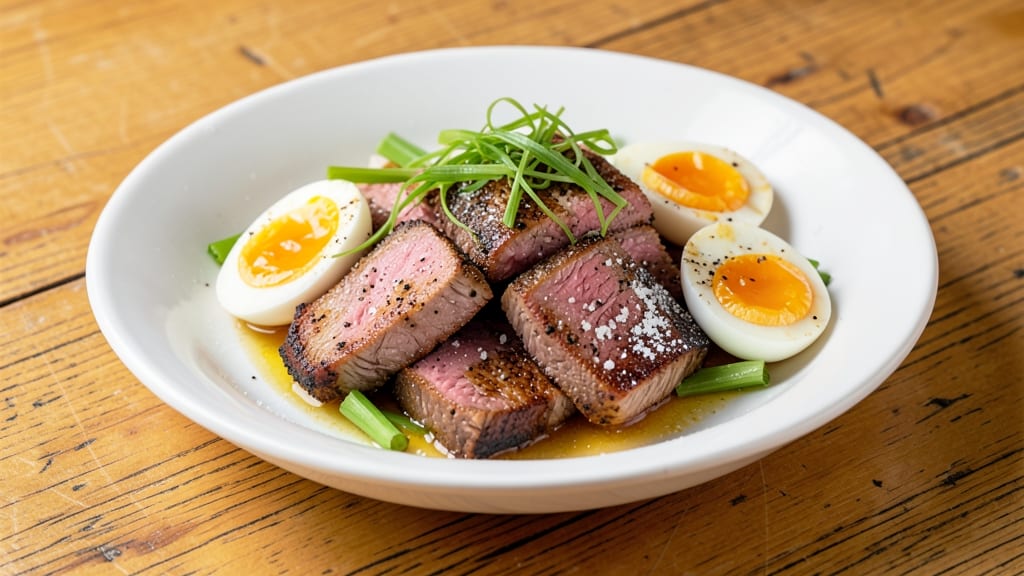
This Filipino tuna eggs recipe transforms simple ingredients into a crispy, golden masterpiece where tender tuna meets velvety runny yolks.
The secret lies in pan-frying the tuna until it develops a satisfying crunch, then topping it with perfectly cooked eggs—just like the classic tuna casserole you’d find in Filipino merienda (afternoon snacks).
What makes this dish special is the balance of textures: crispy tuna, creamy eggs, and the subtle tang of vinegar or soy sauce that ties everything together.
The beauty of this recipe is its adaptability—whether you prefer your tuna grilled, pan-fried, or even canned (drained and flaked), the technique remains the same. The eggs are the star, cooked to a runny yolk that oozes into the crispy tuna, creating a dish that’s both comforting and elegant.
Serve it with steamed rice, a side of atchara (pickled papaya), or a simple tomato-onion salad for a full Filipino-inspired meal.
What you’ll achieve is a dish that’s crispy on the outside, tender on the inside, and packed with the kind of flavor that makes you crave more.
The aroma of sizzling tuna and the sight of golden eggs sliding onto the plate will have everyone at the table asking for seconds. This isn’t just breakfast—it’s a celebration of Filipino comfort food, simplified for modern kitchens.
Ready to master this dish? The process is straightforward, but the result is anything but ordinary. Let’s get started—your taste buds will thank you.
Ingredients for tuna with eggs recipe filipino
Nine simple ingredients that turn into crispy, golden tuna bites with perfect runny yolks.
| Ingredient | Amount | Notes |
|---|---|---|
| Fresh Tuna Steaks 🐟 | 1 ½ lb | Sushi-grade, 1-inch thick slices |
| Large Eggs 🥚 | 4 whole | Room temperature for best runny yolk |
| All-Purpose Flour 🌾 | ½ cup | For light coating |
| Butter 🧈 | ½ cup | Unsalted, melted for frying |
| Celery Stalks 🧅 | 4 whole | Cut into 2-inch pieces |
| Green Onions 🧅 | 4 whole | Thinly sliced for garnish |
| Canola Oil 🫒 | ¼ cup | For shallow frying |
| White Vinegar 💧 | 1 tbsp | Or soy sauce for umami |
| Salt 🧂 | 1 tsp | Kosher or sea salt |
| Black Pepper 🌶️ | ½ tsp | Freshly ground |
| Garlic Cloves 🧄 | 2 cloves | Minced for seasoning |
| Lemon Wedges 🍋 | 2 whole | For serving |
The tuna makes or breaks this dish—sushi-grade is non-negotiable for that clean, crispy texture. Costco or Whole Foods usually carry it pre-sliced, but if you're buying whole, ask for 1-inch cuts. Freshness matters: the tuna should smell like the ocean, not fishy. For celery, grab the crisp, vibrant stalks from the produce section—they should snap when bent. I always buy extra because they keep for 2 weeks in the fridge, perfect for quick snacks later. The eggs? Room temperature is key—cold eggs won't give you that perfect runny yolk.
No sushi-grade tuna? High-quality canned tuna (drained and flaked) works in a pinch, though texture won't be identical. Running short on celery? Substitute with water chestnuts or bell peppers—they add crunch without overpowering. Vinegar or soy sauce? Vinegar brightens the dish, while soy adds depth. Fresh garlic is ideal, but garlic powder at half the amount gets you close. For the butter, unsalted is best—you control the seasoning. And if you're feeling fancy, swap the green onions for chopped chives for a milder flavor.
Celery keeps best in the fridge, wrapped in a damp towel for up to 2 weeks. Tuna should be used within 2 days of purchase. The eggs? Use within 3 days for peak freshness. This dish reheats surprisingly well—just 5 minutes in a skillet over medium heat brings back that crispy texture. I always make a double batch because it disappears fast. Store leftovers in an airtight container for up to 3 days—though honestly, it's hard to resist eating it fresh.
Why You'll Love This Recipe
- One-Pan Magic: I swear by this recipe when I’m too tired to scrub pots—just sear the tuna, fry the eggs in the same pan, and toss everything with celery and flour. The butter pools into golden little pockets, and suddenly, dinner’s ready while I’m still wiping crumbs off the counter.
- Crispy-Creamy Obsession: That first bite? The flour-dusted tuna has this addictive crunch, while the eggs stay runny inside—like a sneaky, grown-up version of tuna casserole but better. Honestly, I’ve made it for friends who don’t even like fish, and they’re still asking for seconds.
- Lunchbox Hero: Between us, this is my go-to for meal prep. Pack the tuna and eggs cold the next day, and the flavors actually improve—the celery adds a fresh crunch, and the butter keeps it rich without getting soggy. My kids steal mine first, but I don’t blame them.
- Budget Ocean Feast: Fresh tuna might sound fancy, but a single steak stretches across two servings when paired with eggs and celery. I’ll be real: it’s cheaper than takeout, and the flour coating makes it feel like a restaurant dish without the markup. Plus, leftovers reheat like a dream.
Step-by-step instructions for Filipino tuna eggs
Here's how to create crispy celery bites with that perfect runny yolk center everyone loves.
Prepare the Tuna and Celery
Start by cutting the 1.5 lb fresh tuna steaks into 1-inch thick slices—about 4 slices total. Pat each slice dry with paper towels, then season both sides generously with 1 tsp salt and 0.5 tsp black pepper. This seasoning will create a flavorful crust while keeping the inside tender.
Next, cut the 4 whole celery stalks into 2-inch pieces. This size ensures they'll fry up crispy without burning. In a small bowl, whisk together 1 tbsp white vinegar, 2 cloves minced garlic, and a pinch of salt. Toss the celery pieces in this mixture and let them marinate for 10 minutes—this adds brightness and prevents bitterness during frying.
Fry the Celery Until Crispy
Heat 0.25 cup canola oil in a large skillet over medium-high heat until it shimmers but doesn't smoke. Add the marinated celery pieces in a single layer and fry for 3-4 minutes, stirring occasionally, until they turn a deep golden brown. You want them crispy but not burnt—remove them and drain on a paper towel-lined plate.
In the same skillet (no need to wipe it clean—those celery bits add flavor), melt 0.5 cup butter over medium heat. Add the seasoned tuna slices and cook for 2-3 minutes per side until they develop a golden crust. The tuna should be cooked through but still tender—overcooking will make it dry. Transfer the tuna to a warm plate and keep it covered while you prepare the eggs.
Make the Egg Mixture
Crack the 4 whole large eggs into a bowl and whisk them lightly—just until the yolks and whites are combined but not frothy. Add 0.5 cup all-purpose flour and whisk again until smooth. This creates a light, airy batter that will help the eggs cook evenly while keeping the yolks runny.
Return the skillet with the leftover butter to medium-low heat. Pour the egg mixture into the skillet, tilting it gently to spread evenly. Cook for 2-3 minutes until the edges set and the top looks slightly puffed but still slightly runny in the center. Here's the thing—you want that signature runny yolk, so don't overcook it.
Assemble and Serve
Slide the egg mixture onto a plate and let it rest for 1 minute. Then, gently cut it into 4 equal rectangles—each should be about 3 inches by 2 inches. Place one rectangle on each plate, top with a slice of tuna, and arrange 2 crispy celery pieces on top of the tuna.
Finish with thinly sliced green onions for freshness and serve immediately with 2 lemon wedges on the side. The lemon brightens the rich flavors, and the crispy celery adds texture that balances the creamy eggs and tender tuna. Enjoy while everything is warm—this dish is best served fresh!
Pro Tips For Making Tuna With Eggs Recipe Filipino
- CRISP THE TUNA FIRST: Sear the tuna steaks in a screaming-hot pan for 30 seconds per side before adding anything else—this locks in juices and gives that perfect crispy edge. I used to skip this, and the tuna always ended up dry or mushy. Trust me, the extra 30 seconds makes all the difference when the eggs hit later.
- DREDGE EGGS IN FLOUR: Lightly coat the whole eggs in flour before poaching them—it keeps the yolks intact and adds a subtle texture. My grandmother swore by this, and she was right: the eggs hold their shape better, and the sauce thickens just enough without extra effort.
- CHOP CELERY FINE: Dice the celery into tiny, even pieces—think rice-sized—not matchsticks. It cooks faster, blends into the sauce smoothly, and doesn’t turn to mush. I learned this the hard way after serving a dish where celery chunks were still crunchy while everything else was soft.
- USE COLD BUTTER: Take the butter straight from the fridge for frying—it heats up slower and gives you better control over the temperature. Sounds weird, but it works: no burnt flour, no scrambled eggs, just a rich, golden base. (Yes, even if you’re impatient like me.)
Essential equipment for perfect results
Skillet Essentials
You’ll need a large, heavy-bottomed skillet—I swear by my 12-inch cast iron from Lodge—to handle the crispy celery and tuna without scorching. Cast iron retains heat beautifully, ensuring even cooking.
If you don’t have cast iron, a stainless steel skillet (like All-Clad) works just as well. Avoid nonstick—it won’t give you that satisfying crust on the tuna or celery. 🔥
For frying, canola oil is my go-to because of its high smoke point, but vegetable or peanut oil also work. Use a thermometer (like the ThermoWorks Dot) to monitor oil temperature—aim for 350°F for the celery.
A slotted spoon helps drain excess oil after frying, keeping your dish crispy without greasiness. Pro tip: Keep a paper towel-lined plate nearby to drain fried ingredients immediately.
Egg Cooking Tools
The secret to perfect runny yolks lies in gentle heat control. A nonstick skillet (like Calphalon) is ideal for cooking the egg mixture—it prevents sticking while allowing the edges to set just enough.
If you’re using the same cast iron skillet, make sure it’s well-seasoned to avoid any sticking. A spatula with a flexible edge (like OXO Good Grips) helps spread the egg mixture evenly without tearing it.
For assembling, a sharp chef’s knife (I use Mercer Culinary) is essential for cutting the egg mixture into clean rectangles. A small offset spatula helps transfer the crispy celery and tuna onto the eggs without breaking them.
And don’t forget a plate warmer—it keeps your final dish warm while you plate everything. If you’re short on time, a clean, warm serving platter works in a pinch.
Prep and Storage Gear
Prep ahead with a sharp knife (like Victorinox Fibrox) for slicing tuna and celery efficiently. A cutting board (I love Teakha bamboo) prevents slipping and keeps your workspace clean.
For seasoning, a small bowl and whisk (like Kitchy) are perfect for mixing the vinegar-garlic marinade for the celery. A measuring spoon set ensures you add the right amount of salt, pepper, and vinegar—no guesswork here.
Storage is easy with airtight containers (like Rubbermaid Brilliance). Leftovers keep well for 3 days in the fridge, and reheating is a breeze in the same skillet over medium heat for 5 minutes.
For longer storage, freeze the tuna and egg mixture separately—just thaw overnight in the fridge before reheating. A microwave-safe plate can also work for quick reheats, though skillet reheating preserves texture best. 💪
Nutrition facts
Frequently asked questions
Can I use canned tuna instead of fresh?
Yes, you can! Drain and flake 1 (5 oz) can of high-quality tuna (like solid white albacore) and spread it evenly over the egg mixture before adding the celery. The texture won't be identical, but it still delivers that rich tuna flavor. For best results, add a pinch of salt and pepper to the flaked tuna to mimic the seasoning on fresh slices.
How do I get the eggs perfectly runny?
The key is low and slow heat. Cook the egg mixture on medium-low heat for exactly 2-3 minutes—the edges should set while the center remains slightly wobbly. Remove it from heat immediately and let it rest for 1 minute before cutting. Overcooking by even 30 seconds turns runny yolks into scrambled eggs!
What's the best way to reheat leftovers?
Reheat in a clean skillet over medium heat for 3-4 minutes to restore crispiness. For eggs, add a splash of water or milk to prevent drying. Microwaving works in a pinch (30 seconds), but textures suffer. Store leftovers in an airtight container for up to 3 days—though honestly, this dish disappears fast!
Can I make this vegetarian?
Swap the tuna for extra-firm tofu cut into slices (press and pan-fry until crispy) or champagne mushrooms (sautéed in butter). Keep the egg and celery components exactly the same—they're the stars of the show. The dish will still have that satisfying texture contrast you love.
Why does my celery turn bitter when frying?
Bitter celery usually means it wasn't properly marinated. Let the celery soak in the vinegar-garlic mix for at least 10 minutes before frying—this neutralizes enzymes that cause bitterness. Also, use fresh, crisp celery (the stalks should snap when bent). If you're still getting bitterness, try adding 1 tsp sugar to the marinade to balance flavors.