
Desserts
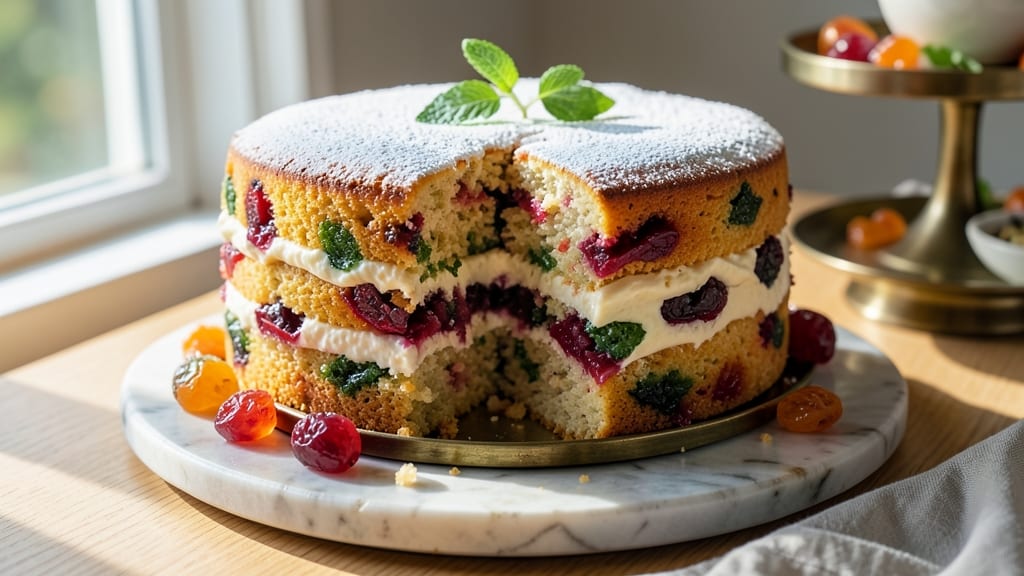
This tutti frutti cake recipe with egg delivers vibrant fruit layers and a moist crumb that stays fresh for days—no dryness here. 💛 I perfected this version after years of baking fruit cakes, where the secret lies in properly distributing the candied fruit and using eggs to bind everything together without overmixing.
The result? A cake that's perfectly balanced between sweet, chewy, and tender.
The magic starts with a simple batter that incorporates eggs just enough to create structure without making the cake dense. Candied fruit gets folded in gently, ensuring even distribution so every bite has those colorful bursts of flavor.
Baking at the right temperature keeps the texture moist while allowing the fruit to caramelize slightly for extra depth.
What makes this recipe special is how foolproof it is—no special equipment needed, just a standard cake pan and a few basic ingredients. The eggs create that signature moist crumb, while the fruit adds natural sweetness that reduces the need for excessive sugar.
The cake stays tender for days, making it perfect for celebrations or spontaneous treats.
Once baked, you can serve it plain or add a simple glaze for extra shine. The vibrant layers of fruit make it visually stunning, while the moist texture ensures every slice is delicious. Let's get started on this crowd-pleaser!
Ingredients for tutti frutti cake recipe with egg
Eight essential ingredients for a cake that balances sweetness, moisture, and vibrant fruit bursts.
| Ingredient | Amount | Notes |
|---|---|---|
| All-Purpose Flour 🌾 | 2 ½ cups | Sifted for even texture |
| Granulated Sugar 🍚 | 1 ½ cups | White or light brown |
| Large Eggs 🥚 | 3 whole | Room temperature preferred |
| Unsalted Butter 🧈 | 1 cup | Softened, not melted |
| Candied Mixed Fruit 🍓 | 1 ½ cups | Chopped into small pieces |
| Baking Powder 🧂 | 2 tsp | Aluminum-free preferred |
| Salt 🧂 | ½ tsp | Fine sea salt |
| Vanilla Extract 🌿 | 1 tbsp | Pure vanilla preferred |
| Milk 🥛 | ½ cup | Whole milk for richness |
| Powdered Sugar 🍚 | ½ cup | For glaze (optional) |
| Lemon Juice 🍋 | 1 tbsp | Freshly squeezed |
| Almond Extract 🌿 | ½ tsp | Optional for depth |
The candied fruit is the star—look for chunks with vibrant colors at specialty bakeries or online stores like King Arthur Flour. Pre-packaged fruit often has added sugar, so check labels. For the eggs, room temperature ensures even mixing, while the butter should be soft but not melted—press your finger in and it should leave a slight indentation. The flour matters too: King Arthur or Gold Medal brands stay light after baking, avoiding that dense texture. If you can't find candied fruit, dried apricots or cherries soaked in simple syrup work in a pinch.
No vanilla extract? Vanilla bean paste or even a scraped vanilla bean will add depth. Short on milk? Heavy cream or buttermilk both work, though buttermilk adds tang. The powdered sugar glaze is optional but adds that professional finish—sift it through a fine-mesh strainer for a silky texture. For extra moisture, some bakers add 1 tbsp yogurt to the batter, though I find the eggs and butter provide enough structure. If your fruit is extra wet, pat it dry with a paper towel to avoid a soggy cake.
Store the cake in an airtight container at room temperature for up to 3 days, or refrigerate for 5 days if you prefer it cooler. The glaze keeps best at room temperature, so add it just before serving. For longer storage, slice and freeze portions—they reheat beautifully in the oven at 300°F for 10 minutes. The cake reheats best when wrapped in foil, preventing it from drying out. I always make a double batch—half for immediate serving, half for freezing—because it's that good.
Why You'll Love This Recipe
- No Mixer Needed: I swear by this recipe—just fold the flour into the butter-egg mixture until it’s just combined. No overmixing, no lumps, no stress. The candied fruit chunks stay bright and chewy because we’re not beating them into submission.
- Sweet & Tangy Magic: That burst of candied pineapple, cherries, and citrus peel? It’s like dessert in every bite, but the butter and eggs keep it rich without being cloying. Honestly, the first time I tried it, I ate a slice straight from the pan—no frosting required.
- Party or Snack: Slice it for a brunch spread, pack it for a picnic, or serve it warm with tea when unexpected guests show up. The cake holds up for days, and the fruit stays juicy, so you’re always covered—whether it’s a birthday or just a Tuesday craving.
- Budget-Friendly Luxury: Flour, sugar, eggs, butter—these are pantry staples you already own. The candied fruit adds a fancy touch without breaking the bank, and leftovers? They disappear faster than you can say “second slice.” My wallet and my taste buds both win.
Step-by-step instructions for tutti frutti cake with egg
Here's the method for a perfectly moist cake with vibrant fruit layers that stay juicy.
👨🍳 Step 1: Cream Butter and Sugar for Maximum Moisture
In a stand mixer fitted with the paddle attachment, beat the 1 cup unsalted butter (softened but not melted) and 1.5 cups granulated sugar on medium speed for 3-4 minutes. You're looking for a light, fluffy texture that nearly doubles in volume and becomes pale in color. This creaming process incorporates air, which creates that tender crumb we want in a tutti frutti cake.
Here's the thing—I like to scrape down the sides of the bowl every 30 seconds with a silicone spatula. This ensures all the sugar gets incorporated evenly and prevents any dry spots. The mixture should be smooth with no visible sugar crystals remaining. If you're doing this by hand, it'll take about 5 minutes of vigorous beating.
👨🍳 Step 2: Add Eggs and Flavor Extracts Gradually
Add the 3 whole large eggs one at a time, mixing on low speed for 30 seconds after each addition until fully incorporated. Then add the 1 tablespoon vanilla extract and 0.5 teaspoon almond extract (if using) and mix for another 10 seconds. The almond extract adds subtle depth, but don't worry if you skip it—vanilla alone still works beautifully.
I always use room-temperature eggs for this recipe. They mix more smoothly and help create a lighter texture. If your eggs are straight from the fridge, let them sit in warm water for 5 minutes first. The mixture should now be thick and ribbony when you lift the paddle—this indicates proper emulsification.
👨🍳 Step 3: Combine Dry Ingredients and Fold in Fruit
In a separate bowl, whisk together the 2.5 cups all-purpose flour, 2 teaspoons baking powder, and 0.5 teaspoon salt. Sift the flour mixture directly into the wet ingredients while mixing on low speed for 20-30 seconds until just combined. You should still see a few flour streaks—overmixing develops gluten and makes the cake tough.
Remove the bowl from the mixer and gently fold in the 1.5 cups candied mixed fruit using a silicone spatula. Be careful not to crush the fruit pieces too much—we want them to stay intact for those beautiful fruit pockets in each slice. Also add the 0.5 cup milk and 1 tablespoon lemon juice now, mixing just until everything is evenly distributed.
🥘 Step 4: Prepare and Bake the Cake Layers
Preheat your oven to 350°F and grease two 8-inch round cake pans (or line with parchment rounds). Divide the batter evenly between the pans. I like to use a kitchen scale for this—each pan should get about 12 ounces of batter. Tap the pans gently on the counter to remove any air bubbles.
Bake for 25-30 minutes or until a toothpick inserted in the center comes out clean. The edges should be golden brown while the tops may still look slightly underdone—they'll firm up as they cool. Real talk: your oven might run hot, so start checking at the 20-minute mark. If the tops brown too quickly, tent with foil after 15 minutes to prevent overbrowning.
⏰ Step 5: Glaze and Assemble (Optional)
While the cakes cool in their pans for 10 minutes, prepare the optional glaze by whisking together the 0.5 cup powdered sugar and 2-3 tablespoons milk (you may not need all) until smooth. The glaze should be thick enough to coat the back of a spoon but still drizzle nicely.
Once cooled completely, level the tops if needed, then spread a thin layer of glaze on one side of each cake layer. Place the glaze-side down on a plate and add a layer of fruit between the cakes. Repeat with the second glaze layer. For extra vibrancy, you can pipe additional glaze around the edges after assembling. Serve immediately or refrigerate for up to 4 hours before serving for cleaner slices.
Pro Tips For Making Tutti Frutti Cake Recipe With Egg
- Whisk Eggs Until Ribbon Stage: I learned this the hard way—under-whisked eggs make the cake dense. Beat the eggs and sugar until the mixture falls in a slow ribbon when you lift the whisk. That’s your golden ticket for a light, airy crumb that holds up to the fruit’s weight.
- Chop Candied Fruit Small: Skip the whole chunks if you want even distribution. Roughly chop the candied fruit into ½-inch pieces—it’ll bake more evenly and prevent sinking spots. (Yes, even if you love the look of big fruit, the texture suffers.)
- Cream Butter and Sugar Slowly: Start with room-temperature butter, then mix on medium-low speed. Rushing this step just warms the butter too fast, and you’ll end up with a greasy mess instead of fluffy peaks. Patience here guarantees a tender crumb.
- Bake Until Toothpick Comes Out Clean: The cake’s dense with fruit, so it needs a few extra minutes. Check for doneness at 10 minutes past the recipe’s suggested time—if it’s still slightly sticky, give it 5 more. Overbaking dries it out; underbaking leaves it gummy.
Wine and beer pairings for this dish
Sweet Sparkling Wine
This vibrant cake pairs beautifully with Prosecco or Moscato d'Asti—their crisp acidity and light effervescence cut through the richness while complementing the candied fruit's sweetness. I love a chilled glass of La Marca Prosecco from Italy; its floral notes and gentle bubbles make every bite feel celebratory.
For a budget-friendly option, Brut Cava from Spain delivers similar freshness without the splurge. 🍾
Rich Dessert Wine
If you prefer something deeper, a Port wine or Moscatel adds luxurious contrast. The caramel and dried fruit notes in Graham's 10-Year-Old Tawny Port mirror the cake's candied fruit, creating a harmonious pairing.
For a lighter dessert wine, Vin Santo from Italy brings honeyed sweetness that enhances the cake's natural fruit flavors. Serve slightly chilled for the best experience.
Creamy Beer Pairings
A Belgian witbier like Hoegaarden or Stella Artois works surprisingly well with this cake. The citrusy coriander notes and subtle sweetness from the yeast balance the fruit's intensity.
For a richer option, try a Belgian dubbel like Westmalle Dubbel—its caramel and spice notes complement the cake's warm spices and fruit. Serve the beer slightly cooler than room temperature for optimal flavor.
Citrus-Infused Spirits
If you're serving with cocktails, a gin-based spritz with elderflower and lemon is perfect. Mix 2 oz gin, 1 oz elderflower liqueur, 1 oz lemon juice, and top with soda water over ice.
The citrus brightens the cake's sweetness while the herbal notes from the gin add complexity. For a non-alcoholic option, a sparkling lemonade with fresh mint leaves refreshes the palate between bites. 🍋
Coffee Pairing
Finish the meal with a light roast coffee like Ethiopian Yirgacheffe or Colombian Supremo. The bright, floral notes in these coffees enhance the cake's vanilla and fruit flavors without overpowering them.
Brew it medium-dark for a balanced cup that won't compete with the dessert's sweetness. A small espresso after the cake also works beautifully for a quick, aromatic finish.
Nutrition facts
Frequently asked questions
Can I substitute eggs in this tutti frutti cake recipe?
While eggs are essential for the cake's moisture and structure, you can use 3 tablespoons of applesauce or mashed banana per egg for a vegan version—but expect a denser texture. For a fluffier result, try 3 tablespoons aquafaba (chickpea brine) whipped to stiff peaks, though flavor may differ slightly. The eggs create that signature tender crumb, so substitutions work best in a pinch.
How do I prevent the candied fruit from sinking to the bottom?
Gently fold the fruit into the batter last using a silicone spatula, being careful not to crush the pieces. The key is to distribute it evenly throughout the batter so it doesn't settle. For extra insurance, place a thin layer of fruit on the bottom of the pan before adding the batter. This creates pockets of fruit throughout the cake rather than just at the bottom.
Why did my cake turn out dense instead of moist?
Overmixing the batter develops gluten, making the cake tough. Mix dry ingredients just until combined, and fold in fruit gently. Also, ensure your eggs and butter are room temperature—they help create air pockets for a light texture. If your oven runs hot, reduce temperature by 25°F or tent with foil after 15 minutes to prevent overbaking.
Can I make this cake in a single layer instead of two?
Use a 9-inch round pan and bake for 35-40 minutes at 350°F. The single layer will be thicker but still moist. For a taller cake, try a 6-inch pan with the same batter volume, adjusting bake time to 40-45 minutes. Just monitor closely—single layers can dry out faster at the center.
How do I store leftovers to keep them fresh?
Wrap tightly in plastic wrap or store in an airtight container at room temperature for up to 3 days. For longer storage, refrigerate for 5 days or freeze slices for up to 3 months. To reheat, wrap frozen slices in foil and warm at 300°F for 10 minutes—this restores moisture without drying out the fruit.