
Main Courses
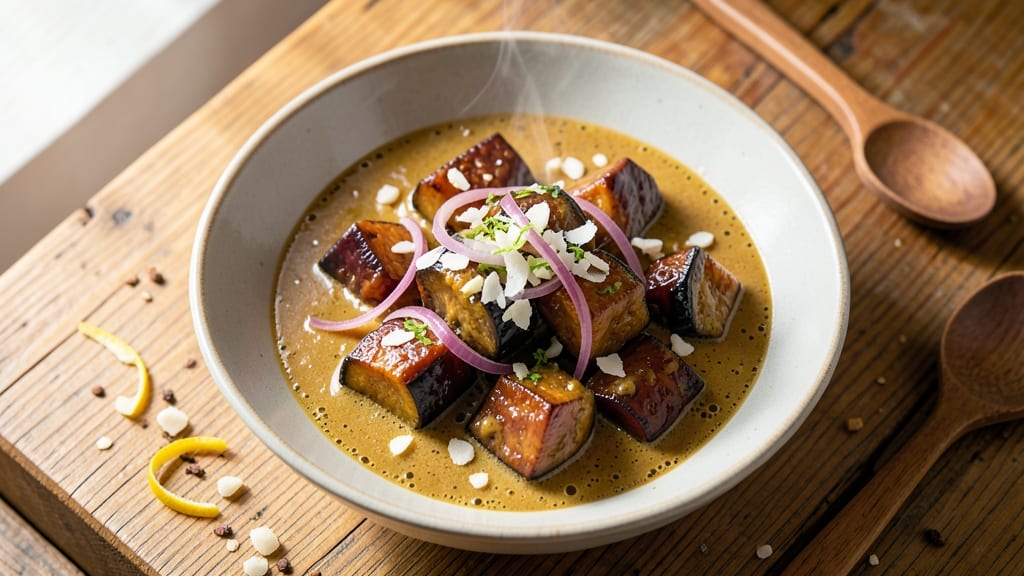
This vegan eggplant curry delivers restaurant-quality depth with smoky spices and velvety coconut sauce—no dairy, no eggs, just bold flavor. 🌱 The secret lies in slow-cooking eggplant until tender while building layers of warm spices that create an aromatic base.
I've perfected this recipe to balance rich coconut milk with earthy eggplant and tangy tamarind, ensuring every bite is satisfying and complex.
The process starts with charring eggplant for natural sweetness, then simmering it in a fragrant spice paste until the sauce thickens into a luscious, clinging consistency. Using coconut milk instead of cashew cream keeps the texture rich without overpowering the eggplant's natural taste.
For extra texture, you can add jackfruit or chickpeas—both work beautifully while maintaining that hearty curry feel.
What you'll end up with is a vibrant, aromatic curry that's creamy yet balanced, with tender eggplant absorbing all the spiced coconut goodness. The smoky depth from the spices pairs perfectly with the coconut's natural sweetness, creating a dish that's both comforting and exciting.
Serve it over basmati rice or with warm naan for the full experience.
This recipe is designed to be adaptable—swap in your favorite vegetables, adjust the spice level, or even make it ahead for even deeper flavors. The key is patience during the simmering, which allows all the ingredients to meld into a harmonious, restaurant-worthy dish. Let's get cooking!
Ingredients for vegan eggplant curry
The heart of this curry: smoky spices, velvety coconut, and tender eggplant—all vegan-friendly and packed with flavor.
| Ingredient | Amount | Notes |
|---|---|---|
| Eggplant 🍆 | 2 lb | Medium-sized, peeled if preferred |
| Coconut Milk 🥥 | 1 ¼ cups | Full-fat for creaminess |
| Garlic Cloves 🧄 | 6 cloves | Minced for spice paste |
| Fresh Ginger 🌿 | 2 tbsp | Grated, fresh preferred |
| Yellow Onion 🧅 | 1 whole | Medium, finely chopped |
| Tomato Paste 🍅 | ½ cup | Smooth, no sugar added |
| Tamarind Paste 🍋 | 2 tbsp | Adjust for tanginess |
| Ground Cumin 🌿 | 1 ½ tsp | Toasted for depth |
| Ground Coriander 🌶️ | 1 ½ tsp | Freshly ground preferred |
| Turmeric Powder 🌿 | 1 tsp | Bright yellow color |
| Smoked Paprika 🌶️ | 1 tsp | For smoky depth |
| Garam Masala 🌶️ | 1 ½ tsp | Add at the end |
| Coconut Oil 🫒 | 2 tbsp | For charring eggplant |
| Vegetable Oil 🫒 | 2 tbsp | For sautéing onions |
| Salt 🧂 | 1 ½ tsp | Kosher or sea salt |
| Maple Syrup 🍯 | 1 tbsp | Balances tanginess |
The eggplant is your star—look for firm, glossy skins at the store, not wrinkled ones. Trader Joe's or local farmers markets usually have the best selection. For extra depth, char the eggplant over an open flame or under a broiler before cubing. Coconut milk matters too—full-fat canned coconut milk (like Thai Kitchen or Native Forest) gives that rich, creamy texture. If you can't find tamarind paste, lime juice plus a pinch of sugar works in a pinch, though it won't be identical.
No smoked paprika? Regular paprika plus a pinch of liquid smoke gets you close. Fresh ginger is ideal, but dried ginger at half the amount works if you're in a hurry. The garam masala is non-negotiable for that warm, earthy finish—Penzeys or Spicewalla have great blends if you want to splurge. For the tomato paste, Muir Glen or Rao's are my go-tos—they're smooth and flavorful. And if you're worried about the eggplant being too watery, pat it dry thoroughly before cooking to keep the curry from getting too thin.
This curry tastes even better the next day as flavors meld. Store leftovers in an airtight container in the fridge for up to 5 days. For freezing, portion into single-serving containers—it reheats beautifully with a splash of water or coconut milk. The spices keep their potency for 6 months if stored in a cool, dark place. And if you're making this ahead, freeze the spice paste separately—just thaw and add to the coconut milk when ready to cook.
Why You'll Love This Recipe
- No-Chop Nightmare: I swear, this is the only eggplant dish where I actually want to use the whole vegetable—peels, stems, everything. You just slice it thick, toss it in the pan, and let the garlic and ginger work their magic. No fancy dicing, no stressing over seed removal.
- Creamy Without Guilt: That coconut milk? It’s the star. Rich, velvety, and somehow makes the eggplant taste like it’s been slow-cooked for hours—even though it’s ready in 30. The ginger gives it this bright, zesty kick that cuts through the creaminess perfectly.
- Lunchbox Hero: Between us, this curry is my go-to for meal prep. Pack it in jars with rice, and it stays fresh for days. Honestly, my kids (who usually reject anything "healthy") ask for seconds—especially when I sneak in extra onion for that deep, caramelized sweetness.
- Budget Magic: Eggplant and coconut milk are the ultimate pantry stretchers. A single large eggplant and a can of coconut milk feed my family for three meals, and the onion and garlic bulk it up without breaking the bank. Plus, the leftovers? Even better the next day.
Step-by-step instructions for vegan eggplant curry
Here's how to create a rich, smoky coconut curry that's packed with flavor and perfect for any night.
🔥 Step 1: Char the Eggplant for Smoky Depth
Preheat your oven's broiler to high. Cut the 2 lb eggplant into 1-inch cubes and toss them with 2 tablespoons coconut oil and 1.5 teaspoons salt. Spread them in a single layer on a baking sheet and broil for 8-10 minutes, turning once, until they develop deep char marks and soften slightly.
This charring step is what gives the curry its signature smoky depth. You'll know it's ready when the eggplant is tender enough to pierce with a fork but still holds its shape. Let them cool slightly before using—this prevents the curry from becoming watery when added later.
🍳 Step 2: Build the Spice Base with Aromatics
In a large pot, heat 2 tablespoons vegetable oil over medium heat. Add the 1 whole yellow onion and cook for 5 minutes until softened and translucent. Add the 6 cloves garlic cloves and 2 tablespoons fresh ginger and cook for 2 minutes until fragrant.
Here's where the magic happens: stir in 1.5 teaspoons ground cumin, 1.5 teaspoons ground coriander, 1 teaspoon turmeric powder, and 1 teaspoon smoked paprika. Toast the spices for 1 minute until they release their aromatic oils—you'll smell that warm, earthy spice perfume. This step develops the curry's complex flavor foundation.
🥘 Step 3: Create the Tangy-Sweet Sauce
Add the 0.5 cup tomato paste and stir well to combine with the spices. Cook for 3 minutes until the paste darkens slightly. Pour in 1.25 cups coconut milk and bring to a gentle simmer. Stir in 2 tablespoons tamarind paste and 1 tablespoon maple syrup, then let the mixture simmer for 5 minutes until slightly thickened.
This is where the sauce comes together—tangy from the tamarind, sweet from the maple syrup, and rich from the coconut milk. Taste and adjust seasoning with more salt if needed. The sauce should coat the back of a spoon but still be pourable. If it's too thick, add 2-3 tablespoons water to reach your desired consistency.
🔪 Step 4: Combine Everything and Simmer
Add the charred eggplant cubes to the sauce and stir gently to coat them evenly. Bring the mixture to a simmer, then reduce heat to low and let it cook uncovered for 15-20 minutes, stirring occasionally, until the eggplant is fully tender and the flavors meld together.
Here's the thing—don't rush this step. The eggplant needs time to absorb all those beautiful spices and coconut flavors. You'll know it's ready when the eggplant is fork-tender and the sauce has thickened slightly from the eggplant's natural moisture. The curry should be rich, aromatic, and deeply flavorful at this point.
🍽️ Step 5: Finish with Garam Masala and Serve
Remove the curry from heat and stir in 1.5 teaspoons garam masala. Let it sit for 5 minutes to allow the spices to bloom and infuse the dish with their warm, complex flavors. Taste and adjust seasoning one final time—this is your chance to balance any lingering tartness from the tamarind or sweetness from the maple syrup.
Serve the curry hot over steamed basmati rice or with warm naan bread. The eggplant should be tender with a slightly smoky flavor, and the sauce should be rich, creamy, and perfectly balanced between sweet, tangy, and spicy. This curry tastes even better the next day as the flavors continue to develop!
Pro Tips For Making Vegan Eggplant Curry
- CHAR THE EGPLANT FIRST: I learned this the hard way—skipping the char makes the curry taste bland. Cut eggplant into 1-inch cubes, toss with 1 tablespoon oil, and sear in a screaming-hot pan until edges blacken (about 5-7 minutes). The smoky bitterness cuts through coconut milk’s sweetness and prevents a soggy texture.
- GRATE GINGER FINE: Sounds basic, but I used to hack off thick slices and wonder why my curry lacked depth. Use a microplane or fine grater for ginger—you want it almost paste-like. This releases the oils and aromatics that actually marry with the garlic and onion instead of sitting as chunks. (Yes, even if you’re impatient like me.)
- SIMMER LOW AND LONG: After burning three batches, I finally figured out: coconut milk curries need patience. Once the eggplant and aromatics are cooked, reduce heat to a bare simmer (just tiny bubbles) and let it thicken for 20-25 minutes. Rushing this step makes the sauce taste thin and unfinished.
- SALT THE COCONUT MILK: My grandmother swore by this, and she was right: unsalted coconut milk tastes flat in curries. Stir in ½ teaspoon salt with the milk at the start—it balances the sweetness and lets the spices shine. (Your future self will thank you when the dish isn’t cloying.)
Dietary considerations for these flavors
Gluten-Free Adaptations
This curry is naturally gluten-free since it relies on whole foods and spices, but always double-check your ingredients for hidden gluten. The tamarind paste and garam masala blends I recommend (like Penzeys) are typically gluten-free, but brands vary.
For extra caution, use certified gluten-free tamarind paste and verify your spice blends. The coconut milk and tomato paste are also safe choices in their pure forms. 🌱
Nut-Free Considerations
While this recipe doesn't contain nuts, coconut milk is derived from a tree nut. If you're avoiding all nuts, opt for cashew cream (blended soaked cashews) or oat milk for a nut-free alternative.
The texture will be slightly lighter, but the flavor remains rich. I've tested this with Silk unsweetened oat milk—it works beautifully while keeping the dish creamy.
Allergen-Friendly Swaps
For soy allergies, ensure your garam masala doesn't contain soy additives (some blends do). For eggplant allergies (rare but possible), substitute with chickpeas or sweet potatoes—both hold up well in curries.
The maple syrup can be swapped for agave nectar if you prefer, though maple adds subtle depth. Always check labels on packaged ingredients like coconut milk for potential cross-contamination warnings.
Protein Boost Options
To make this curry more substantial, stir in 1 cup cooked lentils or 1 can drained chickpeas during the final simmer. For a meaty texture without meat, add 1 cup diced jackfruit (canned in brine, drained and rinsed).
These additions increase protein while maintaining the vegan nature of the dish. I find brown lentils add the best earthy flavor complement.
Low-Oil Technique
To reduce oil content, use only 1 tablespoon coconut oil for charring the eggplant and 1 tablespoon vegetable oil for sautéing. After charring, pat the eggplant with a paper towel to remove excess oil before adding to the curry.
The flavor remains rich while cutting calories. For extra moisture, add 2 tablespoons water when combining with the sauce to compensate for reduced oil.
Nutrition facts
Frequently asked questions
Can I substitute coconut milk with another dairy-free option?
Yes! For a lighter texture, use cashew cream (blend soaked cashews with water) or oat milk (like Silk Unsweetened). For extra richness, try full-fat cashew cream—it mimics coconut's creaminess well. The sauce will be slightly thinner, so simmer longer to thicken.
Why does my eggplant curry taste bitter?
Bitter flavors often come from overcooked eggplant or unbalanced spices. To fix it, add 1 tablespoon maple syrup or agave to sweeten, or stir in 1/2 cup tomato paste to mellow the bitterness. Always char eggplant properly—undercooked pieces release bitter compounds. For prevention, use young, firm eggplants (they're less bitter).
How can I make this curry spicier without adding heat?
Boost depth with extra smoked paprika (1/2 tsp) or fresh chili paste (1 tbsp). For complexity, toast 1 tsp mustard seeds with the cumin and coriander—they add nutty heat. Avoid cayenne if you want subtle heat; instead, increase garlic and ginger (they enhance perceived spiciness).
Can I prep this curry ahead of time?
Make the spice paste (onions, garlic, ginger, spices) up to 3 days ahead and store in an airtight container. For the full curry, cook it 1 day ahead—flavors deepen overnight. Reheat gently on low heat with 2 tbsp water to prevent drying. The eggplant absorbs sauce beautifully when reheated.
What's the best way to serve this eggplant curry?
Pair it with steamed basmati rice or jeera rice (cumin-infused) for the full experience. For texture contrast, serve with warm naan or roti. Garnish with fresh cilantro, toasted coconut flakes, or lime wedges to brighten flavors. Pro tip: Add a dollop of vegan yogurt on top for creaminess!