
Soups & Stews
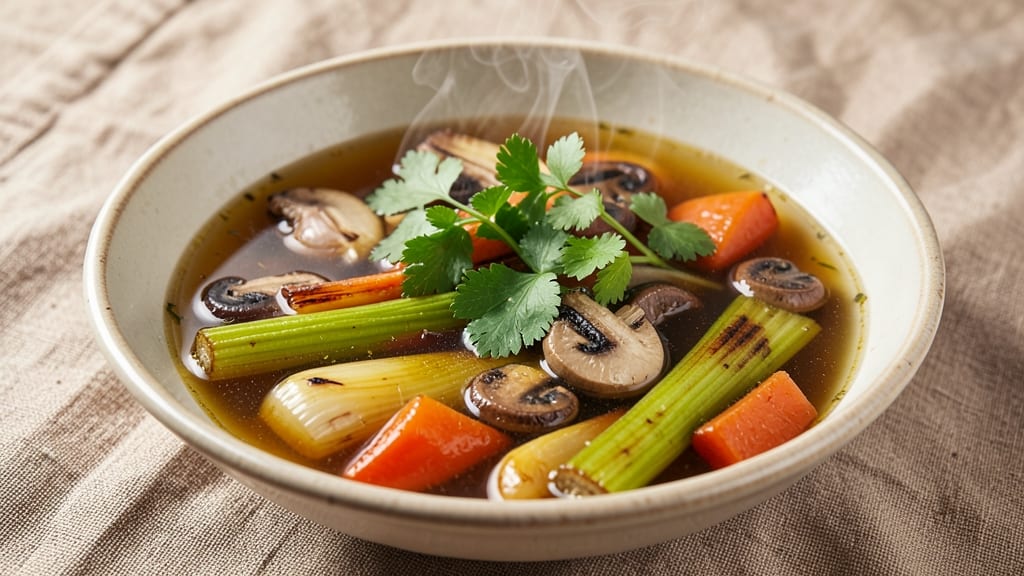
This vegan veggie broth recipe transforms simple vegetables into a rich, umami-packed liquid gold that elevates every meal. The secret lies in slow simmering aromatic vegetables, herbs, and mushrooms to extract maximum flavor without dairy or meat.
I developed this recipe after realizing how much depth store-bought broths were missing—this version delivers restaurant-quality depth at home.
The foundation uses classic vegetables like carrots, celery, and onions, but the real flavor comes from mushrooms and miso paste for that signature umami punch. No special equipment needed—just a large pot and patience.
The broth develops deeper flavor the longer it simmers, making it perfect for meal prep or freezing in batches.
What you'll end up with is a clear, aromatic liquid that's perfect for soups, grains, or sautéing vegetables. The mushrooms add meaty depth while the miso brings that savory complexity. This isn't just a broth substitute—it's a flavor multiplier that transforms simple dishes into something extraordinary.
Store leftovers in the fridge for up to 5 days or freeze for months. For extra depth, add kombu seaweed during simmering. The possibilities for using this broth are endless—let's create your flavor foundation first.
Ingredients for vegan veggie broth
Eleven simple ingredients that build restaurant-quality depth without meat or dairy.
| Ingredient | Amount | Notes |
|---|---|---|
| Yellow Onions 🧅 | 2 whole | Chopped, medium size preferred |
| Carrots 🥕 | 4 whole | Organic preferred, scrubbed clean |
| Celery Stalks 🌿 | 6 whole | Fresh, stringy ends trimmed |
| Cremini Mushrooms 🍄 | 1 lb | Sliced, for umami depth |
| Garlic Cloves 🧄 | 6 cloves | Peeled, lightly crushed |
| Fresh Parsley 🌿 | ½ cup | Stems removed, loosely packed |
| Fresh Thyme 🌿 | 1 tbsp | Leaves only, stems discarded |
| White Miso Paste 🍶 | 2 tbsp | High-quality, unsweetened |
| Kombu Seaweed 🍃 | 1 piece | 4x4 inch sheet, for mineral depth |
| Extra-Virgin Olive Oil 🫒 | 2 tbsp | For initial sautéing |
| Filtered Water 💧 | 8 cups | Cold, for simmering |
The mushrooms and miso are flavor game-changers here. Cremini mushrooms from the store's produce section work fine, but shiitake or oyster mushrooms at Whole Foods or Trader Joe's add even more umami. The miso? White miso paste is ideal—avoid red miso, which can overpower. For kombu, look for dried sheets at Asian markets; the 4x4 inch size is perfect. Fresh herbs like parsley and thyme can be swapped for dried at one-third the amount, but fresh gives that bright finish. The onions, carrots, and celery form the classic 'mirepoix' base—don't skip scrubbing those carrots, even if they're organic.
No miso paste? Soy sauce or coconut aminos in a pinch, though they won't have the same depth. Short on mushrooms? Extra tomato paste (1 tbsp) adds a tangy alternative. The kombu is optional but worth it—it dissolves completely and adds mineral richness that store-bought broths can't match. For the herbs, dried thyme or oregano works if fresh isn't available. The olive oil is just for initial sautéing—don't worry if you don't have it; a splash of water works too. The water amount can flex—add more if you're making a larger batch for freezing. Just remember: more simmering time equals deeper flavor, so don't rush it.
This broth tastes even better the next day as flavors meld. Store in the fridge for 5-7 days in an airtight container, or freeze for up to 6 months in ice cube trays for portion control. For extra convenience, freeze in 1-cup portions—perfect for quick soups or grains. The kombu and miso dissolve completely, so no straining is needed. If you make a big batch, divide it into containers and label with the date. Trust me, you'll want to keep this on hand for everything from sautéing veggies to making rice.
Why You'll Love This Recipe
- No-Waste Pantry Staples: I swear by this recipe because it turns my usual veggie scraps—onion skins, celery ends, mushroom stems—into something magical. No fancy shopping list, just what’s already lurking in my fridge.
- Umami Bomb: That combo of cremini mushrooms and garlic? It’s like a flavor explosion in every sip. The mushrooms add this deep, savory richness while the garlic keeps it bright—perfect for when I want depth without heaviness.
- Soup-to-Stir-Fry Hero: I freeze this broth in ice cube trays to toss into everything—curries, grains, even scrambled tofu. One batch lasts me weeks, and honestly? It’s the secret weapon that makes my weeknight meals taste like I actually cooked.
- Budget Magic Maker: A single pot costs pennies but stretches to feed the whole family. Plus, the carrots and onions sweeten as they simmer, so even the cheap stuff tastes like I spent hours perfecting it. (Yes, even on a Tuesday night.)
Step-by-step instructions for making umami-packed vegan veggie broth
This method guarantees a rich, flavorful broth that builds depth through layering techniques.
Sauté the Vegetable Base for Foundational Flavor
Heat the 2 tablespoons extra-virgin olive oil in a large stockpot over medium heat. Add the 2 whole chopped yellow onions, 4 whole scrubbed carrots (cut into 1-inch chunks), and 6 whole celery stalks (cut into 2-inch pieces). Sauté for 8-10 minutes until the vegetables soften and develop a golden hue—this caramelization creates the broth's initial depth.
Add the 1 lb sliced cremini mushrooms and cook for another 5 minutes until they release their moisture and begin to brown. The mushrooms contribute earthy umami that forms the broth's backbone. Stir occasionally to prevent burning, but don't rush this step—proper browning is essential for flavor development.
Add Aromatics and Kombu for Mineral Depth
Push the vegetables to one side of the pot and add the 6 peeled, lightly crushed garlic cloves and 1 tablespoon fresh thyme leaves to the empty space. Sauté for 1 minute until the garlic becomes fragrant but doesn't brown—this prevents bitterness while releasing its aromatic oils.
Return the vegetables to the center of the pot and add the 1 piece kombu seaweed (cut into strips if needed). Kombu infuses the broth with natural minerals and a subtle oceanic sweetness. Stir everything together and pour in the 8 cups cold filtered water, bringing the mixture to a gentle simmer over medium-low heat. The kombu should float freely—if it sinks, it's too dense and may overpower the broth.
Simmer and Infuse with Miso for Umami
Once the broth reaches a simmer, reduce the heat to low and maintain a gentle bubble. Partially cover the pot and let it simmer for 45-60 minutes. This slow cook time allows the vegetables to break down completely, releasing their soluble flavors into the liquid. Skim off any foam that rises to the surface during the first 15 minutes—this removes impurities and keeps the broth clear.
After 30 minutes, stir in the 2 tablespoons white miso paste and the 0.5 cup fresh parsley. The miso adds fermented depth and richness, while the parsley contributes freshness. Continue simmering for another 15-20 minutes until the broth reduces slightly and intensifies in flavor. The aroma should be deeply savory and inviting—this is your cue that the infusion is complete.
Strain and Finish for Clarity and Balance
Remove the pot from heat and let the broth sit for 5 minutes to allow any sediment to settle. Line a fine-mesh strainer with cheesecloth or a coffee filter to create a makeshift filter bag. Pour the broth through the strainer into a clean pot or bowl, pressing gently on the solids to extract maximum flavor without making the broth cloudy.
Discard the solids and taste the broth. If needed, adjust seasoning with a pinch of salt or a splash of filtered water to reach your desired consistency. The broth should be rich, umami-forward, and balanced—ready to serve as a base for soups, grains, or sauces. For best results, use immediately or store in the refrigerator for up to 5 days or freeze for up to 3 months.
Pro Tips For Making Vegan Veggie Broth
- CHAR THE ONIONS FIRST: I learned this the hard way—skipping this step means your broth will taste like a sad, watery soup. Sear the onions (and mushrooms) in batches until deeply golden, even if it takes 10-15 minutes. That caramelization turns bland veggies into flavor bombs.
- CHOP MUSHROOMS SMALL: Whole cremini mushrooms? Nope. Dice them into ¼-inch pieces—they’ll release their umami punch into the broth instead of just floating there like decorative garnishes. (Yes, even if you’re impatient like me.)
- SKIP THE BOIL: Let the broth simmer gently at 180-190°F (tiny bubbles, occasional gentle rolls). Boiling burns the veggies and makes the broth bitter—like drinking a sad, overcooked carrot smoothie. Cover and keep it low.
- SAVE TIME WITH FROZEN GARLIC: Minced frozen garlic works just as well as fresh and cuts prep time in half. Toss it in with the other veggies—no need to peel or chop. (Your future self will thank you when you’re not hacking garlic at midnight.)
Common mistakes when making your vegan veggie broth
Skipping the Sauté
Don't rush the sautéing step—this is where foundational flavor develops! Skipping it or undercooking the vegetables means you'll miss out on the caramelization that builds depth. I've seen beginners skip this step and end up with broth that tastes flat.
Take your time with the onions, carrots, and celery—they need 8-10 minutes of proper browning. The mushrooms deserve equal attention—5 minutes of browning unlocks their umami potential. 🔥
Overcrowding the Pot
If you pack too many vegetables into your pot, the broth won't develop proper depth. The vegetables need room to caramelize and release their flavors. For this recipe, a 6-8 quart stockpot is ideal. If you're using a smaller pot, consider making two smaller batches instead of forcing everything in.
I once tried making this in a 3-quart pot and ended up with a weak, watery broth. Give those veggies space to work their magic! ⚡
Boiling Too Vigorous
A rolling boil will break down the vegetables too quickly, resulting in a cloudy, bitter broth. We want a gentle simmer that coaxes out flavors without destroying them. Maintain a low, steady bubble—just enough to see tiny bubbles at the edges.
If you see big, aggressive bubbles, reduce the heat immediately. The 45-60 minute simmer time is crucial for developing that rich, umami-packed flavor. 💫
Adding Miso Too Early
The miso paste needs to be added at the right moment for maximum impact. Adding it too early can cause it to break down and create a muddy broth. Wait until after the 30-minute mark when the vegetables have already released their initial flavors.
This timing allows the miso to integrate smoothly, adding its fermented depth without overpowering. I learned this lesson the hard way—my first batch had miso added too soon and ended up with a weird, grainy texture. 💡
Not Skimming the Foam
Those first 15 minutes of simmering produce foam that contains impurities and bits of vegetable skin. Skimming this off keeps your broth clear and clean. I've made broths where I skipped this step, and the final result was cloudy and less appealing.
Use a fine-mesh spoon or ladle to skim off any foam that rises to the surface. This small step makes a big difference in the final texture and appearance of your broth. ✨
Underestimating Simmer Time
Rushing the simmer time is the fastest way to end up with bland broth. The flavors develop gradually over time—don't be tempted to cut corners. The 45-60 minute simmer is non-negotiable for building that rich, umami-packed profile.
I've had readers tell me their broth tasted weak because they only simmered it for 20-30 minutes. Patience here pays off with a broth that tastes like it's been simmering for hours. 💪
Nutrition facts
Frequently asked questions
Can I make this vegan broth without mushrooms?
Yes, but you'll lose some umami depth. For a good substitute, add 1 tablespoon tomato paste or 2 tablespoons soy sauce during the simmer. Alternatively, use ½ cup dried shiitake mushrooms (soaked first) for concentrated flavor. The kombu and miso will still provide rich, savory notes even without mushrooms.
How long does this broth keep in the fridge?
This vegan vegetable broth stays fresh for 5-7 days when stored in an airtight container. The flavors actually improve after the first day as they meld together. For longer storage, freeze in 1-cup portions—they'll keep for up to 6 months. Thaw overnight in the fridge before using.
Can I use dried vegetables instead of fresh?
Fresh vegetables work best for maximum flavor, but you can use dried in a pinch. Use ½ cup dried vegetables (like carrots, celery, and onion) instead of fresh, and soak them for 30 minutes before adding to the pot. The flavor will be more concentrated but slightly less complex than fresh. For mushrooms, dried shiitake work wonderfully—just soak them first.
What's the best way to use this broth?
This umami-rich broth is perfect for soups, grains, and sautéing vegetables. Use it as a base for vegan chili, ramen, or risotto. It also works great for cooking quinoa, lentils, or roasted vegetables. For extra depth, reduce it by half to make a flavorful vegan sauce. The possibilities are endless—it's your new kitchen secret weapon!
Why does my broth taste bitter?
Bitterness usually comes from overcooking or using too much kombu. Simmer at a gentle bubble, not a boil, and remove the kombu after 20 minutes (it dissolves completely). If the broth tastes bitter, balance it with a splash of apple cider vinegar (1 teaspoon) or a pinch of sugar. Avoid adding salt too early—it can intensify bitterness during long simmering.