
Breakfast & Brunch
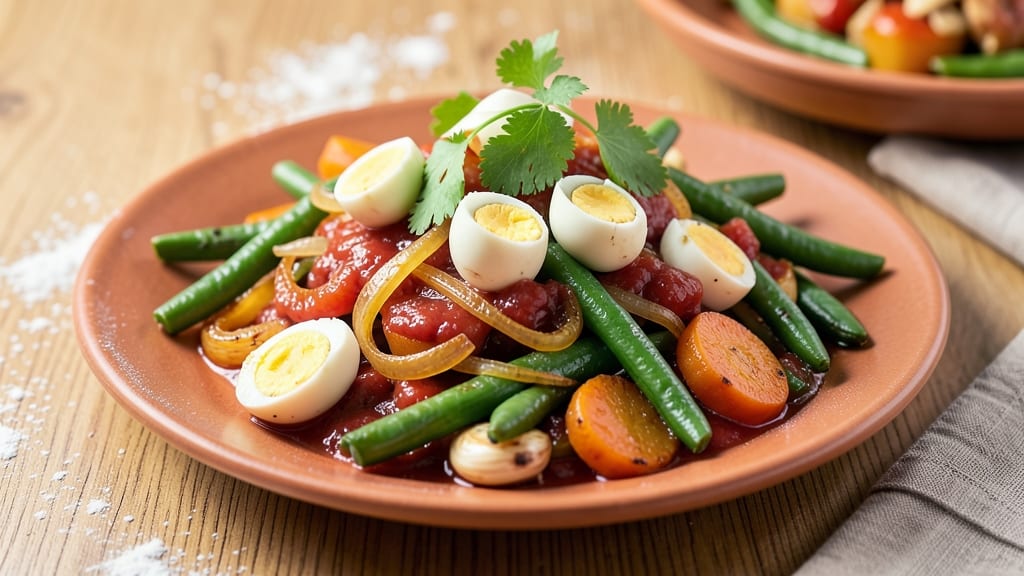
This Panlasang Pinoy vegetables with quail eggs recipe transforms simple ingredients into a restaurant-worthy dish that balances tender vegetables, soft-boiled eggs, and a rich tomato gravy.
The secret lies in the slow simmering of garlic, onions, and tomatoes until they develop a deep, savory sweetness—just like my host mother Claudine taught me years ago. Filipino home cooks know this technique well, and it’s what turns a simple vegetable dish into something truly special.
The beauty of this recipe is its flexibility—use whatever seasonal vegetables you have on hand, from green beans and carrots to eggplant or bell peppers. The quail eggs add a delicate protein element that stays perfectly soft-boiled, with just a hint of runny yolk to tie everything together.
A splash of soy sauce and vinegar at the end brightens the dish, cutting through the richness of the gravy while keeping it authentically Filipino.
What you’ll end up with is a dish that’s hearty enough for breakfast or brunch but simple enough for a weeknight dinner. The vegetables stay crisp-tender, the eggs are just set enough to hold their shape, and the gravy coats everything in a flavorful embrace.
It’s the kind of meal that feels comforting yet vibrant—a perfect balance of home cooking and restaurant-quality results.
This recipe works best with fresh, firm vegetables and quail eggs at room temperature for even cooking. If you’re using store-bought quail eggs, check the sell-by date and gently tap them on a hard surface to ensure they’re fresh.
The dish reheats beautifully, so it’s ideal for meal prep or serving leftovers the next day. Let’s make this dish!
Ingredients for vegetables with quail eggs recipe panlasang pinoy
Seasonal vegetables meet delicate quail eggs in this Filipino classic, where slow-simmered tomato gravy creates restaurant-worthy harmony.
| Ingredient | Amount | Notes |
|---|---|---|
| Quail Eggs 🥚 | 12 whole | Room temperature for even cooking |
| Green Beans 🌱 | 1 ½ lb | Trimmed, crisp-tender cut |
| Carrots 🥕 | 1 ½ lb | Baby or whole, sliced into rounds |
| Yellow Onions 🧅 | 1 whole | Thinly sliced, medium size |
| Garlic Cloves 🧄 | 6 cloves | Minced, fresh preferred |
| Canned Tomato Sauce 🍅 | 14 ½ oz | San Marzano preferred, no added salt |
| Olive Oil 🫒 | ½ cup | Extra-virgin for richness |
| Soy Sauce 🍶 | 1 tbsp | Light or regular, no wheat |
| Cane Vinegar 🍋 | 1 tbsp | White or apple cider vinegar |
| Sugar 🍚 | 1 tsp | White granulated, balances acidity |
| Salt 🧂 | 1 ½ tsp | Diamond Crystal preferred |
| Black Pepper 🌶️ | ½ tsp | Freshly ground for best flavor |
| Fresh Thyme Leaves 🌿 | ¼ cup | Chopped, or 1 tsp dried |
The vegetables are the heart of this dish, so choose firm, fresh produce. Green beans should snap when bent, and carrots should be vibrant orange with no soft spots. Yellow onions work best when they're sweet and crisp—avoid the wilted ones at the back of the bin. For the tomato sauce, San Marzano cans from Italian markets or the specialty aisle at Whole Foods give the best flavor. If you can't find them, any high-quality canned tomatoes will do, just be sure to drain and crush them yourself for better texture. Quail eggs are seasonal, so check your local Asian market or specialty grocer—Trader Joe's often carries them. If you can't find quail eggs, substitute with 8 large chicken eggs, but reduce the cooking time by 2 minutes.
No soy sauce? Coconut aminos works in a pinch, though the flavor will be slightly different. Short on vinegar? Lemon juice at half the amount brightens the dish just as well. The thyme is key—if you don't have fresh, dried thyme at one-third the amount will work, but fresh is always better. For the tomato sauce, if you prefer a smoother texture, blend it first. The sugar balances the acidity in the vinegar, so don't skip it—it's what makes this dish authentically Filipino. Want more depth? Add a pinch of ground white pepper along with the black pepper for a more complex flavor profile. The garlic should be minced finely so it blends into the gravy without chunks.
This dish reheats beautifully—just add a splash of water or broth to loosen the gravy. Keeps for 3-4 days in the fridge, though the eggs are best eaten within 2 days for optimal texture. For meal prep, cook the vegetables and gravy ahead, then soft-boil the eggs fresh when ready to serve. The gravy freezes well for up to 3 months, so double the batch if you're planning to freeze portions. Store the quail eggs in their original carton in the fridge—they'll last about 1 week past their sell-by date if tapped and fresh. Fresh herbs like thyme should be wrapped in damp paper towels and stored in a sealed container to keep them vibrant longer.
Why You'll Love This Recipe
- One-Pan Magic: I swear by this recipe when I’m too tired to wash extra dishes. Just toss everything—green beans, carrots, onions, garlic—onto one pan, let the garlic caramelize until the kitchen smells like heaven, then crack those quail eggs right on top. Minimal chopping, zero fuss, and the eggs poach perfectly in their own steam.
- Umami Bomb: Between us, the secret’s in the garlic and onions—sautéed until they’re golden and sweet, not burnt. That deep, savory base makes the quail eggs taste like they’ve been slow-cooked all day, even though we’re talking 20 minutes. The green beans stay crisp, the carrots melt just enough, and the eggs? Rich, runny yolks that cut through everything like a dream.
- Lunchbox Hero: This is my go-to for packed lunches—cool it down, portion it into containers, and it stays fresh for days. My kids (and my husband) actually finish their veggies because the quail eggs make it feel like a treat, not a chore. Honestly, I’ve sent this to work meetings and had coworkers ask for the recipe. That’s how good it is.
- Budget Flex: Quail eggs are cheaper than chicken eggs, and the veggies stretch across multiple meals. Double the batch, store it in the fridge, and reheat it for breakfast (yes, really) or as a side for dinner. I’ve made this on a $5 grocery run when I was pinched for cash, and it still tasted like I’d spent an hour in the kitchen. Not the prettiest, but the taste makes up for it.
Step-by-step instructions for vegetables with quail eggs Panlasang Pinoy
This Filipino classic delivers tender vegetables in a rich tomato gravy, perfectly balanced with soft-boiled quail eggs.
Prepare the Vegetables for Even Cooking
Trim the 1.5 lb green beans by snapping off the ends and cutting into 2-inch pieces. For the 1.5 lb carrots, peel if desired and slice into ½-inch rounds for even cooking. Thinly slice the 1 whole yellow onion into ¼-inch strips—this ensures they soften quickly without turning mushy.
Mince the 6 cloves garlic cloves finely and set aside. Chop the 0.25 cup fresh thyme leaves into small pieces. The key here is uniform cutting—this guarantees all vegetables cook at the same rate in the rich tomato sauce. Keep all prepped ingredients in separate bowls until ready to use.
Sauté Aromatics and Build the Tomato Base
Heat 0.25 cup olive oil in a large, deep skillet over medium heat until shimmering. Add the sliced onions and cook for 3-4 minutes until they soften and begin to turn translucent. Add the minced garlic and stir for 30 seconds until fragrant—this prevents burning while developing flavor.
Pour in the 14.5 oz canned tomato sauce, then stir in the 1 tbsp soy sauce, 1 tbsp cane vinegar, 1 tsp sugar, 1.5 tsp salt, and 0.5 tsp black pepper. Bring to a gentle simmer and let cook uncovered for 8-10 minutes, stirring occasionally. The sauce should thicken slightly and develop a rich, balanced flavor—this is your foundation.
Add Vegetables and Simmer Until Tender
Add the green beans and carrots to the skillet, stirring to coat evenly in the tomato mixture. Reduce heat to medium-low and simmer for 12-15 minutes, stirring occasionally. You want the vegetables to soften but still retain a slight bite—crisp-tender is the goal here. The sauce should cling to them without being overly watery.
If the sauce becomes too thick, add 1-2 tablespoons of water to loosen it. The thyme leaves can be added now if desired, but I prefer to sprinkle them on top at the end for maximum aroma. Taste and adjust seasoning—this is where the dish comes together with perfect balance.
Soft-Boil the Quail Eggs
While the vegetables cook, prepare the 12 whole quail eggs by placing them in a small saucepan. Cover with cold water by 1 inch and bring to a gentle boil over medium heat. Once boiling, immediately reduce heat to low and simmer for exactly 4 minutes. This timing ensures the yolks remain runny while the whites set completely.
Transfer the eggs to an ice bath for 2 minutes to stop cooking. The eggs should be warm but not hot when you serve them. Peel carefully under running water if you prefer, though many enjoy them with the shell intact for easy handling. The contrast of the warm, creamy eggs against the rich tomato-vegetable mixture is what makes this dish special.
Combine and Serve Immediately
Return the skillet with vegetables to medium heat and stir in the 0.25 cup chopped fresh thyme leaves. Arrange the soft-boiled quail eggs on top of the vegetables or serve them on the side. The eggs should nestle into the sauce, absorbing its flavors while maintaining their creamy texture.
Serve immediately while hot, as the sauce thickens further off the heat. This dish is best enjoyed fresh, with the warm tomato gravy hugging the tender vegetables and soft-boiled eggs. Pair with steamed rice to soak up every last bit of flavor—each bite should deliver a perfect balance of sweet, tangy, and savory notes.
Pro Tips For Making Vegetables With Quail Eggs Recipe Panlasang Pinoy
- CRACK EGGS LAST: Hold off on adding quail eggs until the very end—even 30 seconds too early means they’ll overcook into rubbery blobs. Pop them in when the veggies are just starting to wilt, then cover the pan immediately to set them gently.
- CUT CARROTS UNIFORM: Slice carrots into even ½-inch rounds so they cook at the same pace as green beans. I learned this the hard way—uneven pieces mean some turn mushy while others stay crunchy.
- SWEAT ONIONS LOW: Don’t rush the onion step—cook them on medium-low for 5-6 minutes until translucent but not browned. This builds flavor without burning, and you’ll taste the difference in every bite.
- SALT THE WATER: If boiling green beans, add a pinch of salt to the water first—it keeps them vibrant and prevents bitterness. (Yes, even if you’re adding soy sauce later.)
Regional styles of vegetables with quail eggs recipe panlasang pinoy
Classic Filipino Style
This dish is a staple in Filipino home kitchens, where it's often served as a hearty breakfast or brunch. The key is balancing the rich tomato gravy with the delicate flavor of quail eggs and the natural sweetness of the vegetables.
In the Philippines, this dish is commonly called "Ginataang Gulay sa Itlog ng Puto"—the name reflects its humble origins but restaurant-worthy results.
I remember the first time I tried it at a local carinderia in Manila, where the sauce was so flavorful it made even the simplest vegetables taste special. 🌟
Visayan-Inspired Twist
In the Visayas region, this dish often includes banana heart (saba bananas) and string beans instead of green beans. The bananas add a subtle sweetness that pairs beautifully with the tangy tomato sauce.
For a Visayan-inspired version, substitute ½ cup sliced banana heart and 1 lb string beans for the green beans. The texture contrast between the tender bananas and crisp-tender vegetables creates a delightful bite. This variation is especially popular in Cebu, where fresh produce is abundant year-round.
Manila Urban Adaptation
In Manila, where ingredients are more varied and imported, you'll often find this dish with asparagus or zucchini instead of carrots. The urban adaptation also tends to use more garlic—sometimes up to 8 cloves—for a stronger aromatic base.
For a Manila-style twist, add ½ cup sliced asparagus and increase the garlic to 8 cloves. The city's fast-paced lifestyle means this dish is often prepped ahead and reheated, making it a go-to for busy weeknights.
The extra garlic adds depth, while the asparagus brings a fresh, slightly bitter note that cuts through the richness of the sauce.
Bicolano-Style Spicy Kick
In the Bicol region, this dish is often spiced with siling labuyo (Filipino chili peppers) for a fiery twist. For a Bicolano-inspired version, add 1-2 chopped siling labuyo peppers (or 1 tsp cayenne pepper) to the tomato sauce while simmering.
The heat balances the sweetness of the vegetables and the creaminess of the quail eggs, creating a dish that's both comforting and exciting. If you can't find siling labuyo, a pinch of ground annatto (achuete) adds a vibrant red color and earthy flavor that's characteristic of Bicolano cuisine.
This version is perfect for those who love a little heat with their meal! 🌶️
Modern Filipino-Fusion
For a contemporary take, swap the tomato sauce for a ginger-turmeric base and add coconut milk at the end for creaminess. This fusion version keeps the quail eggs and vegetables but infuses the dish with warm spices like ground turmeric and fresh ginger.
Start by sautéing 1 tbsp grated ginger and 1 tsp ground turmeric in the olive oil before adding the onions. After the vegetables are tender, stir in ½ cup coconut milk and let it simmer for 2-3 minutes to blend the flavors.
This modern adaptation is lighter yet equally flavorful, with a vibrant color that makes the dish look as good as it tastes.
Weekend Family Feast
In many Filipino households, this dish is a centerpiece for weekend gatherings, where it's served with steamed rice and a side of sinigang (sour tamarind soup). The quail eggs are often replaced with chicken eggs for larger servings, and the vegetables are chosen based on what's fresh from the garden.
For a family-style version, double the recipe and serve it in a large platter with extra sauce on the side.
The communal aspect of sharing from a single dish is a big part of what makes this recipe so special—it's not just about the food, but the experience of enjoying it together. 💛
Nutrition facts
Frequently asked questions
Can I substitute chicken eggs for quail eggs in this recipe?
Yes, but adjust the cooking time! Use 8 large chicken eggs instead of 12 quail eggs, and reduce the soft-boiling time by 2 minutes (to 2 minutes instead of 4 minutes). Chicken eggs are larger, so they'll need less time to reach the same soft-boiled texture. The flavor remains identical, just scaled up for portion size.
How do I prevent the vegetables from turning mushy?
Keep the heat at medium-low after adding vegetables and avoid overcrowding the pan. Stir occasionally to ensure even cooking. For extra tenderness without mushiness, blanch the green beans and carrots in boiling water for 1 minute before adding them to the sauce. This jumpstarts their cooking time while maintaining their structure.
Can I make this dish ahead of time?
Cook the vegetables and gravy up to 2 days ahead and store in an airtight container. Reheat gently on the stove with a splash of water or broth. For the eggs, soft-boil them fresh when ready to serve—this ensures they stay perfectly creamy. The sauce reheats beautifully, while the eggs add a fresh, warm element when plated.
What vegetables work best in this recipe?
Stick to firm, crisp vegetables that hold up well in sauces: green beans, carrots, asparagus, or zucchini. Avoid leafy greens like spinach—they'll wilt too quickly. For a Visayan twist, try banana heart (saba bananas) or string beans. The key is choosing vegetables with similar cooking times to maintain texture balance.
Why does my sauce taste too acidic?
The vinegar and tomatoes create a bright flavor, but if it's too sharp, balance it with more sugar (½ tsp at a time) or a pinch of salt. For a richer taste, add a splash of coconut milk (2 tbsp) at the end. If the sauce still tastes harsh, reduce the vinegar next time to ½ tbsp and increase the soy sauce to 1.5 tbsp for depth. Taste as you go!