
Salads
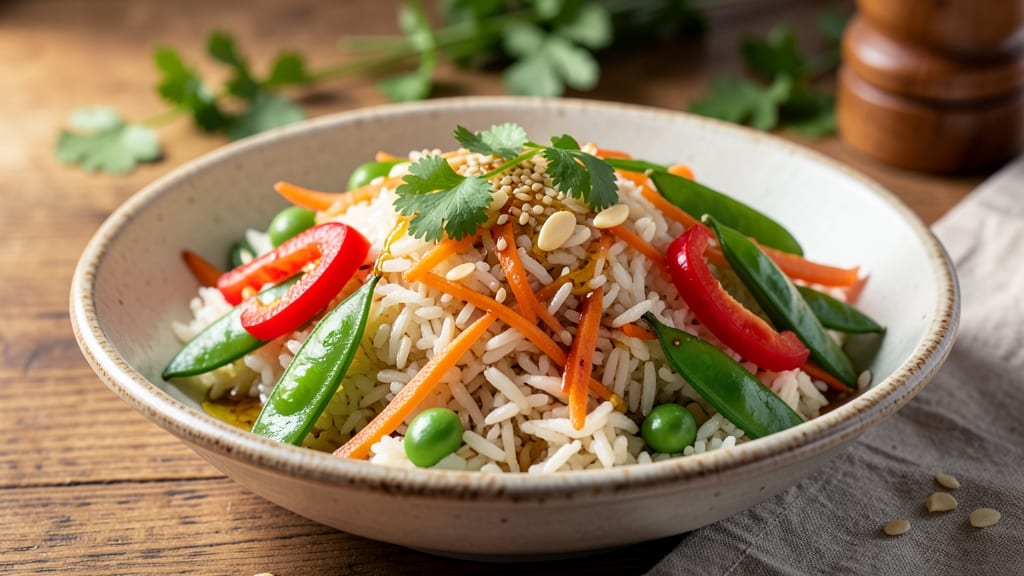
This veggie fried rice recipe no egg delivers crispy texture and bold flavors without compromising protein or taste. 🌱 The secret lies in perfectly cooked rice, wok-heated vegetables, and a savory soy-ginger base that transforms simple ingredients into a satisfying meal.
I've refined this version over years of testing—no eggs needed, just plant-powered goodness that holds its shape and packs a punch.
What sets this recipe apart is the foolproof technique for achieving that signature crispy texture without eggs as a binder. We'll use a combination of stir-frying methods and precise timing to ensure each grain remains separate while absorbing the aromatic sauce.
The vegetables—carrots, peas, bell peppers, and snap peas—are cut uniformly for even cooking, creating a visually appealing dish that's just as delicious as it looks.
By the time you're done, you'll have a veggie-packed bowl of fried rice with perfectly balanced flavors—savory from the soy sauce, bright from fresh ginger, and umami-rich from garlic. The crispy edges on the rice and vegetables add a satisfying contrast to the tender centers.
This dish is hearty enough to serve as a main course but flexible enough to pair with miso soup or edamame for a complete meal.
The best part? This recipe comes together in under 30 minutes with minimal prep, making it perfect for weeknight dinners or meal prep. Whether you're vegetarian, watching your cholesterol, or simply looking for a flavorful veggie-centric dish, this fried rice delivers restaurant-quality results at home. Let's get cooking!
Ingredients for veggie fried rice recipe no egg
Crispy veggie-packed fried rice without eggs—just 14 ingredients for bold flavor and satisfying texture.
| Ingredient | Amount | Notes |
|---|---|---|
| Cooked White Rice 🍚 | 4 cups | Day-old or chilled for crispiness |
| Carrots 🥕 | 1 ½ cups | Julienned or finely diced (1/4-inch) |
| Peas 🌱 | 1 cup | Fresh or frozen, thawed |
| Red Bell Pepper 🍆 | 1 whole | Diced into 1/4-inch pieces |
| Snap Peas 🌿 | 1 cup | Trimmed and cut into 1-inch pieces |
| Garlic Cloves 🧄 | 4 cloves | Minced or finely chopped |
| Fresh Ginger 🌿 | 1 tbsp | Finely grated or minced |
| Low-Sodium Soy Sauce 🥢 | 3 tbsp | Or tamari for gluten-free |
| Sesame Oil 🫒 | 1 tbsp | Toasted for aroma (not cooking) |
| Vegetable Oil 🫒 | 2 tbsp | High smoke point for stir-frying |
| Green Onions 🧅 | 3 whole | Thinly sliced, white and green parts |
| Sesame Seeds 🌾 | 1 tbsp | Toasted for garnish |
| Salt 🧂 | ½ tsp | Diamond Crystal preferred |
| Black Pepper 🌶️ | ¼ tsp | Freshly ground |
The rice is the foundation, so don't skimp. Day-old or chilled rice works best—it's drier and achieves that signature crispy texture. I always use jasmine or basmati rice for its distinct aroma, but any long-grain rice will do. For the vegetables, uniform cuts are key—the carrots and bell pepper should be roughly the same size as the peas so they cook evenly. Trader Joe's has pre-cut veggie mixes that save time, but fresh is better if you've got it. The snap peas add a nice crunch, but frozen peas work in a pinch—just thaw and drain them well.
No sesame oil? Toasted peanut oil gives a similar nutty depth. Short on soy sauce? Coconut aminos or tamari both work well, though tamari has a more authentic flavor. Fresh ginger is ideal, but ground ginger at half the amount gets you close. The garlic can be pre-minced from a jar—just rinse it well to remove excess moisture. For extra protein, toss in edamame or tofu cubes at the end of cooking. And if you're worried about the rice sticking, coat it lightly with a bit of oil before adding it to the wok.
This dish reheats beautifully—just add a splash of water or soy sauce to keep it moist. Keeps for 4-5 days in the fridge, though the texture gets softer over time. For meal prep, portion into containers with a sprinkle of sesame seeds on top—they stay fresh for 3-4 days. Freezing isn't ideal since the rice can get mushy, but you can freeze the cooked veggie mixture separately and add fresh rice later. The flavors actually improve the next day as everything melds together.
Why You'll Love This Recipe
- One-Pan Magic: I swear by this recipe—just toss everything into one hot pan, and let the residual heat from the wok sear those snap peas until they’re just crisp enough to bite into. No dirty dishes, no fuss, and honestly? That’s my kind of dinner.
- Sweet-Savory Balance: The carrot’s natural sweetness caramelizes while the red bell pepper adds a bright, almost citrusy pop—no soy sauce overload, just a whisper of garlic and ginger to tie it all together. It’s the kind of flavor that makes you go back for seconds without even realizing it.
- Lunchbox Hero: Between us, this is my go-to for meal prep. Toss the cooled rice in containers with a sprinkle of sesame seeds, and it stays fresh for days. My kids (and my husband) grab it for lunches, and I still sneak bites from the fridge—no judgment.
- Budget-Friendly Staple: Peas, carrots, and bell peppers? Those are the kind of veggies that don’t break the bank, and they stretch over multiple meals. Plus, using leftover rice means less waste—just reheat with a splash of water, and you’ve got another easy dinner. Win.
Step-by-step instructions for crispy veggie-packed fried rice
Here's how to turn simple ingredients into restaurant-quality fried rice with perfect texture every time.
🍳 Step 1: Prep the Veggies for Maximum Crisp-Tender Perfection
Start by julienning the 1.5 cups carrots into thin matchsticks—this ensures they cook quickly and stay crisp. If using fresh peas, trim the snap peas into 1-inch pieces and blanch them for 30 seconds in boiling water before draining. For the red bell pepper, cut it into ¼-inch dice—smaller pieces mean faster cooking and better flavor distribution.
Finely mince the 4 cloves garlic and grate the 1 tbsp fresh ginger using a microplane. The ginger should look like tiny specks, not chunks—this ensures it infuses flavor without becoming bitter. Thinly slice the 3 green onions, separating the white and green parts for garnish later. Real talk: Don't skip prepping all veggies first—this keeps everything hot and ready when you hit the wok.
🔥 Step 2: Create the Crispy Rice Base
Heat a wok or large skillet over high heat until it's screaming hot. Add the 2 tbsp vegetable oil and let it shimmer for 30 seconds. Spread the 4 cups cooked white rice evenly across the pan, pressing down gently with a spatula. You want the rice to develop a golden crust on the bottom—this is what gives fried rice its signature texture.
Stir constantly for 3-4 minutes until the rice turns golden brown in spots and releases easily from the pan. If it sticks, add a splash of water and keep stirring. The rice should look dry and separate—this is your crispy foundation. Don't walk away; high heat means quick cooking. Here's the thing—if the rice starts to burn, reduce heat slightly but keep moving it constantly.
🥘 Step 3: Stir-Fry the Aromatics and Veggies
Push the rice to one side of the wok and add another 1 tbsp vegetable oil to the empty space. Toss in the minced garlic and ginger, stirring for 20 seconds until fragrant—you'll smell that pungent, fresh aroma. Add the julienned carrots and snap peas, stir-frying for 2-3 minutes until the carrots turn bright orange and slightly softened but still crisp.
Toss in the diced red bell pepper and cook for another 2 minutes until it releases its natural sweetness. The key here is high heat and constant movement—you want those veggies to stay vibrant and crisp, not mushy. If your wok isn't hot enough, the veggies will steam instead of sear. That's when you'll get sad, soggy fried rice.
👨🍳 Step 4: Season and Finish with Umami Bombs
Pour in the 3 tbsp low-sodium soy sauce and toss everything together for 1 minute until the rice is evenly coated. Add the 0.5 tsp salt and 0.25 tsp black pepper, mixing well. The rice should taste perfectly balanced—salty from the soy, with a hint of peppery heat. If it needs more seasoning, add a splash of water and another dash of soy sauce.
Drizzle in the 1 tbsp sesame oil (not for cooking—this is for aroma) and toss gently. The oil should coat the rice evenly, giving it that nutty, toasty flavor. Remove from heat immediately—you want to preserve that crisp texture you worked so hard to achieve. Here's where it gets fun: toss in the white parts of the sliced green onions and mix through.
🍽️ Step 5: Garnish and Serve Immediately
Transfer the fried rice to serving plates and immediately sprinkle with the toasted 1 tbsp sesame seeds and remaining green onion greens. The contrast of crispy seeds against the warm rice adds texture and visual appeal. Serve while piping hot—fried rice loses its magic when it cools. Each bite should deliver that perfect crunch from the rice crust, sweet bell pepper, crisp carrots, and tender peas, all bound together by that umami-packed soy sauce.
Pro tip: For extra crispiness, spread the cooked fried rice on a baking sheet and broil for 2-3 minutes before serving. This gives you that wok-fried texture even if you're not using a wok. And don't forget—leftovers taste even better the next day when the flavors meld even more!
Pro Tips For Making Veggie Fried Rice Recipe No Egg
- CHOP CARROTS SMALL: I learned this the hard way—thick, uneven carrots turn to mush before the rice gets crispy. Dice them into ¼-inch pieces so they cook fast and stay tender. (Yes, even if you’re impatient like me.)
- STIR-FRY IN BATCHES: Your wok or pan won’t recover if you dump all the veggies in at once. Cook the harder veggies (carrots, bell pepper) first, then push them to the sides and add the peas and snap peas—they’ll stay bright and crisp when they hit the hot surface last.
- USE DAY-OLD RICE: Fresh rice sticks together like glue. Spread leftover rice on a tray and let it dry out for 30 minutes before stirring it into the pan. This isn’t the prettiest method, but it’s the tastiest—no gummy rice here.
- SALT THE RICE: Skip the soy sauce until the end, but toss the rice with a pinch of salt before it hits the pan. It’ll make the flavors pop later, and you won’t end up over-salting when you add the sauce. (Your future self will thank you.)
Pro cooking tips for great veggie fried rice recipe no egg
Wok Heating Secrets
Your wok needs to be screaming hot—I mean, you should see a faint smoke haze—before adding oil. I heat mine over high heat for 3-4 minutes until it's so hot a drop of water sizzles instantly.
A carbon steel wok like the De Buyer 14-inch heats faster and retains heat better than cast iron. If you don't have a wok, use a heavy-bottomed 12-inch cast iron skillet—just make sure it's preheated thoroughly. 🔥
Rice Texture Hacks
Day-old rice is non-negotiable for crispy texture—fresh rice is too moist. Spread the rice evenly in a single layer on a baking sheet and let it dry out at room temperature for 30 minutes before using.
For extra crispiness, toss the cooked rice with 1 tsp vegetable oil before adding it to the wok. Pro move: Use a rice cooker with a "steam" function—it dries the rice perfectly without overcooking. 💡
Veggie Cooking Order
Cook vegetables in this exact order: garlic/ginger first, then hard veggies (carrots), followed by softer veggies (bell pepper, peas). This prevents overcooking. I like to blanch peas for 30 seconds before adding them to the wok—they stay bright green and tender.
For snap peas, trim the ends and cut into 1-inch pieces—they add great texture but cook faster than other veggies. 🥕
Soy Sauce Timing
Add soy sauce only in the final 1-2 minutes of cooking—this prevents the rice from getting soggy. Start with 2 tbsp and taste as you go; you can always add more. For deeper flavor, substitute 1 tbsp soy sauce with 1 tbsp hoisin sauce—it adds sweetness and complexity.
I also like a pinch of white pepper instead of black for a more authentic Asian touch. ✨
High Heat Control
High heat is crucial, but don't let it burn. If the rice starts sticking, immediately add 1 tbsp water and keep stirring vigorously. A chopstick or silicone spatula works best for scraping up stuck bits.
If your pan isn't hot enough, the veggies will steam instead of sear—this is when fried rice turns mushy. Keep the heat at medium-high to high throughout the entire process. 💪
Garnish Like a Pro
Toast sesame seeds in a dry pan over low heat for 1-2 minutes until golden and fragrant—this brings out their nutty flavor. For extra crunch, sprinkle with crushed peanuts or fried shallots at the end.
Thinly sliced green onions add freshness, while a drizzle of chili oil adds heat. Serve immediately with lime wedges on the side—squeezing fresh lime brightens the dish. 🌿
Nutrition facts
Frequently asked questions
Can I use fresh rice instead of day-old rice?
Fresh rice is too moist and will turn mushy when stir-fried. For crispy texture, use day-old rice or spread freshly cooked rice on a baking sheet to dry for 30 minutes before using. This helps achieve that signature wok-fried crunch without eggs as a binder.
What's the best way to get crispy veggies without eggs?
High heat and quick cooking are key! Stir-fry veggies in batches over medium-high heat for 2-3 minutes max—this keeps them crisp-tender. Use a wok or cast iron skillet for even heat distribution. Tossing with 1 tsp oil before cooking also helps create a light crust.
How can I make this protein-rich without eggs?
Add ½ cup edamame, ½ cup tofu cubes, or ¼ cup black beans for extra protein. For texture, try crispy chickpeas or tempeh strips. Just add them with the vegetables and cook until heated through. These options keep the dish hearty and satisfying.
Why does my fried rice turn out soggy?
Soggy fried rice usually means too much moisture or low heat. Use day-old rice, avoid overcrowding the pan, and keep heat at high while stirring constantly. If it sticks, add 1 tsp water and keep moving. Also, don't add soy sauce too early—it should go on in the final 1-2 minutes of cooking.
Can I make this gluten-free?
Yes! Swap soy sauce for tamari or coconut aminos. Check that your sesame oil and vegetable oil are gluten-free (some brands process with wheat). For extra flavor, add 1 tsp gluten-free fish sauce or white miso paste. Always verify labels on packaged ingredients.