
Soups & Stews
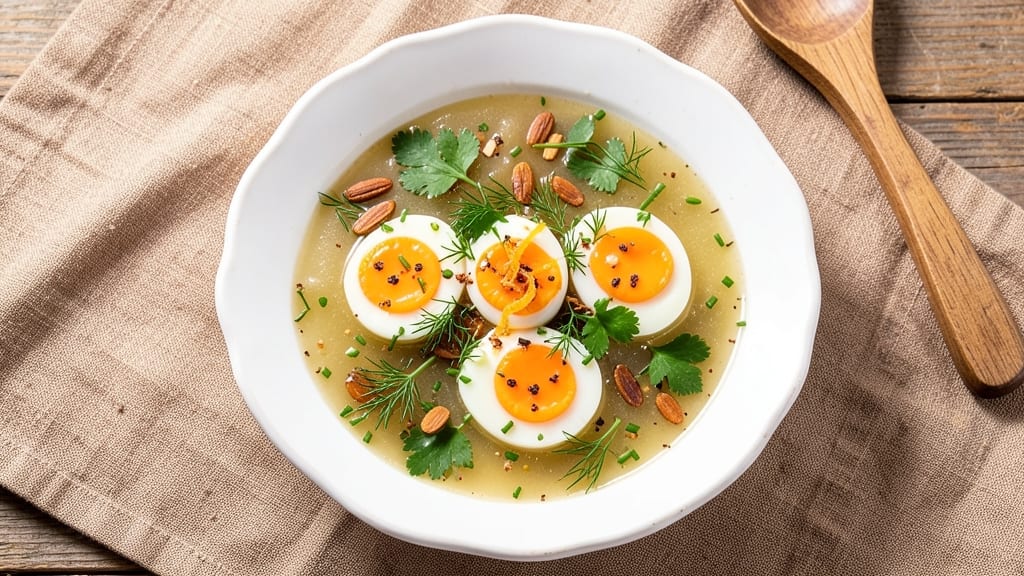
This wedding soup recipe with egg brings a taste of tradition to your table with its delicate herb-infused broth and signature almond topping. 💛 Born from Italian and Jewish culinary traditions, this dish symbolizes prosperity and love—perfect for celebrations or comforting weeknight meals.
The secret lies in a rich, flavorful broth that cradles tender egg drops and al dente noodles, all finished with a crunchy almond garnish that adds texture and elegance.
The beauty of this recipe is in its simplicity—just a handful of ingredients transform into a dish that feels both nostalgic and refined.
You'll start with a fragrant broth simmered with aromatic vegetables, herbs, and a touch of citrus, then gently drop beaten eggs into the hot liquid to create delicate, cloud-like strands. The almond topping, a nod to tradition, adds a satisfying crunch that balances the broth's richness.
What you'll end up with is a soup that's light yet deeply flavorful, with each spoonful offering layers of herbaceousness, umami, and a hint of sweetness from the almonds.
It's the kind of dish that feels special without being overly complicated—ideal for gatherings or when you want to impress with minimal effort.
Serve it warm with crusty bread to soak up every last drop of that fragrant broth. Here's how to make it—step by step—for a taste of tradition that's as comforting as it is beautiful.
Ingredients for wedding soup recipe with egg
Six ingredients for the broth, six eggs for the magic—this dish feels special without being complicated.
| Ingredient | Amount | Notes |
|---|---|---|
| Large Eggs 🥚 | 6 whole | Freshly beaten, room temperature |
| Vegetable Broth 🍲 | 6 cups | Homemade or quality low-sodium |
| Fresh Parsley 🌿 | ½ cup | Chopped, stems included |
| Fresh Dill 🌿 | ¼ cup | Chopped, or 1 tbsp dried |
| Fresh Chives 🌿 | 2 tbsp | Chopped, for garnish |
| Slivered Almonds 🥜 | ½ cup | Toasted for crunch |
| Extra-Virgin Olive Oil 🫒 | ¼ cup | For toasting almonds |
| Yellow Onion 🧅 | 1 whole | Medium, chopped |
| Garlic Cloves 🧄 | 3 cloves | Minced for flavor |
| Lemon Zest 🍋 | 1 tbsp | From 1 lemon |
| Salt 🧂 | 1 ½ tsp | Kosher or sea salt |
| Black Pepper 🌶️ | ½ tsp | Freshly ground |
| Egg Noodles 🍝 | 8 oz | Al dente cooked |
The broth is where the soul of this soup lives. Homemade vegetable broth is ideal—it's packed with depth—but a good-quality low-sodium store-bought version works in a pinch. I always grab mine from Trader Joe's or make a big batch myself. Fresh herbs are a must here: parsley and dill should be vibrant green, not wilted. Costco sells pre-washed herb bundles that save time. For the almonds, toast them in the olive oil until golden—this brings out their natural sweetness and makes them irresistible. Skip the pre-sliced kind; whole almonds toasted yourself taste better.
No fresh dill? Dried works at one-third the amount, but fresh is worth hunting down at a farmers market. Running low on parsley? Fresh cilantro can sub in a pinch, though it has a different flavor profile. The lemon zest adds brightness, but if you're out, a splash of lemon juice will do. For the eggs, room temperature is key—they should be whisked just until combined, not over-beaten. Noodles? Egg noodles are traditional, but any pasta shape works. Just make sure they're al dente—slightly firm to the bite.
This soup tastes even better the next day as flavors meld. Store leftovers in the fridge for up to 4 days, covered tightly. The almond topping stays crisp if you toast it fresh before serving, but you can also toast extra and sprinkle it on later. Freezes beautifully for 2 months—just reheat gently and add fresh herbs at the end. I always make a double batch because it disappears fast, especially with that almond crunch on top.
Why You'll Love This Recipe
- No-Chop Necessary: I swear by this—just crack those eggs into simmering broth, no dicing or prep. The herbs float right in whole, and the broth does all the work while you sip your coffee.
- Herb-Packed Umami Bomb: That first spoonful of broth with fresh dill and chives? It’s like a bright, garlicky hug. The eggs poach perfectly, with just enough set to hold the broth’s rich, savory depth—no blandness here.
- Leftover Goldmine: Make a double batch and refrigerate—it tastes even better the next day. Cold or reheated, those poached eggs stay tender, and the broth reduces to a deeper flavor. My lunchbox’s new best friend.
- Budget-Friendly Luxury: Eggs, broth, and a handful of herbs cost pennies but feel like a fancy restaurant dish. Honestly, it’s the kind of meal that makes you wonder why you ever ordered takeout when this tastes this good.
Step-by-step instructions for herb-infused wedding soup
This traditional dish brings together delicate egg noodles, rich broth, and nutty almonds in perfect harmony.
🍳 Step 1: Toast the Almonds and Sauté Aromatics
Heat the 0.25 cup extra-virgin olive oil in a large pot over medium heat. Add the 0.5 cup slivered almonds and toast for 2-3 minutes until they turn a beautiful golden brown and release their nutty aroma. Remove them with a slotted spoon and set aside—these will become your garnish.
In the same pot, add the 1 whole yellow onion and cook for 5 minutes until softened and translucent. Add the 3 cloves minced garlic and 1 tbsp lemon zest, cooking for another 1 minute until fragrant. This aromatic base forms the flavor foundation of your soup.
🍳 Step 2: Build the Herb-Infused Broth
Pour in the 6 cups vegetable broth and bring to a gentle boil. Add the 0.5 cup chopped fresh parsley, 0.25 cup chopped fresh dill, 1.5 tsp salt, and 0.5 tsp black pepper. Reduce heat to medium-low and let it simmer for 10 minutes—this allows the herbs to infuse the broth with their bright flavors.
Here's the thing—don't skip this simmering time. The herbs need to steep properly to create that signature herbaceous taste that makes wedding soup special. You'll know it's ready when the broth smells intensely aromatic and the herbs have softened slightly.
🍳 Step 3: Cook the Egg Noodles Al Dente
Add the 8 oz egg noodles to the simmering broth and cook for 8-10 minutes until they're al dente—just slightly firm to the bite. You want them to finish cooking perfectly in the hot broth, not become mushy. Taste one noodle to check for doneness.
While the noodles cook, I like to stir occasionally to prevent them from sticking to the bottom. The broth should be bubbling gently throughout this process. If it reduces too much, add ¼ cup hot water to maintain the proper consistency.
🥘 Step 4: Prepare the Poached Eggs
In a separate small pot, bring 2 cups water to a gentle simmer. Crack each of the 6 large eggs into small ramekins. Gently lower them into the simmering water using a slotted spoon—this prevents cracking. Poach for 3-4 minutes until the whites are set but the yolks remain runny and vibrant.
Here's a pro tip: I use a spoon to gently swirl the water around each egg to help the whites set evenly. You'll know they're ready when they float to the surface and the whites are completely opaque. Remove them with a slotted spoon and drain well on paper towels.
🥘 Step 5: Assemble and Serve Traditionally
Divide the cooked noodles and broth among 6 bowls. Carefully place one poached egg in each bowl, nestling it gently among the noodles. Sprinkle with the reserved toasted almonds and 2 tbsp chopped fresh chives for garnish.
This is where wedding soup gets its name—traditionally served with a single poached egg on top, representing the beginning of married life. The contrast of the creamy egg against the warm broth and nutty almonds creates a truly special dining experience. Serve immediately while the eggs are still warm and runny.
Pro Tips For Making Wedding Soup Recipe With Egg
- POACH EGGS LOW: DESCRIPTION: Bring broth to a gentle simmer—tiny bubbles at the edges, not a rolling boil. Overheated broth turns eggs rubbery, and nobody wants that sad, gray center. Test with a drop of broth: if it sizzles, wait.
- CHOP HERBS FINE: DESCRIPTION: Dice parsley, dill, and chives into tiny pieces—smaller than rice grains. Big chunks sink to the bottom or clump; you want them evenly distributed so every bite tastes like spring. (And yes, this means chopping twice if your knife’s lazy.)
- SALT THE BROTH WELL: DESCRIPTION: Taste the broth before adding eggs—it should be seasoned like a finished soup. Eggs absorb flavor, so bland broth means bland eggs. I learned this after serving a pot where the eggs tasted like water.
- SKIP THE STIRRING: DESCRIPTION: Once eggs are in, don’t move them—not even to "check." Stirring breaks the delicate curds and turns them into mush. Let them set undisturbed for 3-4 minutes, then gently lift with a slotted spoon.
Pro cooking tips for this recipe
Egg Drop Perfection
For flawless egg drops, beat the eggs in a separate bowl until just combined—no need to overmix. I like to use room temperature eggs because they cook more evenly. Gently lower them into the simmering broth with a slotted spoon to prevent cracking.
The broth should be at a gentle simmer, not a rolling boil, so the eggs set beautifully without breaking. 🥚
Herb Infusion Secrets
Simmer the herbs for 10 minutes to fully infuse the broth—this is where the magic happens. If you're using dried herbs, reduce the amount to one-third of fresh and steep for 5 minutes.
I always add the herbs after the broth comes to a boil to preserve their bright flavors. For extra depth, add a bay leaf while simmering and remove it before serving.
Almond Toasting Tips
Toast the almonds in extra-virgin olive oil over medium heat until they're golden brown—this takes about 2-3 minutes. Watch them closely to avoid burning, as they can go from perfect to bitter in seconds.
Remove them immediately with a slotted spoon and set aside on a paper towel-lined plate. The nutty aroma alone makes the soup taste special. 🥜
Broth Consistency Control
If the broth reduces too much while cooking the noodles, add ¼ cup hot water to maintain the right consistency. The broth should coat the back of a spoon but still be light enough to sip easily.
I find that homemade vegetable broth works best, but a quality low-sodium store-bought version in a pinch. Avoid adding salt too early—taste as you go and adjust at the end.
Noodle Timing Tricks
Cook the noodles al dente—they should be just slightly firm to the bite. Overcooking turns them mushy, which ruins the texture. I like to taste-test one noodle after 8 minutes to check for doneness.
If they finish cooking too quickly, reduce the heat slightly to let them absorb the broth without overcooking. 🍲
Egg Poaching Mastery
For perfectly poached eggs, use 2 cups water in a small pot and bring to a gentle simmer—not a boil. Crack eggs into ramekins first to prevent them from breaking when lowering into the water.
Poach for 3-4 minutes until the whites are set but the yolks remain runny. Swirl the water gently with a spoon to help the whites set evenly around the yolks. 💫
Nutrition facts
Frequently asked questions
Why is this called "wedding soup"?
This dish carries deep symbolic meaning in Italian and Jewish traditions. The single poached egg represents fertility and new beginnings, while the almonds symbolize prosperity. Serving it at weddings celebrates the couple's future together—making it a perfect dish for celebrations or romantic dinners.
Can I make wedding soup without eggs?
For a vegetarian version, replace the eggs with 1 cup cooked chickpeas or ½ cup crumbled feta cheese. The broth and noodles remain the same, but adjust seasoning slightly—cheese adds saltiness, while chickpeas need extra herbs for flavor. The almond topping still works beautifully as the crunchy garnish.
How do I keep the poached eggs from breaking?
Use room temperature eggs and crack them gently into small ramekins first. Lower them into simmering (not boiling) water with a slotted spoon to avoid splashing. For extra protection, add 1 tbsp vinegar to the water—it helps the whites set faster. Remove eggs immediately when whites are opaque but yolks are still runny.
What's the best way to reheat leftovers?
Reheat gently in a pot over low heat with ¼ cup water or broth to prevent drying. Never microwave—it turns the eggs rubbery. Stir occasionally and add fresh herbs at the end. The almonds stay crisp if toasted fresh before serving, but you can sprinkle them on after reheating for extra crunch.
Can I use chicken broth instead of vegetable?
Yes, but the flavor will be richer and more savory. For a lighter taste, use a mix of half vegetable and half chicken broth. If using all chicken, reduce salt by ½ tsp—chicken broth is already seasoned. The herb infusion time remains the same, but you may want to add a splash of lemon juice to balance the meaty flavors.