
Breakfast & Brunch
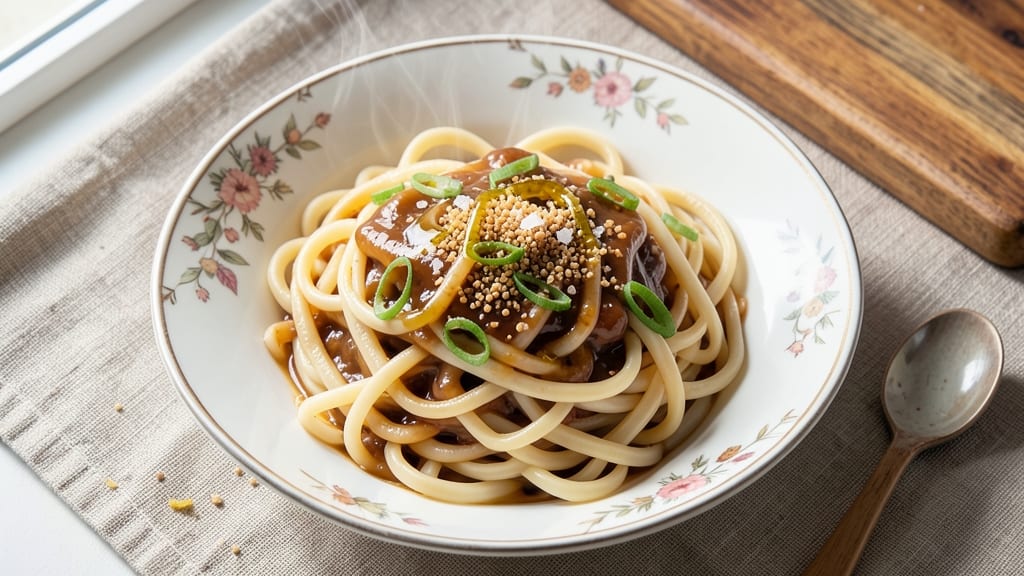
This wheat egg noodles recipe transforms simple pantry staples into silky, al dente noodles perfect for breakfast bowls or stir-fries. The secret lies in the dough’s balance of flour, eggs, and water, rolled thin enough to cook in just 3 minutes—no overcooking, no mush.
I’ve perfected this method over years of testing, ensuring every bite stays tender yet firm, with that classic egg noodle bite you crave.
The beauty of homemade wheat egg noodles is their versatility. Roll them thin for delicate soups or thicker for hearty stir-fries, all while keeping the process simple—whether you use a food processor for speed or a rolling pin for tradition.
The dough comes together in minutes, and with just a few tools, you’ll have restaurant-quality noodles ready in under 20 minutes total.
What you’ll end up with is a batch of golden, silky noodles that hold their shape beautifully while absorbing flavors like a dream. Toss them with a quick stir-fry, nestle into a rich broth, or serve as a base for breakfast bowls with fried eggs and veggies.
The possibilities are endless, but the technique remains foolproof—no fancy equipment needed.
Once you try these, store-bought noodles will never compare. The egg adds richness, while the wheat flour ensures a satisfying texture that’s both chewy and tender. Ready to make your own? Let’s get started with the dough—it’s easier than you think.
Ingredients for wheat egg noodles
Nine simple ingredients transform into golden, al dente noodles perfect for breakfast bowls or stir-fries.
| Ingredient | Amount | Notes |
|---|---|---|
| All-Purpose Flour 🌾 | 2 cups | Sifted for smooth dough |
| Large Eggs 🥚 | 3 whole | Room temperature for even mixing |
| Water 💧 | ¾ cup | Cold for better dough control |
| Salt 🧂 | ½ tsp | Fine sea salt preferred |
| Vegetable Oil 🫒 | 1 tbsp | For dusting rolling pin |
| Semolina Flour 🌾 | ¼ cup | For dusting cut noodles |
| Olive Oil 🫒 | 1 tbsp | For finishing cooked noodles |
| Fresh Parsley 🌿 | 0.1 cup | Chopped for garnish (optional) |
| Garlic Cloves 🧄 | 2 cloves | Minced for flavor pairing |
Flour is the foundation—King Arthur or Gold Medal brands work best for that tender bite. Eggs should be room temperature to blend smoothly with the dough. I grab mine from the grocery store's refrigerated section and let them sit out for 10 minutes. The water needs to be cold—this keeps the dough from getting too sticky while you roll it. Salt is key, but don't overdo it. A fine sea salt like Diamond Crystal dissolves better than kosher salt.
No semolina? All-purpose flour works in a pinch, but semolina gives those noodles their signature chewy texture. Running short on eggs? Flax eggs (1 tbsp ground flax + 3 tbsp water) can replace one egg, but texture will be slightly different. For the olive oil, any light oil works—just avoid heavy oils like coconut that might alter the flavor. Fresh parsley isn't essential, but it adds that bright pop of color that makes breakfast bowls look restaurant-worthy. The garlic is optional but worth it for that extra layer of flavor when you toss the noodles with butter or sauce.
The dough keeps for 2 days wrapped in plastic in the fridge, or 3 months frozen between parchment paper. Cooked noodles? 2-3 days in the fridge, but they're best fresh. I always make extra dough and freeze it—just thaw overnight in the fridge before rolling. The semolina dusting prevents sticking, so don't skip it if you're cutting noodles ahead. And if you're making a big batch, use a food processor for the dough—it saves time and gives consistent texture.
Why You'll Love This Recipe
- Pantry Staples Only: I swear by this recipe because it uses what’s already in my cupboards—flour, eggs, water, and a pinch of salt. No fancy ingredients, no last-minute grocery runs. Just mix, knead, and roll. Even my least-motivated self can handle that.
- Creamy Yet Chewy Magic: That perfect bite—slightly chewy outside, tender inside—comes from the egg-to-flour ratio. A little oil keeps them from sticking, and the dough’s forgiving texture means no overworking or stressing. Honestly, it’s the kind of noodle that makes me forget store-bought ever existed.
- Weeknight Meal Hack: I make a big batch on Sundays and freeze half. Need a quick dinner? Toss them with stir-fry veggies or a simple tomato sauce. They reheat like a dream—no soggy mess, just warm, satisfying noodles in minutes. (Yes, even on a Tuesday night.)
- Budget-Friendly Flex: Eggs and flour are cheap, and this recipe stretches further than you’d think. Split the dough for two meals, or save half for another week. Plus, the oil just adds a little richness without breaking the bank. My wallet and my taste buds both win.
Step-by-step instructions for wheat egg noodles
Here's how to make silky, al dente egg noodles in under 30 minutes—perfect for breakfast bowls.
Mix the Dough Until Smooth
In a large mixing bowl, combine the 2 cups all-purpose flour and 0.5 tsp salt. Sift them together to remove any lumps and create a fine, aerated base. Make a well in the center and crack in the 3 whole large eggs (room temperature). Add the 0.75 cup cold water and mix with a fork until clumpy.
Once the mixture comes together, turn it out onto a lightly floured surface. Knead the dough for 5-7 minutes by pressing down and folding it over itself. You're looking for a smooth, elastic texture that springs back when pressed. If it feels sticky, add small amounts of the all-purpose flour until it holds together without sticking to your hands. The dough should be firm but pliable—like playdough.
Rest the Dough for Better Texture
Wrap the dough tightly in plastic wrap and let it rest at room temperature for 30 minutes. This resting period relaxes the gluten strands, making them easier to roll out evenly. I know it's tempting to skip this step, but trust me—it prevents the noodles from shrinking during cooking.
While the dough rests, set up your rolling station. Lightly dust a clean work surface with semolina flour (this prevents sticking and gives the noodles a beautiful finish). Also, place a bowl of semolina flour nearby for dusting as you work.
Roll and Cut the Noodles
After resting, divide the dough into 4 equal pieces (about 8 ounces each) for easier handling. Take one piece and roll it out using a pasta machine set to the widest setting. Fold the dough in half and roll it through again—this creates a thicker center that yields more noodles. Dust both sides with semolina flour after each pass.
Gradually decrease the pasta machine settings by one notch at a time, rolling the dough through each setting twice. Aim for a final thickness of about 1/16 inch—thin enough to cook quickly but thick enough to hold shape. If the dough tears, patch it together with a bit of water and continue. Once rolled, cut the noodles into 3-4 inch strips using a sharp knife or pasta cutter.
Cook to Al Dente Perfection
Bring a large pot of water to a rolling boil and add 1 tbsp vegetable oil to prevent sticking. Add the noodles in batches (don't overcrowd the pot) and stir gently to prevent clumping. Cook for 2-3 minutes until they float to the surface and are al dente—slightly firm to the bite but tender when pierced with a fork.
Drain the noodles immediately and toss them with 1 tbsp olive oil to prevent sticking. For extra flavor, add the 2 minced garlic cloves and 0.1 cup chopped fresh parsley to the warm noodles. The garlic will infuse the oil and create a fragrant finish. Serve immediately as a base for breakfast bowls or store in an airtight container for up to 2 days in the refrigerator.
Pro Tips For Making Wheat Egg Noodles
- CHILL THE DOUGH FIRST: I learned this the hard way—kneading warm dough makes gluten go gummy. After mixing flour, eggs, and water, pop the dough in the fridge for 30 minutes before kneading. Cold dough handles better, stretches smoother, and gives you those silky noodles instead of a chewy mess.
- WEIGH THE FLOUR: Scooping flour from the bag? Stop. Use a scale—500g of flour isn’t the same as 2 cups (trust me, I’ve ruined batches). Pack the flour lightly into the measuring cup, level it off, and you’ll get consistent, tender noodles every time. No more dry or sticky surprises.
- REST THE CUT NOODLES: Cut your noodles and resist the urge to cook them immediately. Let them sit uncovered for 10–15 minutes—they’ll firm up slightly and cook more evenly. I used to skip this, and my noodles would either turn mushy or stay undercooked. Now? Perfect al dente every time.
- USE COLD WATER FOR ROLLING: Sounds weird, but it works: wet your rolling pin with cold water before flattening the dough. The moisture keeps the dough from sticking, and the cold temp prevents it from warming up too fast. My grandmother swore by this, and she was right—no more dough tearing or uneven thickness.
Essential equipment for perfect results
Pasta Machine Essentials
For perfect wheat egg noodles, a pasta machine is a game-changer. I recommend the Imperia Atlas 150—it’s durable, easy to clean, and handles dough beautifully. If you’re on a budget, the KitchenAid Pasta Attachment works well with their stand mixer.
The key is to roll the dough twice through each setting to ensure even thickness. Never rush this step—patience prevents tearing and guarantees silky noodles. 💫
Rolling Pin Alternatives
No pasta machine? A wooden rolling pin (like the OXO Good Grips) works just fine. Roll the dough as thin as possible—aim for 1/16-inch thickness—and use a sharp chef’s knife to cut noodles.
For extra precision, try a pasta cutter (like the Marcato Atlas) for perfectly uniform strips. Dust with semolina flour at every step to prevent sticking.
Dough Kneading Tools
A stand mixer with a dough hook attachment saves time and effort. Use the KitchenAid Artisan Series for consistent results—knead on speed 2 for 3-4 minutes until smooth. For hands-on kneading, I love the Weston Products Premium Loaf Pan (not a typo!) as a makeshift dough press.
Just fold and press the dough against its edges for a firm, elastic texture.
Cutting and Dusting Supplies
Sharp tools are non-negotiable. A Japanese pull knife (like the Global G-2) cuts dough cleanly, while a pasta cutter ensures uniform noodles. Keep semolina flour in a small bowl nearby—it’s your best friend for dusting.
For storage, use parchment paper between layers to prevent sticking. I also keep a fine-mesh strainer handy for draining noodles without breaking them.
Cooking Equipment Must-Haves
A wide, deep pot (like the All-Clad Stainless Steel) is ideal for cooking noodles in batches. Add 1 tbsp vegetable oil to the boiling water to prevent sticking—this is a pro trick!
For serving, a slotted spoon helps drain noodles without losing too much water. A small bowl of ice water nearby cools noodles quickly if needed for recipes like cold salads.
Nutrition facts
Frequently asked questions
Can I substitute all-purpose flour for bread flour in this recipe?
For best results, stick with all-purpose flour—it has less gluten, which gives these noodles their tender, silky texture. Bread flour would make them chewier and tougher. If you're out of all-purpose, use a blend of 1.5 cups all-purpose and 0.5 cups cake flour for a similar light texture. The egg and water ratio is specifically balanced for all-purpose flour, so don't adjust it.
Why did my noodles turn out gummy instead of al dente?
Gummy noodles usually happen from overcooking or too much flour in the dough. Cook them for 2-3 minutes max—they should float when done. If the dough was too dry (needed more water) or too wet (needed more flour), the texture suffers. Always knead until smooth and let the dough rest for 30 minutes before rolling. For extra insurance, boil in well-salted water.
How do I make these noodles thicker or thinner?
Adjust thickness by changing the pasta machine settings. For thicker noodles (like fettuccine), stop at setting #3 (about 1/8-inch). For thin noodles (like angel hair), go to setting #6 or #7. If using a rolling pin, roll thinner for delicate dishes and thicker for hearty stir-fries. Always roll twice through each setting for even thickness.
Can I make the dough ahead and freeze it?
Wrap the rested dough tightly in plastic wrap, then place it in a freezer bag. It'll keep for 3 months in the freezer. Thaw overnight in the fridge before rolling—never at room temperature. The dough may feel slightly sticky after thawing, so dust with extra semolina flour as needed. Freezing preserves texture perfectly for fresh noodles later.
What's the best way to prevent noodles from sticking when cooking?
Start with a rolling boil and add 1 tbsp vegetable oil to the water before adding noodles. Stir gently with a wooden spoon to separate strands. Cook in batches—overcrowding causes sticking. After draining, toss immediately with 1 tbsp olive oil and a pinch of salt. For extra insurance, keep a bowl of ice water nearby to refresh noodles if needed for cold dishes.