
Main Courses
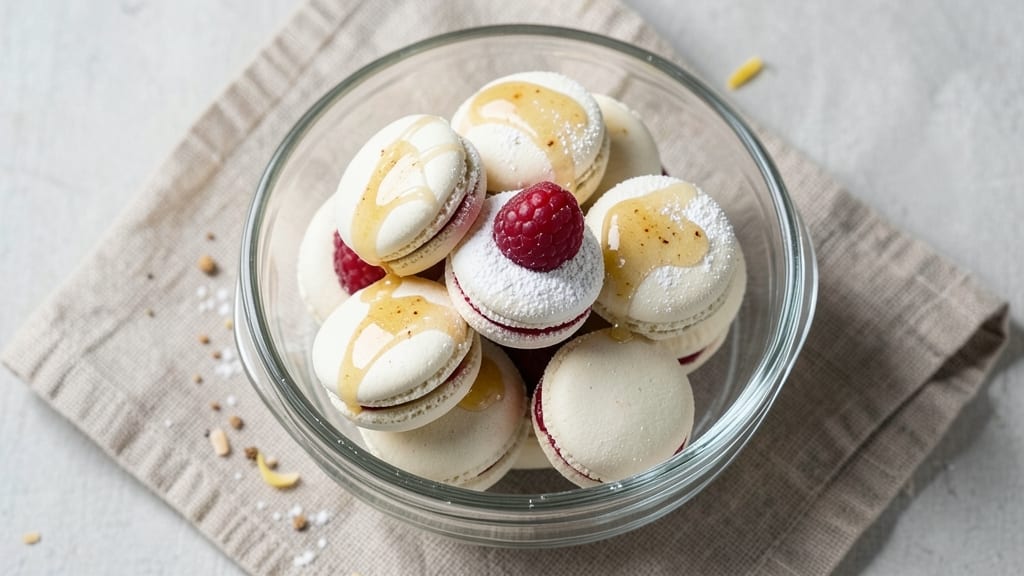
This 1 egg white macaron recipe transforms a single egg white into delicate, light-as-air shells that rival traditional recipes—no waste, no fuss. The secret lies in precise technique: whipping the meringue to stiff peaks, sifting powdered sugar for smooth batter, and baking at the perfect temperature to prevent cracking.
I’ve perfected this method after years of trial (and a few failed batches), so you’ll get consistent results every time.
What makes this recipe special is its efficiency—ideal for small-batch baking or testing flavors without committing to a full recipe. The key steps include resting the shells before filling (critical for preventing breakage) and using a food scale for accuracy.
Even beginners can achieve professional-looking macarons with these foolproof instructions, from piping to baking times.
By the end, you’ll have crisp yet tender shells with smooth tops and flat bottoms, ready to be filled with ganache, buttercream, or jam. The texture is the star: crisp edges that give way to a delicate, almost glass-like interior.
These macarons are perfect for gifting, special occasions, or satisfying a sweet tooth without the complexity of traditional recipes.
Pair the shells with your favorite fillings—dark chocolate ganache, citrus curd, or salted caramel buttercream—and watch them disappear. The beauty of this method is its flexibility: scale up or down, experiment with flavors, and enjoy the process. Let’s get started on your first perfect batch.
Ingredients for 1 egg white macaron
Transform a single egg white into delicate macarons with these precise ingredients—no waste, just perfection.
| Ingredient | Amount | Notes |
|---|---|---|
| Large Egg Whites 🥚 | 1 whole | Room temperature, no yolks |
| Powdered Sugar 🍚 | 1 ½ cups | Sifted for smooth batter |
| Almond Flour 🌰 | 1 cup | Superfine, finely ground |
| Granulated Sugar 🍬 | ½ cup | For meringue stability |
| Cornstarch 🌾 | ¼ cup | Ensures crisp texture |
| Vanilla Extract 🌿 | ½ tsp | Pure, high-quality |
| Food Coloring 🎨 | ¼ tsp | Gel-based, optional |
| Dark Chocolate Ganache 🍫 | ¾ cup | For filling, store-bought or homemade |
| Unsalted Butter 🧈 | ¼ cup | Room temperature, for ganache |
| Heavy Cream 🥛 | ¼ cup | For ganache, optional |
| Salt 🧂 | ⅛ tsp | Fine sea salt |
The egg whites are your foundation—room temperature is critical for smooth whipping. KitchenAid attachments make this easier, but a hand mixer works too. For almond flour, Bob’s Red Mill super-fine is my go-to, but any finely ground flour works if sifted well. Powdered sugar must be sifted with the almond flour to avoid lumps—Diamond Crystal is ideal for its fine texture. Vanilla extract should be pure, not imitation—McCormick Pure is my pick. Store these dry ingredients in airtight containers to maintain freshness.
No food coloring? Skip it—macarons look stunning naturally. For ganache, Ghirardelli dark chocolate squares melt beautifully. If you're making ganache from scratch, heavy cream heated to 160°F tempers the chocolate perfectly. Substitute buttercream for ganache by whipping room-temperature butter and powdered sugar—add vanilla and a splash of milk for consistency. The cornstarch in the shells ensures that crisp snap, so don’t skip it. For a citrus twist, swap vanilla for lemon zest in the batter.
Egg whites lose volume fast—whip them immediately before use. Store dry ingredients for 3 months in a cool, dark place. Ganache keeps 1 week refrigerated or 3 months frozen. Macaron shells stay fresh 2 days at room temperature in an airtight container. For long-term storage, freeze filled macarons on a tray before transferring to a container—prevents sogginess. Reheat shells 10 seconds at 300°F before refilling if needed.
Why You'll Love This Recipe
- No Mixer Needed: I’ll be real—this recipe only needs a whisk and a bowl. No stand mixer, no fancy tools, just elbow grease for 5 minutes. The egg whites stiffen like magic when you fold in that almond flour, and honestly? It’s the kind of simplicity that makes baking feel like a win.
- Crispy-Meets-Chewy Magic: That first bite—crisp shell, then tender almond center—is what makes these worth it. The cornstarch keeps them from cracking, while the granulated sugar on top caramelizes just enough to give them that perfect contrast. (Yes, even on a Tuesday night.)
- Weeknight Dessert Hack: Store-bought macarons cost a fortune, but these? I make a batch on Sundays and they last all week. Freeze half for when you forget to plan ahead—just pop them in the oven for 2 minutes. My kids think they’re "fancy," but I know the secret.
- Budget-Friendly Luxury: Almond flour might sound pricey, but you only need a handful per batch. Egg whites are cheap, powdered sugar is a pantry staple, and the result? A dessert that tastes like you spent hours on it. (Between us, it’s my go-to for potlucks where I don’t want to bring store-bought.)
Step-by-step instructions for light-as-air macarons
Mastering macarons starts with precision and patience—this method delivers flawless shells every time.
Prepare the Macaronage for Silky Texture
In a clean, grease-free mixing bowl, combine the 1 whole large egg whites and 0.125 tsp salt using a stand mixer fitted with the whisk attachment. Beat on medium-high speed until soft peaks form—this ensures proper aeration for those signature air pockets.
Gradually add the 1.5 cups powdered sugar while mixing on low speed to prevent sugar from settling at the bottom. Increase to medium-high speed and whip for 3-5 minutes until the meringue reaches stiff, glossy peaks that hold their shape when the whisk is lifted. The mixture should be smooth, thick, and hold its form when you draw a figure-eight motion with the whisk.
Real talk: This is the moment that matters. If your meringue isn't glossy or holds peaks, you'll end up with flat, dense shells. I always test by lifting the whisk—if the peak stands straight up, you're golden.
Incorporate Dry Ingredients for Perfect Consistency
In a separate bowl, sift together the 1 cup almond flour, 0.5 cup granulated sugar, 0.25 cup cornstarch, 0.5 tsp vanilla extract, and 0.25 tsp food coloring until completely smooth. This step eliminates any lumps that could disrupt the delicate macaron structure.
Gently fold the dry ingredients into the meringue using a spatula, working in a J motion from the bottom of the bowl upward. Be careful not to deflate the meringue—this is where most beginners go wrong. The batter should flow like lava when you lift the spatula, creating a ribbon that dissolves slowly back into the mixture. If it's too thick, you'll get domed tops; too thin, and your shells won't hold their shape.
For best results, I recommend letting the batter rest for 10-15 minutes at room temperature. This allows the gluten to relax and the sugar to dissolve evenly, preventing cracks in your finished macarons.
Pipe and Rest for Crisp Shells
Transfer the batter to a piping bag fitted with a ¼-inch round tip. Pipe 1-inch circles onto a parchment-lined baking sheet, spacing them 1 inch apart to prevent spreading. Tap the tray 5-7 times firmly on the counter to release any air bubbles—this ensures smooth, crack-free tops.
Let the piped macarons rest at room temperature for 30-60 minutes until they form a dry skin on top. You'll know they're ready when you can gently touch them without the batter sticking to your finger. This drying step is critical—it prevents the shells from spreading too much in the oven and ensures that crisp, snappy texture we all love.
Don't rush this step. I've seen many macarons fail because they were baked too soon. The longer they rest (up to 2 hours), the more stable they become, but 30 minutes is the minimum for consistent results.
Bake to Golden Perfection
Preheat your oven to 300°F (convection works best for even baking). Place the baking sheet on the middle rack and bake for 15-18 minutes until the edges are light golden and the tops are matt, not shiny. Rotate the tray halfway through for even cooking.
Watch closely—they bake quickly! The moment they're done, remove them from the oven and let them cool on the tray for 2 minutes before transferring to a wire rack. If you tap the bottom of a shell and it sounds hollow, it's ready. If it sounds dull, bake for 2-3 more minutes—underbaking leads to chewy centers, while overbaking makes them brittle.
Real talk: Oven temperatures vary, so start checking at the 15-minute mark. If your oven runs hot, reduce the temperature to 290°F next time. The goal is a crisp shell with a slightly chewy interior—not rock-hard or gummy.
Fill and Assemble for Decadent Macarons
Once the shells are completely cool, pipe or spoon 0.75 cup dark chocolate ganache between two shells, pressing gently to create a clean, flat edge. The ganache should be smooth and spreadable—if it's too thick, warm it gently in the microwave for 10-15 seconds and stir until silky.
For extra stability, I recommend chilling the filled macarons in the fridge for 15 minutes before serving. This ensures the ganache sets properly and prevents any filling from oozing out. Store any unfilled shells in an airtight container at room temperature for up to 3 days, or freeze for 1 month—they'll keep their crispness beautifully.
Here's the thing—macarons are all about presentation. Use a small offset spatula to smooth any uneven edges, and dust with a little powdered sugar for that bakery-fresh look. Serve immediately for the ultimate texture contrast: crisp shell, silky filling, and that perfect snap!
Pro Tips For Making 1 Egg White Macaron
- Avoid Overmixing the Batter: I learned this the hard way—whipping egg whites into stiff peaks with powdered sugar is delicate. Once you’ve folded in the almond flour, stop immediately after the batter flows like lava. Any extra mixing adds gluten, and your macarons will turn dense instead of light. Trust the ribbon test: lift the spatula, and if the batter holds a slow, thick trail, you’re golden.
- Sift Almond Flour Twice: Your almond flour is the backbone here, and clumps are the enemy. Sift it first through a fine-mesh sieve, then sift the powdered sugar right after. This keeps the batter smooth and prevents lumpy shells. (Yes, it’s extra work, but your macarons will look like they came from a pâtisserie.)
- Use Room-Temp Egg Whites: Cold egg whites won’t whip properly, and that’s a recipe for sad, flat macarons. Pop them in a bowl of warm water for 10 minutes before starting—no need to wait hours. Room temperature is key, and this small step makes a real difference in volume and stability.
- Rest the Shells Longer: Skip the urge to bake them fresh off the tray. Let the macarons sit for at least 30 minutes (or up to 24 hours) before baking. This evens out moisture, so they don’t crack or sink in the oven. (Your future self will thank you when they hold their shape.)
Serving suggestions for this recipe
Ganache Fillings
Dark chocolate ganache is the classic choice for macarons, and you can make it in 10 minutes with ½ cup heavy cream heated to 160°F and poured over ½ cup chopped Ghirardelli dark chocolate squares.
Let it sit for 2 minutes before stirring until smooth. For a richer texture, add 1 tbsp unsalted butter at the end. Chill for 30 minutes before filling to thicken slightly. 🍫
Buttercream Variations
Swap ganache for buttercream by whipping ½ cup room-temperature butter with 1.5 cups powdered sugar, 1 tsp vanilla extract, and 1 tbsp milk until fluffy. For flavor variations, add 1 tsp lemon zest for a citrus twist or ½ tsp almond extract for a nutty depth.
Pipe into shells using a pastry bag with a small round tip for neat filling.
Fruit Preserves
Brighten your macarons with raspberry, strawberry, or apricot jam—just warm 2 tbsp jam with 1 tsp water to thin slightly. Spread ½ tsp between shells and chill for 10 minutes to set. For extra elegance, top with a tiny dollop of whipped cream or edible gold leaf. 🍓
Salted Caramel
Make salted caramel by cooking ½ cup granulated sugar in a saucepan until amber, then carefully adding ¼ cup heavy cream and 2 tbsp butter. Stir in ½ tsp flaky sea salt and let cool slightly before piping between shells.
The contrast of sweet, salty, and crisp is pure magic—trust me, it’s a crowd-pleaser.
Presentation Tips
Arrange macarons on a parchment-lined platter in a circular pattern for an elegant display. Dust with powdered sugar using a fine-mesh sieve or use a stencil for decorative patterns.
For a rustic touch, place them on a wooden board with fresh berries. Serve at room temperature for the best texture—never straight from the fridge!
Nutrition facts
Frequently asked questions
Why do my macaron shells crack?
Cracked shells usually happen from one of three issues: under-whipped meringue, improper batter consistency, or baking too soon. Make sure your egg whites reach stiff, glossy peaks and the batter flows like lava when you lift the spatula. Also, let the piped macarons rest for 30-60 minutes until they form a dry skin before baking. Patience is key here!
Can I make these macarons without a stand mixer?
Use a hand mixer or even a whisk—just be extra careful with the meringue. Whip the egg whites to stiff peaks (about 5-7 minutes by hand) and fold in the dry ingredients gently with a spatula. The key is patience—don't rush the process, or you'll risk deflating the batter.
How do I store leftover macaron shells?
Store unfilled shells in an airtight container at room temperature for up to 3 days—they'll stay crisp that way. For longer storage, freeze them on a tray first, then transfer to a container for 1 month. Never store them in the fridge—condensation ruins the texture! Before refilling, warm shells at 300°F for 10 seconds to crisp them up.
What's the secret to getting smooth tops?
Smooth tops come from three things: sifting all dry ingredients, tapping the tray 5-7 times after piping to release air bubbles, and using a clean, grease-free bowl for whipping. Also, make sure your batter is at the right consistency—it should flow like lava when you lift the spatula. If it's too thick, add a little more meringue; if too thin, add a spoonful of powdered sugar.
Can I use almond butter instead of almond flour?
Not for this recipe—almond butter is too dense and will change the texture completely. Stick with superfine almond flour for that signature crisp shell. If you're out of almond flour, you can grind whole almonds in a food processor until ultra-fine, but sift it thoroughly to avoid lumps. The texture won't be identical, but it'll work in a pinch!