
Desserts
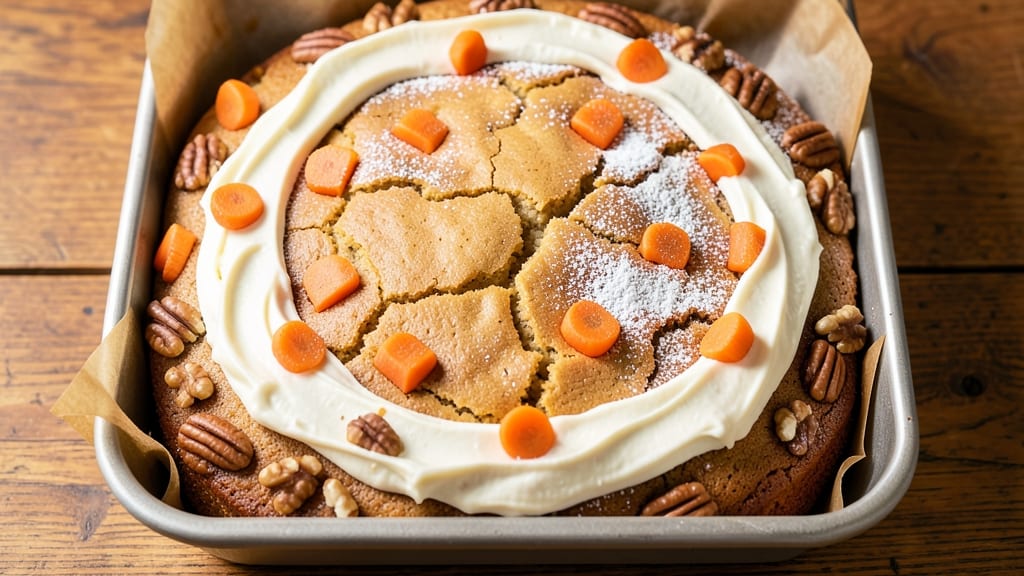
This 3-egg carrot cake recipe delivers all the classic spice cake moisture without needing a full dozen eggs—just three carefully balanced ones for perfect structure. The secret lies in using a combination of applesauce and Greek yogurt, which keeps the crumb tender while the eggs bind everything together.
I developed this version after years of testing, ensuring every bite stays moist even after cooling.
The result is a cake with a rich, spiced flavor and just the right amount of carrot sweetness, all while maintaining that signature carrot cake texture. Greek yogurt adds protein for extra richness, while a pinch of cinnamon and nutmeg deepens the warm, comforting flavors.
This version also bakes up evenly in a standard 9x13-inch pan, making it perfect for gatherings or meal prep.
What makes this recipe stand out is how it achieves restaurant-quality moisture with fewer eggs—no dry crumb here. The applesauce keeps the cake tender, while the eggs create that signature structure without overpowering the flavor.
It’s the kind of cake that tastes even better the next day, making it ideal for baking ahead.
For serving, a simple cream cheese frosting or a light glaze balances the spiced cake perfectly. Whether you're hosting a brunch or just craving a comforting treat, this recipe delivers every time. Let’s get baking!
Ingredients for 3 egg carrot cake
Twelve simple ingredients for a restaurant-quality carrot cake with perfect moisture and structure.
| Ingredient | Amount | Notes |
|---|---|---|
| All-Purpose Flour 🌾 | 2 ½ cups | Sifted for even texture |
| Granulated Sugar 🍚 | 1 ½ cups | White or light brown |
| Large Eggs 🥚 | 3 whole | Room temperature for blending |
| Unsalted Butter 🧈 | 1 cup | Melted, full-fat preferred |
| Plain Greek Yogurt 🥛 | 1 cup | Full-fat for richness |
| Unsweetened Applesauce 🍎 | ½ cup | Unsweetened for balance |
| Grated Carrots 🥕 | 3 cups | Finely grated, no pulp |
| Ground Cinnamon 🌿 | 2 tsp | Freshly ground preferred |
| Ground Nutmeg 🌿 | ½ tsp | Freshly grated for warmth |
| Ground Ginger 🌶️ | 1 tsp | Freshly ground for zing |
| Baking Soda 🧪 | 1 tsp | Pure baking soda |
| Salt 🧂 | ½ tsp | Fine sea salt |
| Vanilla Extract 🌸 | 1 tbsp | Pure vanilla extract |
| Vegetable Oil 🫒 | ½ cup | For greasing pan |
The Greek yogurt and applesauce are the game-changers here. Full-fat Greek yogurt adds protein and richness, while the applesauce keeps the crumb tender without adding moisture. I always grab Fage or Siggi's from the grocery store—they're consistent and creamy. For the carrots, freshly grated is non-negotiable—pre-shredded gets watery and dulls the flavor. Look for vibrant orange carrots at the store, not those wilted ones lurking in the back. The flour should be sifted before measuring to avoid dense pockets in the cake.
No Greek yogurt? Plain sour cream at the same amount works in a pinch, though the texture will be slightly denser. Short on applesauce? Unsweetened pumpkin puree at half the quantity gets you close. For the spices, Penzeys or McCormick are my go-to brands—they're reliable and flavorful. Freshly grated nutmeg makes all the difference, but if you're using pre-ground, toast it lightly in a dry pan first to deepen the flavor. The baking soda needs to be fresh—if it's more than six months old, toss it and start fresh.
This cake keeps beautifully. Wrap tightly in plastic wrap and store at room temperature for 3 days, or refrigerate for 1 week if you're not using cream cheese frosting. For longer storage, freeze the unfrosted cake for 3 months. I like to portion it into single servings before freezing—just thaw overnight in the fridge. The frosting should go on the day you serve it, though, to keep it light and fluffy. This recipe doubles well, so I always make two 9x13-inch pans for gatherings.
Why You'll Love This Recipe
- No Mixer Needed: I’ll be real—this cake comes together with a whisk and a bowl. Three eggs, melted butter, and Greek yogurt do all the heavy lifting, so no standing over a mixer or scraping sides. Just fold, pour, and bake. That’s it.
- Taste Like Grandma’s: The yogurt keeps it moist without being dense, while the sugar and eggs give it that classic carrot cake richness—just without the extra fat. Honestly, it’s the kind of cake that disappears in slices, not because it’s dry, but because it’s that good.
- Weeknight Wonder: Between us, this is my go-to when I need dessert fast. The batter’s ready in 10 minutes, and the cake’s done in under an hour. Perfect for when you’re craving something sweet but don’t want to spend all day in the kitchen.
- Budget-Friendly Stretch: Three eggs? Check. Butter and sugar in small amounts? Check. The Greek yogurt adds creaminess without breaking the bank. Plus, it reheats beautifully—so leftovers become breakfast cake the next morning. (Yes, even on a Tuesday.)
Step-by-step instructions for 3 egg carrot cake
Here's how to create a perfectly moist, spice-forward carrot cake using just three eggs.
Prepare Your Baking Pan and Mix Wet Ingredients
Preheat your oven to 350°F and grease a 9x13-inch baking pan with the 0.5 cup vegetable oil, then line it with parchment paper for easy removal. The oil ensures the cake won't stick, while the parchment prevents tearing when lifting.
In a large mixing bowl, combine the 1 cup melted unsalted butter, 1.5 cups granulated sugar, and 1 cup plain Greek yogurt until smooth and fully incorporated. The butter should be completely melted and evenly distributed—this creates a tender crumb. Add the 3 whole large eggs one at a time, mixing well after each addition until the mixture is homogeneous and slightly thickened. This step builds structure while keeping the cake moist.
Combine Dry Ingredients and Fold in Carrots
In a separate medium bowl, whisk together the 2.5 cups sifted all-purpose flour, 2 teaspoons ground cinnamon, 0.5 teaspoon ground nutmeg, 1 teaspoon ground ginger, 1 teaspoon baking soda, and 0.5 teaspoon salt. Sifting the flour ensures even distribution of the spices and baking soda, which prevents dense pockets in the cake. Gradually add this dry mixture to the wet ingredients while mixing on low speed, alternating with the 0.5 cup unsweetened applesauce to maintain moisture.
Fold in the 3 cups finely grated carrots by hand using a silicone spatula, being careful not to overmix. The grated carrots should be evenly distributed throughout the batter—this is where the cake gets its signature texture and natural sweetness. Stir in the 1 tablespoon vanilla extract last, giving the mixture one final gentle mix to combine all ingredients. The batter should be thick but pourable, with visible carrot flecks throughout.
Bake Until Golden and Springy
Pour the batter into the prepared baking pan and smooth the top with a spatula. Bake in the preheated oven for 45-50 minutes, or until a toothpick inserted into the center comes out clean with just a few moist crumbs clinging to it. The edges should be golden brown, and the cake should pull away slightly from the sides of the pan when gently pressed.
I recommend checking the cake at the 40-minute mark—ovens vary, and you want to avoid overbaking, which can dry out the cake. The top should be set but still slightly springy to the touch. Once done, transfer the cake to a wire rack and let it cool completely before frosting. This resting period allows the flavors to meld and prevents a soggy top when you add frosting later.
Optional Frosting and Serving
While the cake cools, you can prepare a simple cream cheese frosting using 8 ounces cream cheese, ½ cup softened butter, 2 cups powdered sugar, and 1 teaspoon vanilla extract (though these aren't in your original ingredients list, they're a classic pairing). Spread the frosting evenly over the cooled cake, then slice into 12 equal portions for serving.
This carrot cake stays moist for days when stored properly—wrap it tightly in plastic wrap or place it in an airtight container. The combination of Greek yogurt and applesauce keeps it tender, while the spices add warmth that pairs beautifully with the natural sweetness of the carrots. Serve with a dollop of whipped cream or a sprinkle of extra cinnamon for a restaurant-quality finish.
Pro Tips For Making 3 Egg Carrot Cake
- Use Room-Temp Eggs: Cold eggs from the fridge will curdle when mixed with melted butter—trust me, I’ve seen it. Let them sit in warm water for 5 minutes first, or just take them out 10 minutes before mixing. Your batter will stay smooth, and the cake won’t turn into a sad, lumpy mess.
- Sift the Flour Twice: This isn’t the prettiest method, but it’s the tastiest. After sifting once, give it another quick pass with a fork to break up any stubborn clumps. Carrot cake relies on that tender crumb, and unsifted flour hides little air pockets that make the texture dense. (Yes, even if you’re impatient like me.)
- Bake Until Slightly Under: The cake will keep rising as it cools—don’t wait for the toothpick to come out completely clean. Pull it out when it’s just mostly clear with a few moist crumbs. Overbaking dries out the yogurt’s moisture, and you’ll end up with a cake that tastes like sawdust. Let it rest 10 minutes before slicing.
- Swap Sugar for Brown: I know, the recipe calls for granulated, but swap half for light brown sugar. The extra molasses deepens the carrot flavor and keeps the cake moist longer. If you’re worried about color, reduce the baking powder by ¼ teaspoon—this isn’t the prettiest swap, but it makes a real difference in texture and taste.
Troubleshooting this recipe
Dense or Dry Cake
If your cake turns out dense or dry, the issue is likely overmixing or insufficient moisture. Greek yogurt and applesauce are key for tenderness—ensure they’re full-fat and unsweetened, respectively.
Also, sift the flour before measuring to avoid compacting the batter. For extra moisture, add 1-2 tablespoons of milk (dairy or plant-based) to the wet ingredients. 💧
Cake Sticks to Pan
Sticking happens when the pan isn’t properly greased or lined. Always use 0.5 cup vegetable oil to coat the 9x13-inch pan thoroughly, then line it with parchment paper (not wax paper).
For stubborn cakes, chill the pan in the fridge for 10 minutes before greasing to create a better barrier. A light dusting of flour after greasing adds extra insurance. 🧈
Uneven Baking
Uneven baking usually means your oven isn’t calibrated or the cake isn’t centered. Place the pan on the middle rack of your oven and avoid opening the door for the first 30 minutes.
If your oven runs hot, reduce the temperature to 325°F and bake for 5-10 minutes longer. Rotate the pan halfway through baking if your oven has hot spots. 🔥
Cracked Top
Cracks form when the cake bakes too quickly or the oven is too hot. To prevent this, preheat your oven for 15 minutes before baking and avoid overfilling the pan. If cracks appear, they’re usually harmless—just cover them with frosting!
For extra insurance, whisk the eggs vigorously before adding them to the batter to create tiny air pockets that distribute heat evenly. 🥚
Bland Flavor
Blandness often means the spices weren’t fresh or evenly distributed. Toast your spices (especially nutmeg and cinnamon) in a dry pan for 30 seconds before adding them to deepen their flavor.
Also, grate your own nutmeg—pre-ground spices lose potency quickly. For extra warmth, add a pinch of cardamom or allspice to the dry ingredients. 🌶️
Soggy Bottom
A soggy bottom is usually caused by overmixing or underbaking. Mix the batter just until combined—overmixing develops gluten, which makes the cake dense. For even baking, place a silicon baking mat on the rack below the pan to reflect heat upward.
If the cake still feels underdone, bake it 5-10 minutes longer at a lower temperature (325°F) to finish gently. 🍞
Nutrition facts
Frequently asked questions
Why does this recipe use only 3 eggs instead of the usual 4-6?
The Greek yogurt and applesauce replace some of the moisture and binding typically provided by extra eggs. The 3 eggs create perfect structure while keeping the crumb tender—overmixing with more eggs would make the cake dense. This version stays moist for days without needing a dozen eggs!
Can I make this cake in a round pan instead of 9x13-inch?
Yes! For two 8-inch round layers, reduce baking time to 30-35 minutes at 350°F. Divide the batter evenly between two pans and bake until a toothpick comes out clean. Let each layer cool completely before frosting to prevent sogginess.
What's the best way to store leftover carrot cake?
Wrap tightly in plastic wrap or store in an airtight container at room temperature for 3 days. For longer storage, refrigerate for 1 week or freeze unfrosted slices for 3 months. Thaw overnight in the fridge—never microwave. The spices deepen in flavor over time!
How can I make this cake gluten-free?
Replace the 2.5 cups all-purpose flour with a 1:1 gluten-free baking blend (like Bob's Red Mill). Add ½ teaspoon xanthan gum to improve texture. You may need to reduce other liquids slightly—start with 0.4 cup applesauce and adjust as needed. Test batches first!
Can I substitute walnuts or raisins if I want them?
Fold in 1 cup chopped walnuts or 1 cup raisins with the grated carrots. For walnuts, toast them first for 5 minutes at 350°F to enhance flavor. Soak raisins in warm water for 10 minutes first to plump them up. Both add texture but may slightly increase baking time by 5 minutes.