
Desserts
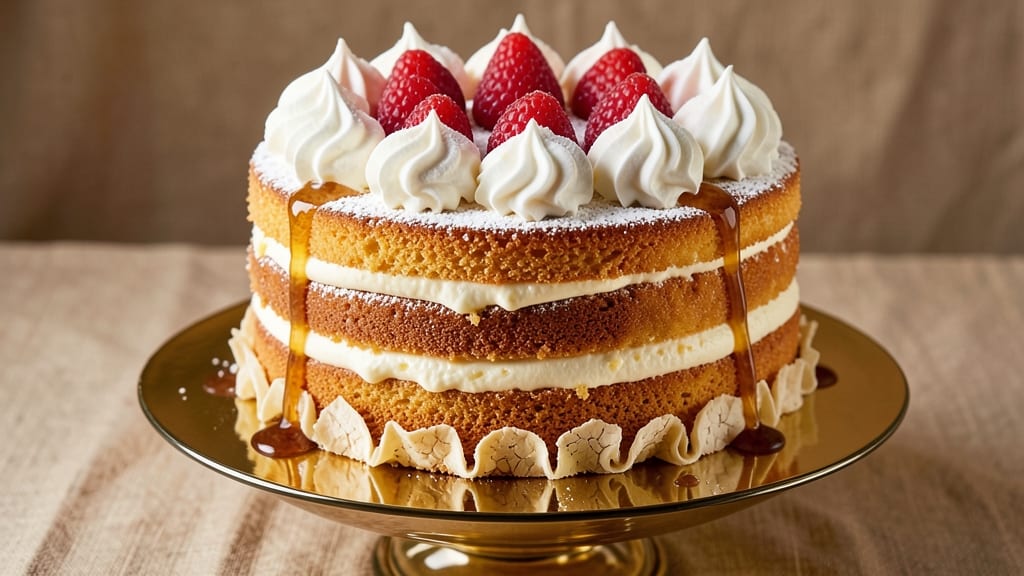
This 5-egg sponge cake recipe delivers the towering, airy perfection you've been craving—no shortcuts, just science-backed technique for a light-as-a-cloud texture that's impossible to resist. 🌟 The secret lies in properly folded egg whites and a precise baking method that creates those signature domed layers, not a dense cake that sinks with every slice.
What sets this recipe apart is the foolproof method that balances structure and tenderness, using room-temperature ingredients and a gentle folding technique to incorporate air without deflating those precious whites.
Unlike many recipes that rely on commercial stabilizers, this version achieves its signature rise through proper technique alone—no mysterious additives required.
By the time it emerges from the oven, you'll have a golden, domed cake with a delicate crumb that practically melts in your mouth. The high egg content creates that signature sponge texture, while proper baking ensures it stays light rather than gummy.
This is the kind of cake that makes every celebration feel special—without requiring advanced baking skills.
Perfect for birthdays, anniversaries, or simply treating yourself, this recipe includes variations for vanilla, citrus, or chocolate flavors. Let's get started on creating your showstopping sponge cake that will have everyone asking for seconds.
Ingredients for 5 egg sponge cake
Precision ingredients for a cake that defies gravity with its light-as-air structure.
| Ingredient | Amount | Notes |
|---|---|---|
| Large Eggs 🥚 | 5 whole | Room temperature, separated carefully |
| Granulated Sugar 🍚 | 1 ½ cups | Superfine preferred for even dissolving |
| All-Purpose Flour 🌾 | 1 ½ cups | Sifted, spooned gently (no packing) |
| Unsalted Butter 🧈 | ½ cup | Room temperature, cubed |
| Vanilla Extract 🌿 | 1 tbsp | Pure Madagascar bourbon preferred |
| Cream of Tartar 🧂 | ¼ tsp | Stabilizes egg whites |
| Baking Powder 🍞 | ½ tsp | Aluminum-free for tender crumb |
| Salt 🧂 | ¼ tsp | Fine sea salt preferred |
| Lemon Zest 🍋 | 1 tbsp | Fresh organic preferred |
| Cornstarch 🌾 | 1 tbsp | For delicate crumb texture |
| Whole Milk 🥛 | ¼ cup | Room temperature |
The eggs are non-negotiable here—room temperature is essential for proper volume. Pasture-raised eggs from Whole Foods or local farmers markets yield superior whites with more stable structure. For sugar, Domino Superfine dissolves instantly, but if you only have regular granulated, pulse it in a food processor first. The butter must be room temperature—press a finger into it; it should dent but not smear. Plugrá or Land O'Lakes unsalted are reliable brands for consistent results. Measure flour by gently spooning it into your cup and leveling with a knife—never pack or the cake will be dense.
No vanilla extract? Seeds from a vanilla bean work beautifully, but steep them in warm water for 10 minutes first. Short on cornstarch? Arrowroot powder at the same amount is a perfect substitute. The baking powder must be fresh—if it's over a year old, toss it. For a citrus twist, swap lemon zest for orange or lime zest at the same quantity. King Arthur flour is ideal for this recipe, but any all-purpose will work. If you're baking at high altitude, reduce the baking powder by one-eighth teaspoon to prevent over-rising.
Store the cake in an airtight container at room temperature for up to 3 days, or freeze for 2 months for maximum freshness. For serving, brush layers with simple syrup (equal parts sugar and water, heated until dissolved) to maintain moisture. This cake's structure makes it perfect for layering with fillings—whipped cream, citrus curd, or chocolate ganache all pair beautifully. The domed top should be sliced with a serrated knife for clean cuts without collapsing the structure.
Why You'll Love This Recipe
- No Stand Mixer Needed: I’ll be real—this recipe saved me after my mixer gave up the ghost. Five eggs and a hand whisk? That’s it. The butter gets whipped into clouds with just elbow grease, and the flour folds in like a dream. No fancy tools, no stress.
- Vanilla Buttercream Ready: Here’s what sold me—the cake’s so moist that it practically begs for frosting. Whip up the same butter and sugar you used in the batter, add vanilla, and you’ve got a showstopper. (Yes, even on a Tuesday night.) No extra ingredients, just pure, creamy indulgence.
- Crowd-Pleaser for Birthdays: Between us, this is my go-to for celebrations. It’s light enough to feel special but sturdy enough to cut into neat slices. Add a sprinkle of powdered sugar or a dusting of cocoa—suddenly, it’s birthday cake, dessert spread, or office potluck hero.
- Pantry Staples Only: Honestly, I make this when I’m too tired to shop. Five eggs, a stick of butter, flour already in the cupboard? That’s my emergency dessert. It keeps for days wrapped in plastic, and slices reheat in seconds. Budget-friendly, fuss-free, and always delicious.
Step-by-step instructions for 5 egg sponge cake
Master the science of aeration with this precise method for a towering, cloud-like sponge.
👨🍳 Step 1: Separate Eggs and Whip Whites to Stiff Peaks
Begin by separating the 5 whole Large Eggs into yolks and whites, ensuring no yolk traces contaminate the whites. Place the whites in a spotlessly clean, grease-free bowl—even microscopic fat prevents proper aeration. Add the 0.25 tsp Cream of Tartar to the whites to stabilize them.
Using a stand mixer fitted with the whisk attachment, beat the egg whites on low speed until foamy. Gradually increase to high speed and whip for 5-7 minutes until they form stiff peaks that hold their shape when the whisk is lifted. The peaks should be glossy and stand straight up—this is your foundation for height. If the bowl gets warm, chill it in the freezer for 2 minutes to prevent over-whipping.
👨🍳 Step 2: Cream Butter and Sugar to Ribbon Stage
In a separate bowl, combine the 0.5 cup Unsalted Butter (room temperature) and 1.5 cups Granulated Sugar. Using the paddle attachment, beat on medium-high speed for 5-7 minutes until the mixture is light, fluffy, and pale—it should leave a ribbon trail when the whisk is lifted. This incorporates air, which will later merge with your whipped egg whites for maximum volume.
Add the 1 tbsp Vanilla Extract and 1 tbsp Lemon Zest to the butter-sugar mixture, beating just until combined. Scrape down the sides of the bowl to ensure even mixing. Here's the thing—this step creates the structural framework that supports your cake's rise, so don't rush it. The mixture should be smooth and nearly triple in volume from its starting point.
🥘 Step 3: Combine Dry Ingredients and Fold in Egg Yolks
In a medium bowl, sift together the 1.5 cups All-Purpose Flour, 0.5 tsp Baking Powder, 0.25 tsp Salt, and 1 tbsp Cornstarch. Whisk gently to combine—this ensures even distribution of leavening agents throughout the batter. The cornstarch creates that signature delicate, melt-in-your-mouth texture.
Add the 5 egg yolks to the butter-sugar mixture and beat on low speed for 1 minute until just combined. With the mixer running on low, gradually add the dry ingredients in three additions, mixing just until incorporated after each. Be careful not to deflate the butter mixture—this is where most beginners lose volume. The batter should be thick but pourable, with no visible flour streaks.
🥘 Step 4: Fold in Whipped Egg Whites in Three Stages
Using a spatula, gently fold one-third of the whipped egg whites into the yolk mixture in large, sweeping motions from the bottom up. This preserves as much air as possible. The batter will lighten noticeably as you incorporate the first portion. Here's where precision matters: don't overmix or you'll collapse those precious air bubbles.
Add another third of the egg whites and fold gently until just combined. Finally, incorporate the remaining whites, again folding until no white streaks remain. The batter should be smooth, thick, and hold its shape when the spatula is lifted. If the batter looks too thin, it needs more folding—this is your final chance to build that towering structure. The lemon zest will infuse subtle brightness throughout.
⏰ Step 5: Bake at Low Temperature for Even Rise
Preheat your oven to 325°F—this lower temperature prevents the cake from rising too quickly and then collapsing. Grease and flour a 9-inch tube pan or line it with parchment paper, tapping to remove air bubbles. Pour the batter into the prepared pan and smooth the top with a spatula.
Bake for 50-60 minutes until the top is golden brown and a toothpick inserted in the center comes out clean. The cake should spring back when gently pressed in the center—this confirms proper doneness. Real talk: your oven might run hot, so start checking at the 45-minute mark. If the edges brown too quickly, tent loosely with foil to prevent over-browning while the center finishes baking.
Pro Tips For Making 5 Egg Sponge Cake
- Whisk Eggs to Ribbon: Split the 5 eggs—beat yolks and whites separately until the whites hold stiff peaks, then slowly drizzle yolks into whites while whisking. Stop when the batter looks like wet ribbon clinging to the whisk. I used to overmix the whites, and the cake turned dense—this keeps it light.
- Melt Butter Gently: Warm the butter (about 1/2 cup) in the microwave for 15 seconds, then let it sit 30 seconds to cool slightly before folding into the egg mixture. Hot butter cooks the eggs prematurely, and the cake ends up gummy. Trust me, this small pause makes a real difference.
- Sift Flour Twice: Sift the flour (about 1 1/2 cups) into the egg mixture in three additions, folding gently after each. The first sift aerates the batter, but the second and third ensure no lumps settle. I learned this the hard way—lumpy batter sinks like a stone.
- Bake at 325°F: Preheat the oven to 325°F (not 350°F) and bake the cake in the center rack for 40-45 minutes. The lower heat prevents a domed top or overbrowning, while the center rack guarantees even rise. I was skeptical until I tried it—no more burnt edges or undercooked centers.
Common mistakes when making this recipe
Overmixing the Batter
This is the #1 volume killer in sponge cakes. Once you've folded in all the egg whites, stop mixing immediately when no white streaks remain. Overmixing deflates those delicate air bubbles you worked so hard to create.
I've seen cakes go from towering to flat just from an extra 30 seconds of mixing after folding. Use a spatula and work in large, gentle scoops from the bottom up to maintain maximum aeration. 🌬️
Room-Temperature Ingredients
Cold eggs or butter are sneaky saboteurs. When ingredients are straight from the fridge, they don't incorporate air properly, leading to dense cakes. Let your 5 eggs sit at room temperature for at least 1 hour before starting.
Test your butter by pressing a finger into it—it should dent but not smear. I keep my eggs on the counter overnight before baking days to ensure perfect temperature. ❄️
Incorrect Oven Temperature
Baking at too high a temperature causes rapid rising followed by collapse. The ideal 325°F gives even heat distribution for gradual rise. I've ruined cakes by using 375°F thinking it would speed things up—resulting in a dense, flat mess.
Always use an oven thermometer to verify your oven's accuracy. If your cake browns too quickly, tent it loosely with foil to protect while the center finishes baking. 🌡️
Skipping the Cream of Tartar
This ¼ teaspoon stabilizes egg whites for stiffer peaks, which translates to better volume. Without it, your whites may not hold their shape properly, leading to a cake that's more cake-like than airy.
I keep a small jar of cream of tartar in my pantry specifically for baking—it's a game-changer for high-rise cakes. The stabilized whites create that signature delicate crumb structure. 🥚
Underwhipped Egg Whites
Soft peaks won't give you the height you need. Your egg whites should form stiff peaks that stand straight up when the whisk is lifted. I test by turning the bowl upside down—if the whites hold their shape, they're ready.
Underwhipped whites mean your cake will be dense and flat. For extra insurance, chill the bowl in the freezer for 2 minutes if it gets warm during whipping. 💨
Improper Pan Preparation
Greasing and flouring your pan correctly prevents sticking and ensures clean release. Use a 9-inch tube pan lined with parchment paper for perfect doming. I always tap the parchment against the counter to remove air bubbles before pouring batter.
Neglecting this step can cause the cake to tear when removing, ruining that beautiful dome shape. The pan should be prepared while the oven preheats—no last-minute rushing! 🧼
Nutrition facts
Frequently asked questions
Why does this recipe use 5 eggs instead of the usual 3?
The extra eggs create that signature light-as-air texture by incorporating more air into the batter. Each egg adds structure while maintaining moisture—ideal for a high-rise sponge. The high egg content also prevents dryness, giving you that melt-in-your-mouth crumb. Think of it as the secret to professional bakery-style results at home!
Can I make this cake without a stand mixer?
Yes, but you'll need to whip egg whites by hand for 8-10 minutes using a balloon whisk. For the butter-sugar mixture, use a hand mixer or even a fork (though it'll take longer). The key is patience—fold gently and work in stages to maintain aeration. A 9-inch tube pan works best for hand-mixed versions too.
How do I store leftover sponge cake?
Keep it in an airtight container at room temperature for up to 3 days, or freeze for 2 months. For maximum freshness, wrap layers individually in plastic wrap before storing. Thaw frozen cake overnight in the fridge. Pro tip: Brush layers with simple syrup (equal parts sugar and water) before storing to maintain moisture.
What's the best way to slice this cake?
Use a serrated knife heated in hot water for 10 seconds between slices. Warm the knife after every 2-3 cuts to prevent tearing the delicate structure. Cut at a 45-degree angle for elegant layers. Never use a cold knife or you'll get crumbs instead of clean slices!
Can I substitute cake flour for all-purpose?
Yes, but replace 1.5 cups all-purpose flour with 1.25 cups cake flour plus 0.25 cups cornstarch. Cake flour has a lower protein content, creating a finer crumb. The cornstarch helps maintain the delicate texture. If you only have all-purpose, add 1 tbsp cornstarch to the recipe as written for similar results.