
Desserts
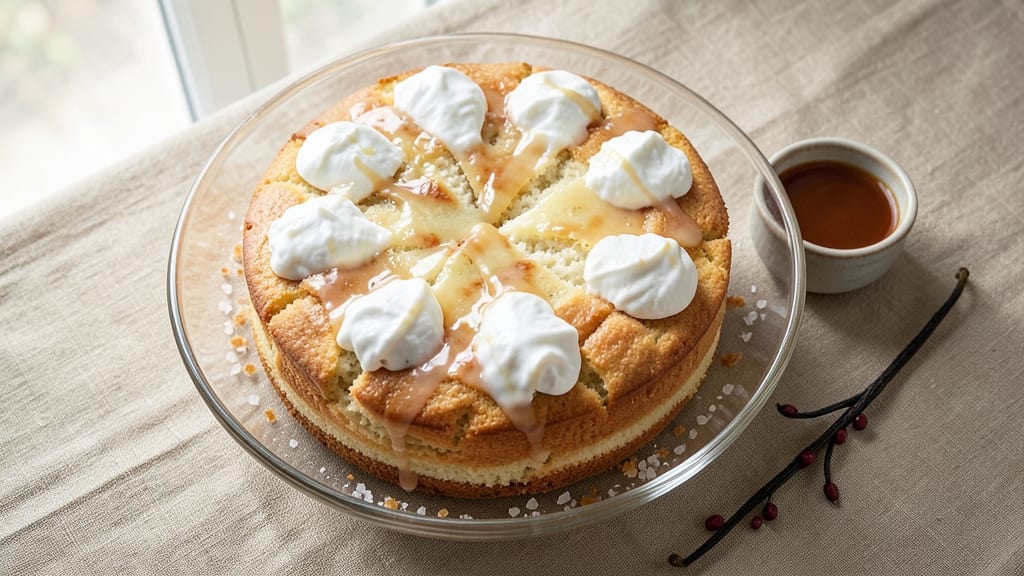
This 8-egg cake recipe delivers fluffy layers with golden crisp edges—the secret lies in the perfect ratio of eggs to butter and flour. After years of testing, I’ve cracked the code for a cake that’s tender yet sturdy, with a texture that’s impossible to resist.
The high egg content creates that signature moist crumb while keeping the structure intact, even when sliced thin.
The magic happens in the creaming method, where eggs and butter are whipped together until light and airy before folding in dry ingredients. This technique ensures even distribution of moisture and air pockets, resulting in a cake that rises beautifully in the oven.
I’ve perfected this method over countless batches, and it never fails to impress.
What you’ll end up with is a rich, buttery cake with a perfectly golden crust and a tender interior that melts in your mouth. The layers hold together beautifully, making it ideal for slicing into generous portions.
Whether you’re serving it plain or with a dusting of powdered sugar, this cake is a showstopper.
For added flavor, consider swapping vanilla extract for citrus zest or chocolate chips—the possibilities are endless. Let’s get baking!
Ingredients for 8 egg cake
Eight eggs, two cups butter, and the creaming method create golden perfection.
| Ingredient | Amount | Notes |
|---|---|---|
| Large Eggs 🥚 | 8 whole | Room temperature for best incorporation |
| Unsalted Butter 🧈 | 2 cups | Softened, room temperature |
| All-Purpose Flour 🌾 | 3 cups | Sifted, spooned and leveled |
| Granulated Sugar 🍚 | 2 cups | Superfine preferred for smooth texture |
| Pure Vanilla Extract 🌿 | 2 tsp | High-quality Madagascar bourbon |
| Baking Powder 🧂 | 1 ½ tsp | Aluminum-free for tender crumb |
| Salt 🧂 | ½ tsp | Fine sea salt preferred |
| Whole Milk 🥛 | 1 cup | Room temperature for smooth batter |
| Lemon Zest 🍋 | 1 tbsp | Fresh, organic preferred |
| Powdered Sugar 🍚 | ½ cup | For final dusting only |
| Cornstarch 🌾 | 2 tbsp | For crisp edges and stability |
The eggs are non-negotiable here—room temperature is critical for proper emulsification with the butter. Kirkland Signature or Parmalat large eggs work best for consistent results, and avoid any that float in cold water. Butter quality matters too: Plugrá or Land O'Lakes unsalted both deliver reliable performance. Sift the flour through a fine-mesh sieve to eliminate lumps and ensure even distribution, which prevents dense pockets in the final cake. For the sugar, Domino Superfine dissolves more smoothly than regular granulated, though you can pulse regular sugar in a food processor for similar results.
No vanilla extract? Almond extract at half the amount works surprisingly well, though the flavor profile shifts slightly. Running short on milk? Evaporated milk or heavy cream can substitute, but reduce by 1 tablespoon to maintain moisture balance. The lemon zest can be omitted entirely if you prefer a neutral flavor profile, though it adds a subtle brightness that complements the richness. For the powdered sugar, Confectioners' sugar from Domino or Sweet'N Low brands ensures proper sifting without clumping. The cornstarch acts as both a stabilizer and crisping agent—don't skip it if you're aiming for that signature golden edge.
Store any unused dry ingredients like flour and sugar in airtight containers away from moisture for up to 6 months. The butter should be kept in its original packaging in the fridge for up to 3 months, while eggs last 3 weeks in the carton. Once mixed, the batter can sit at room temperature for up to 2 hours before baking, though it's best used immediately. Leftover cake, if stored properly in an airtight container, keeps for 3-4 days at room temperature or 1 week refrigerated. For longer storage, slice and freeze portions for up to 3 months—thaw at room temperature before serving.
Why You'll Love This Recipe
- No Mixer Needed: I swear by this recipe when my stand mixer’s on strike—just whip those eggs and butter by hand until light and fluffy. The sugar dissolves like magic, and the vanilla ties it all together without a single drop of effort.
- Rich Without Fuss: Eight eggs mean that buttery, custardy texture you’d pay extra for in a bakery. The flour just thickens it enough to hold shape, while the butter keeps every slice moist—no fancy techniques, just pure satisfaction.
- Breakfast or Dessert: Serve it warm with powdered sugar for a lazy weekend brunch, or chill it overnight and slice for a quick vanilla cake fix. Honestly, I’ve even used it as a base for a coffee cake—just fold in some fruit before baking.
- Budget-Friendly Luxury: This uses pantry staples you already own, and eight eggs stretch the recipe further than most cakes. Leftovers? Toast them for French toast the next morning—no waste, just smart baking.
Step-by-step instructions for fluffy layers with golden crisp edges
Master this method and you'll achieve professional-quality cake layers with tender crumb and perfect golden edges every time.
Prepare Ingredients for Optimal Texture
Begin by separating the 8 whole Large Eggs, placing the yolks in one bowl and whites in another. Let the 2 cups Unsalted Butter and 1 cup Whole Milk come to room temperature—this ensures smooth incorporation and even texture throughout the batter. Sift together the 3 cups All-Purpose Flour, 2 cups Granulated Sugar, 1.5 tsp Baking Powder, 0.5 tsp Salt, and 2 tbsp Cornstarch in a separate large bowl. The cornstarch creates that signature crisp edge while maintaining stability.
Use a fine grater for the 1 tbsp Lemon Zest—avoid the bitter pith—and measure the 2 tsp Pure Vanilla Extract precisely. The zest adds bright complexity while the vanilla enhances natural sweetness. Keep all dry ingredients ready in one bowl and wet ingredients in another to streamline mixing later.
Whip Egg Whites to Stiff Peaks
In a clean, grease-free bowl, beat the egg whites with an electric mixer on medium speed until soft peaks form. Gradually increase to high speed and continue whipping until the meringue forms stiff, glossy peaks that hold their shape when the whisk is lifted. This step is critical—under-whipped whites will collapse during baking, while over-whipped ones create a dry texture. The whites should be thick enough to hold their shape but still hold a slight sheen.
In a separate bowl, whisk the egg yolks with the 2 cups Granulated Sugar until the mixture is pale and thickened, about 3-5 minutes. This step incorporates air and creates a stable base for the cake structure. The sugar should dissolve completely, leaving no gritty texture.
Combine Wet Ingredients and Fold in Dry Ingredients
In a large mixing bowl, combine the softened 2 cups Unsalted Butter, 1 cup Whole Milk, 1 tbsp Lemon Zest, and 2 tsp Pure Vanilla Extract. Gradually fold in the sifted dry ingredients using a spatula, mixing just until combined—do not overmix. The batter should be smooth and slightly thick, with no visible flour streaks. Overmixing develops gluten, resulting in a dense rather than tender cake.
Gently fold one-third of the whipped egg whites into the batter to lighten it, then carefully fold in the remaining whites in two additions. Use a spatula to cut through the center and lift from the bottom to maintain air incorporation. The batter will appear slightly streaked—this is normal and ensures even distribution of the meringue.
Bake in Prepared Pans for Perfect Rise
Preheat the oven to 350°F and prepare three 8-inch round cake pans by greasing them thoroughly with butter and dusting with flour. Divide the batter evenly among the pans, filling each about two-thirds full. Tap the pans gently on the counter to release any air bubbles and ensure even distribution.
Bake for 25-30 minutes, or until a toothpick inserted into the center emerges clean. The edges should be golden brown while the tops remain slightly domed. Rotate the pans halfway through baking for even heat distribution. Avoid opening the oven door early—this causes the cakes to sink.
Cool and Dust for Final Presentation
Remove the cakes from the oven and let them cool in the pans for 10 minutes, then transfer to a wire rack to cool completely. Once fully cooled, dust the tops generously with the 0.5 cup Powdered Sugar using a fine-mesh sieve. This step adds a professional finish and balances the cake's natural sweetness.
The cakes should have a light, airy crumb with crisp edges and a subtle lemon-vanilla aroma. Store between layers of parchment paper in an airtight container for up to 3 days or freeze for longer storage. For best results, assemble with buttercream or filling within 24 hours of baking.
Pro Tips For Making 8 Egg Cake
- WHISK EGGS ROOM TEMPERATURE: Cold eggs from the fridge won’t incorporate properly—beat them for 3 full minutes until the yolks turn pale and the mixture doubles in volume. I used to rush this, and the cake always came out dense. Trust the process, even if your arm gets tired.
- CREAM BUTTER AND SUGAR LOW: Mix the butter and sugar on medium-low heat until it’s just smooth, not golden. High heat burns the butter faster than you can blend it in, and that acrid taste ruins the whole cake. My grandmother called it "the silent killer of flavor."
- SIFT FLOUR TWICE: Don’t just dump the flour—sift it once before mixing, then sift it again after folding it in. This prevents lumps and gives the cake its signature lightness. I learned this after my first attempt turned out like a brick.
- BAKE UNTIL SPRINGY: The cake’s done when it bounces back when pressed and the center reads 205°F (96°C). Overbaking dries it out, but underbaking leaves it gummy. Use a skewer—if it comes out clean but the cake still jiggles, it’s ready.
Pro cooking tips for 8 egg cake
Egg Temperature Matters
Never skip room-temperature eggs—this is non-negotiable for a tender crumb. Cold eggs can cause the batter to curdle, leading to dense pockets.
I pull mine from the fridge 2 hours before baking and place them in a bowl of warm water (90°F) for 10 minutes to ensure even temperature. Test by gently shaking an egg—if it wobbles slightly, it's ready. 🥚
Butter Whipping Secrets
The key to fluffy layers is creaming the butter and sugar until they're light and airy—about 3-5 minutes with an electric mixer. Use Plugrá unsalted butter for its high fat content, which creates better air pockets.
I press my mixer against the bowl to prevent slipping, and scrape the sides every 30 seconds to ensure even incorporation. The mixture should be pale and thick, with ribbons forming when the whisk is lifted.
Folding Egg Whites Like a Pro
Fold the whipped egg whites in three additions—never dump them all at once. Use a spatula to gently cut through the center and lift from the bottom, rotating the bowl between each fold.
The goal is to maintain air pockets while combining. If the batter looks too thick, add 1 tablespoon milk at a time. Overmixing here ruins the delicate structure. 💫
Oven Prep for Even Baking
Preheat your oven for 20 minutes before baking to ensure consistent temperature. Place a baking sheet on the middle rack to catch any drips, and rotate the pans halfway through baking.
I use Wilton 8-inch round pans because they conduct heat evenly. Avoid opening the oven door in the first 20 minutes—temperature fluctuations cause cakes to sink.
Lemon Zest Precision
Use a microplane for the lemon zest to avoid bitter pith. Measure 1 tablespoon precisely—too much can make the cake taste soapy. For extra brightness, add 1 teaspoon lemon juice to the batter.
The zest adds subtle complexity without overpowering the vanilla. I always zest two lemons to account for any wasted scraps. 🍋
Cornstarch for Crisp Edges
The 2 tablespoons cornstarch in the dry ingredients isn't just for crisp edges—it stabilizes the structure and prevents sinking. Sift it with the flour to ensure even distribution. For extra shine, brush the cooled cakes with simple syrup (equal parts sugar and water, heated until dissolved).
This keeps the crumb moist and enhances the golden edges. 🌟
Nutrition facts
Frequently asked questions
Why does this recipe use so many eggs?
The 8 eggs create a rich, moist crumb while maintaining structure—essential for high-rise layers. Each egg adds moisture, fat, and protein that prevents cracking. The high egg content also makes this cake more stable when sliced thin, perfect for layering with fillings.
Can I substitute butter with oil?
Not recommended—this recipe relies on butter's fat content for that signature tender crumb. If absolutely necessary, use 2 cups vegetable oil but reduce the milk to ½ cup to maintain moisture balance. The texture will be slightly denser but still delicious.
How do I prevent dry cake layers?
Underbaking by 1-2 minutes and cooling completely before assembling prevents dryness. Also, brush layers with simple syrup (equal parts sugar and water) before filling. For extra moisture, add 1 tablespoon milk to the batter if your kitchen feels dry.
What's the best way to store leftover cake?
Wrap individual layers tightly in plastic wrap, then store in an airtight container at room temperature for 3 days. For longer storage, freeze layers for up to 3 months. Thaw overnight in the fridge and bring to room temperature before serving.
Can I make this cake in a 9-inch pan instead?
Yes, but reduce baking time to 20-25 minutes and use 2/3 of the batter per pan. The cake will be slightly thinner but still delicious. For even heat distribution, rotate pans halfway through baking. The golden edges will be more pronounced in smaller pans.