
Breakfast & Brunch
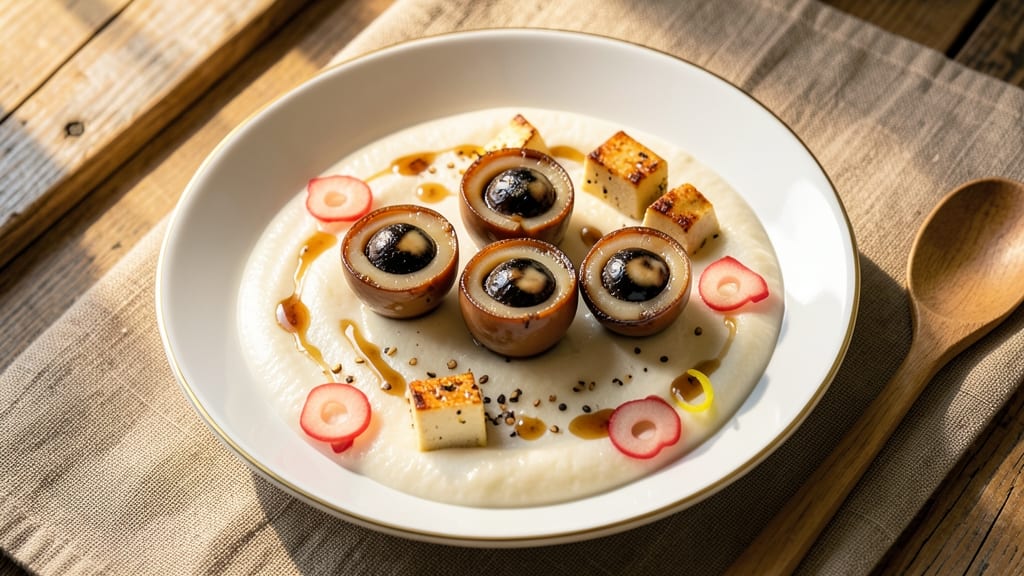
This silken tofu with century egg recipe transforms a traditional Chinese breakfast into a fast, vegetarian-friendly dish that balances creamy textures with bold umami flavors.
The secret lies in peeling century eggs properly—just tap the shell gently to reveal the dark, salty center—while silken tofu adds a delicate, melt-in-your-mouth contrast. What makes this dish special is how effortlessly it comes together in minutes, yet feels like a restaurant-worthy meal.
The foundation of this recipe is the century egg's intense, briny depth paired with silken tofu's silky smoothness. We'll slice the tofu into delicate cubes and arrange it alongside quartered century eggs on a chilled plate, creating a visually striking presentation.
A drizzle of chili oil or pickled vegetable garnish adds a final layer of complexity that elevates this dish beyond simple ingredients.
What you'll achieve is a restaurant-quality breakfast that's ready in under 30 minutes—no fussy techniques required. The tofu remains cool and velvety, while the century eggs provide that signature salty crunch.
This dish proves that vegetarian meals can be just as satisfying as their meat-based counterparts, with bold flavors that linger long after the last bite.
Perfect for brunch gatherings or a special weekend breakfast, this recipe scales easily for groups while maintaining its elegant presentation. The key to success is proper egg peeling and careful plating—once you master those, you'll have a dish that's both impressive and impossible to resist.
Let's get started with the ingredients you'll need.
Ingredients for silken tofu with century egg
Effortless ingredients for a restaurant-quality vegetarian breakfast fusion dish.
| Ingredient | Amount | Notes |
|---|---|---|
| Silken Tofu 🧀 | 12 oz | Unopened package, chilled |
| Century Eggs 🥚 | 4 whole | Pre-peeled or whole for peeling |
| Extra-Firm Tofu 🍲 | 14 oz | For garnish, pressed |
| Dark Soy Sauce 🥄 | 2 tbsp | For umami depth |
| Light Soy Sauce 🥄 | 1 tbsp | Balances flavors |
| Rice Vinegar 🍶 | 1 tbsp | White or seasoned |
| Sesame Oil 🫒 | 1 tbsp | Toasted, for aroma |
| Chili Oil 🌶️ | 1 tbsp | Optional garnish |
| Green Onions 🧅 | 2 whole | Thinly sliced, for garnish |
| Sesame Seeds 🌰 | 1 tsp | Toasted, for crunch |
| Cucumber 🥒 | ½ cup | Thinly sliced, for freshness |
| Salt 🧂 | ½ tsp | Fine sea salt |
| White Pepper 🌶️ | ¼ tsp | Freshly ground |
| Ice ❄️ | 1 cup | For chilling tofu |
The century eggs are the star—look for plump, dark-shelled eggs at Asian markets or specialty grocery stores. H Mart or 99 Ranch Market carry them year-round, but if unavailable, substitute with hard-boiled quail eggs for a similar presentation. Silken tofu should be unopened and chilled—never drained or pressed, as that disrupts its delicate texture. For the extra-firm tofu garnish, press it for 20 minutes before slicing to remove excess water. The difference in texture is noticeable when plated.
No century eggs? Salty duck eggs or preserved eggs work as substitutes, though the flavor profile differs slightly. Substitute sesame oil with neutral oil plus a pinch of toasted sesame seeds if unavailable, but the aroma is essential. For the cucumber, English cucumbers hold their shape best, but any variety will work if sliced thinly. The chili oil can be homemade by infusing oil with dried chili flakes, or use Lao Gan Ma brand for authenticity. Balance the soy sauces carefully—the dark soy adds color, while light soy provides the salty depth.
Century eggs keep 2-3 weeks refrigerated in their brine, but once peeled, store them submerged in water for 3-4 days maximum. Silken tofu lasts 5 days unopened in the fridge, but once opened, use within 2 days. Pressed tofu for garnish can be stored 1 week wrapped tightly in paper towels. Prep the cucumber and green onions last—they wilt quickly, so keep them in cold water until ready to plate. For a make-ahead option, assemble the dish without the cucumber and garnishes, then add them fresh before serving.
Why You'll Love This Recipe
- No-Chop Necessary: I swear by this—just blend the silken tofu with a splash of dark soy until it’s silky smooth, then fold in those century eggs like little flavor bombs. The extra-firm tofu gets a quick sear, and suddenly you’ve got a dish that looks like you spent hours on it.
- Umami Bomb Combo: Between us, the century eggs add this deep, briny punch that’s chef’s kiss with the dark soy’s smoky richness. Light soy ties it all together—salty, sweet, and just a little funky. It’s the kind of flavor that makes you go back for seconds without even thinking.
- Lunchbox Hero: This keeps perfectly for days in the fridge, so I make a big batch on Sundays. Pack it in bento boxes with steamed greens or rice—my kids actually eat their veggies when it’s in there. (Yes, even on a Tuesday night.)
- Budget Flex: Century eggs might sound fancy, but they’re cheaper than you’d think, and tofu stretches further than any meat I’ve tried. A single block of silken tofu and a few eggs feed four for under $10. That’s a win for my wallet and my taste buds.
Step-by-step instructions for silken tofu with century egg fusion
This fusion breakfast comes together in minutes with precise technique and bold flavors.
Prepare the Silken Tofu Base
Place the unopened 12 oz package of chilled silken tofu in a mixing bowl. Add the 1 cup of ice and 0.5 tsp of salt to the bowl. Using an immersion blender, blend until completely smooth and frothy—this should take about 2-3 minutes of continuous blending. The mixture should resemble thick, creamy pudding with no visible ice crystals remaining.
I like to stop and scrape down the sides of the bowl with a spatula every 30 seconds to ensure even blending. The cold temperature from the ice helps create that signature silky texture while the salt enhances the umami profile. If you don't have an immersion blender, a high-speed blender works just as well—just pulse until completely smooth.
Season and Chill the Tofu Mixture
Transfer the blended tofu to a clean bowl and gently fold in the 2 tbsp of dark soy sauce, 1 tbsp of light soy sauce, and 1 tbsp of rice vinegar. Mix thoroughly until completely combined. The mixture should have a rich, dark hue from the soy sauces and a slightly tangy aroma from the vinegar.
Cover the bowl with plastic wrap and refrigerate for at least 30 minutes—this chilling step is crucial for developing proper texture. I often find this waiting time helps the flavors meld together more harmoniously. While it chills, you can prepare the century eggs and other components without worrying about the tofu mixture separating.
Peel and Prepare the Century Eggs
Carefully peel the 4 whole century eggs, removing the outer membrane and preserving the yolk intact. Cut each yolk in half lengthwise and separate from the whites. Place the yolk halves in a small bowl and set aside. The whites can be finely chopped and reserved for garnish if desired.
Here's where the magic happens: use a spoon to gently press the century egg yolks through a fine-mesh sieve, creating a smooth paste. This step extracts the rich, complex flavors without any texture. The resulting yolk mixture should be thick and vibrant—almost like a dark, luxurious custard. If you prefer more texture, you can leave some of the yolk intact instead of sieving.
Assemble the Fusion Dish
Return the chilled tofu mixture to the bowl and gently fold in the century egg yolk paste using a silicone spatula. Add the 1 tbsp of sesame oil and 0.25 tsp of white pepper, mixing until fully incorporated. The combination should create a velvety texture with deep umami notes from both the century eggs and soy sauces.
Divide the mixture evenly among 4 serving bowls. For each serving, top with thinly sliced green onions, toasted sesame seeds, thinly sliced cucumber, and a drizzle of chili oil. The contrast of textures—creamy tofu, crunchy cucumber, and toasted seeds—elevates each bite. Serve immediately while the tofu maintains its silky consistency.
Pro Tips For Making Silken Tofu With Century Egg
- Cut Century Eggs Cold: Use a sharp knife and freeze the century eggs for 10 minutes first—this makes slicing through the jelly and yolk cleanly without turning your cutting board into a science experiment. I learned this the hard way after trying to slice one with a butter knife and ending up with a mess of goo and frustration.
- Pan-Fry Extra-Firm First: Cook the extra-firm tofu separately in the pan until it’s golden and slightly crispy before adding the silken tofu. The contrast in textures—crispy tofu, creamy silken, and silky century egg—is what makes this dish sing. Skip this, and you’re just serving mushy tofu with a side of regret.
- Don’t Overmix the Sauce: Stir the dark and light soy sauces together just until combined—a few swirls, not a whirlpool. Overmixing turns the sauce thin and watery, which dilutes the rich umami of the century egg. Think "marry the flavors," not "blend them into oblivion."
- Press Silken Tofu Dry: Drain the silken tofu, then wrap it in a clean kitchen towel and press it gently between your hands for 30 seconds to absorb excess water. Wet silken tofu steams instead of searing, and you’ll end up with a sad, soupy dish. This isn’t the prettiest method, but it’s the tastiest.
Wine and beer pairings for silken tofu with century egg
Umami-Rich White Wine
For this dish, I recommend a dry Riesling from Germany or Austria—its crisp acidity and subtle mineral notes complement the century egg's briny depth without overpowering the silken tofu. Look for a Kabinett-level Riesling with 12-13% ABV like Dr. Loosen Blue Slate or Chateau Ste.
Michelle. The wine's slight sweetness balances the soy sauce's saltiness, creating harmony. Serve slightly chilled (45-50°F) to enhance its refreshing quality. 🍷
Earthy Beer Pairing
A Japanese junmai sake with 15-16% alcohol works beautifully, especially if you prefer beer over wine. Brands like Dassai 23 or Kubota Junmai offer rich umami notes that mirror the century egg's complexity. The sake's smooth, slightly sweet profile softens the soy sauce's intensity while highlighting the tofu's delicate texture.
For a beer alternative, try a light Japanese lager like Asahi Super Dry—its clean finish won't compete with the dish's bold flavors.
Herbal Tea Harmony
If you prefer non-alcoholic options, jasmine green tea or pu-erh tea from China elevate the dish's umami profile. Brew jasmine tea at 175°F for 2-3 minutes to preserve its delicate floral notes, which contrast beautifully with the soy and century egg.
For a bolder match, aged pu-erh (fermented for 5+ years) adds earthy depth that mirrors the dish's savory richness. Serve warm or chilled for a refreshing twist. 🍵
Spicy Contrast
Add a chili-infused lychee wine like Wuliangye for a spicy-sweet pairing that cuts through the dish's richness. The lychee's floral notes complement the century egg's brininess, while the chili oil's heat aligns with the dish's natural spice.
For a non-alcoholic option, mix 1 tsp chili oil with ½ cup sparkling water and a squeeze of lime—this refreshing drink mirrors the dish's bold flavors without overpowering them. 🌶️
Nutrition facts
Frequently asked questions
Why does the recipe call for blending silken tofu with ice?
The ice creates a silky, velvety texture by breaking down the tofu's natural structure while keeping it cold. Without ice, the tofu can become grainy or separate during blending. The cold temperature also helps preserve the tofu's delicate consistency throughout cooking. This technique is key for achieving that restaurant-quality smoothness!
How do I properly peel century eggs without ruining them?
Start by tapping the shell gently with a spoon—it should crack easily. Peel away the outer membrane, then rinse under cold water to remove any residue. For the yolk, cut it lengthwise and gently press it through a fine-mesh sieve for a smooth paste. Never force it or the yolk may break. The key is patience—take your time to preserve that rich, dark center!
Can I make this dish ahead of time?
Prepare the tofu mixture and century egg paste up to 1 day ahead, but store them separately in airtight containers. Refrigerate until ready to assemble—just combine them with the sesame oil and pepper right before serving. The tofu will maintain its texture best when freshly blended. Garnishes like cucumber and green onions should be added fresh for optimal crispness.
What if I can't find century eggs?
Try salty duck eggs or preserved eggs for a similar salty, umami flavor. For a vegetarian alternative, use black garlic paste or miso paste mixed with a pinch of salt—though the texture will differ. If you're near an Asian market, century eggs are often sold in the refrigerated section near other preserved foods.
How do I get the best texture when plating?
Serve the tofu mixture immediately after combining with century egg paste to maintain its creamy consistency. Use chilled bowls to prevent warming. Garnish with crisp elements like cucumber and toasted sesame seeds last—they add visual contrast and keep the dish refreshing. For extra elegance, arrange the century egg yolk halves on top before drizzling chili oil.