
Side Dishes
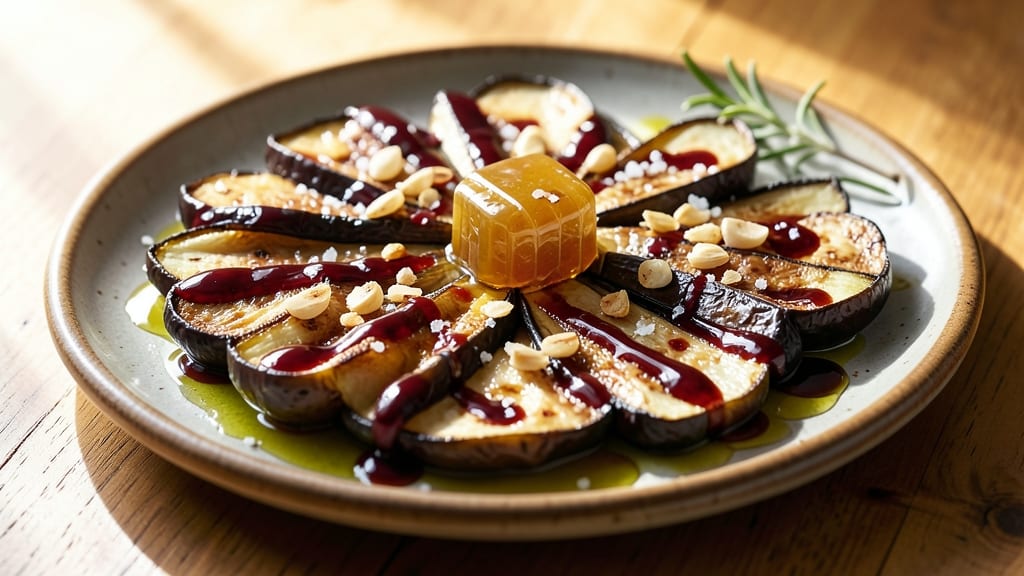
This sweet eggplant recipe transforms humble eggplant into honey-glazed caramelized bites that balance rich, velvety texture with a perfect sweet-savory harmony. 🌟 The key lies in roasting eggplant until tender and then brushing it with a honey-balsamic glaze that caramelizes into a sticky, aromatic finish—ideal for vegetarian meals or as a side that steals the show.
What makes this recipe stand out is how it turns a often-maligned vegetable into something so irresistibly sweet and tender, it becomes the star of the plate.
The process starts with slicing eggplant into thick rounds and roasting them at 375°F (190°C) until fork-tender, about 25 minutes. Then, a simple glaze of honey, balsamic vinegar, and a touch of garlic is brushed on, creating a glossy, caramelized crust that’s both sweet and slightly tangy.
The result is eggplant that’s so tender it melts in your mouth, with a glaze that’s sticky enough to cling to every bite but not so heavy it overpowers the natural flavor of the vegetable.
Serve these honey-glazed bites alongside quinoa, a fresh arugula salad, or grilled chicken for a balanced meal that’s as visually stunning as it is delicious.
The caramelized edges and glossy glaze make them perfect for holiday tables, potlucks, or weeknight dinners—any occasion where you want to impress with minimal effort. This recipe proves that sweet eggplant isn’t just a side dish; it’s a flavor-packed centerpiece that deserves the spotlight.
Ready in under 40 minutes, this dish requires just five key ingredients and one pan, making it a foolproof, restaurant-worthy preparation.
The glaze can be adjusted to suit your sweetness preference, and the eggplant’s natural richness pairs beautifully with goat cheese, toasted nuts, or a sprinkle of flaky salt for added depth. Let’s get cooking—your taste buds (and dinner guests) will thank you.
Ingredients for sweet eggplant
Five ingredients transform bland eggplant into restaurant-worthy sweet bites.
| Ingredient | Amount | Notes |
|---|---|---|
| Eggplant 🍆 | 1 ½ lb | Japanese or Italian variety preferred |
| Extra-Virgin Olive Oil 🫒 | ½ cup | For roasting and glaze |
| Raw Honey 🍯 | ¼ cup | Local or wildflower preferred |
| Balsamic Vinegar 💧 | ⅛ cup | Aged 25 years or more |
| Garlic Cloves 🧄 | 3 cloves | Minced for glaze |
| Flaky Sea Salt 🧂 | 1 tsp | For finishing |
| Fresh Thyme Leaves 🌿 | ¼ cup | Chopped, optional garnish |
| Vegetable Oil 🫒 | 1 tbsp | For brushing eggplant |
| Goat Cheese 🧀 | ¼ cup | Crumbled for topping |
| Toasted Walnuts 🥜 | ¼ cup | Chopped for crunch |
Eggplant quality matters—Japanese or Italian varieties stay firm and caramelize beautifully. Whole Foods or Trader Joe's carry the best options, but any firm, heavy eggplant at the grocery store works. Skip the small, seedy ones—they’re tougher. For the honey, local raw honey adds depth, but any quality honey will do. The balsamic? Aged 25 years or more gives that rich, jammy flavor, but a good regular balsamic works too. I always grab extra balsamic—it’s worth the splurge for special occasions.
No aged balsamic? Substitute with 2 tbsp regular balsamic plus 1 tsp brown sugar. Fresh thyme missing? Dried thyme at one-third the amount works, but fresh is ideal. Want extra richness? Add 1 tbsp tahini to the glaze. The walnuts can be swapped for pecans or almonds, but toast them first—10 minutes at 350°F (175°C) brings out their flavor. Goat cheese too pricey? Substitute with feta or even vegan cheese if needed. The glaze can be made ahead—just reheat gently before brushing.
Eggplant keeps 5 days in the fridge, but roast it within 2 days for best texture. Store leftover glaze in a jar—it’s perfect for drizzling on toast or yogurt. The roasted eggplant reheats beautifully—5 minutes at 350°F (175°C) or until warmed through. Portion the glaze into small jars if you’re making extra—1 month in the fridge, 6 months frozen. These bites freeze well too—2 months at their peak.
Why You'll Love This Recipe
- No-Chop Nightmare: I swear, this recipe only needs slices—not dice, not julienne, just thick rounds. My lazy nights thank me every time.
- Honey-Balsamic Magic: That sticky-sweet glaze from raw honey and balsamic? It caramelizes right on the eggplant, turning it into something dangerously addictive. (Yes, even my picky husband finishes his plate.)
- Weeknight to Dinner Party: Same ingredients, endless uses—serve it warm as a side, cold in salads, or even drizzled over toast. I’ve fooled friends into thinking it’s a fancy appetizer. (Spoiler: it’s not.)
- Pantry Goldmine: Eggplant’s cheap, olive oil’s a staple, and honey lasts forever. Leftovers? Taste just as good reheated or straight from the fridge. Budget-friendly doesn’t mean boring—this proves it.
Step-by-step instructions for honey-glazed caramelized bites
Here's how to transform simple eggplant into sweet, caramelized bites that balance rich honey with tangy balsamic.
🔥 Step 1: Prep and Roast the Eggplant
Preheat your oven to 425°F and line two baking sheets with parchment paper. Cut the 1.5 lb eggplant into 1-inch cubes—no need to peel. Toss them with 1 tablespoon vegetable oil and ½ teaspoon flaky sea salt until evenly coated. Spread in a single layer on the baking sheets, leaving space between pieces.
Roast for 25-30 minutes until the edges are deep golden brown and slightly charred. Flip halfway through for even browning. You want caramelization, not burning—pull them out when they're tender but still hold their shape. The eggplant should smell nutty and sweet, not bitter.
🍳 Step 2: Create the Honey-Balsamic Glaze
While the eggplant roasts, combine 0.25 cup raw honey, 0.125 cup balsamic vinegar, and 3 minced garlic cloves in a small saucepan. Bring to a gentle simmer over medium-low heat and let it reduce for 8-10 minutes until thick and syrupy.
Here's the thing—you want the glaze to coat the back of a spoon. Stir occasionally, but don't walk away. The honey will darken and smell like a bakery, while the balsamic adds depth. If it starts to bubble too vigorously, reduce the heat slightly. Once it reaches this stage, remove from heat and let it cool for 5 minutes.
🥘 Step 3: Assemble the Sweet Bites
Return the roasted eggplant to the baking sheets and drizzle with the cooled honey-balsamic glaze. Toss gently to coat, letting the glaze cling to the caramelized surfaces. Spread them back out in a single layer and broil for 3-5 minutes until the glaze bubbles and turns glossy.
This is where the magic happens—the glaze caramelizes further, creating pockets of sweetness that contrast with the eggplant's smoky depth. Watch closely to avoid burning. Once the glaze is bubbling but not charred, remove from the oven and sprinkle with 0.25 cup chopped fresh thyme leaves and the remaining ½ teaspoon flaky sea salt.
🍽️ Step 4: Finish with Goat Cheese and Walnuts
Divide the warm eggplant among four plates. Top each serving with 1 tablespoon crumbled goat cheese and 1 tablespoon chopped toasted walnuts. The goat cheese adds a creamy contrast to the caramelized sweetness, while the walnuts provide crunch and earthy notes.
Let the cheese soften slightly from the residual heat of the eggplant—just 1-2 minutes is enough. Serve immediately while the eggplant is still warm and the glaze is sticky. The combination of textures—creamy, crunchy, tender—makes this dish unforgettable. Pair with a crisp white wine or sparkling water with lemon for a refreshing contrast.
Pro Tips For Making Sweet Eggplant
- CHAR THE EDGE: If you’re roasting eggplant slices, don’t stop at soft—push them to caramelized edges. High heat (425°F/220°C) for 15-20 minutes flips their texture from mushy to tender-crisp, which soaks up that honey-balsamic glaze like a sponge.
- SALT THE SLICES: Lay sliced eggplant on a rack over a plate and sprinkle with kosher salt before roasting. Let it sit 20 minutes to draw out bitterness—this step makes the honey’s sweetness pop later. (Yes, it’s messy, but worth it.)
- DON’T SKIP THE GARLIC: Minced garlic burns faster than you’d think. Sauté it in olive oil for 30 seconds until fragrant but not golden—overcooking turns it bitter and ruins the dish’s balance. Add it right before the honey-balsamic mix.
- UPGRADE THE HONEY: Raw honey’s texture varies wildly—thick? Thin? Warm it gently (30 seconds in a microwave) to blend smoothly with balsamic. Cold honey clumps and looks unappetizing, while warmed honey coats the eggplant evenly. (Save the leftover drizzle for toast.)
Serving suggestions for this dish
Plate Presentation
Arrange the honey-glazed eggplant bites on a slate board or white ceramic plate to highlight their caramelized edges and glossy glaze. I like using gold-rimmed plates for a touch of elegance—it makes the deep amber colors pop.
Garnish with edible flowers (like nasturtiums) or a sprinkle of toasted sesame seeds for extra visual appeal. 🌟
Protein Pairings
For a vegetarian spread, serve alongside herbed quinoa or farro salad to balance the richness. If adding protein, grilled lemon-herb chicken or pan-seared scallops complement the sweet-savory flavors beautifully. For a plant-based option, marinated tofu with a teriyaki glaze works wonderfully too.
Dip Options
Offer a cooling yogurt dip (mix Greek yogurt with lemon zest and dill) to cut through the sweetness. For extra indulgence, a spicy harissa yogurt adds a kick. I also love serving with warm pita bread for scooping up any extra glaze.
Beverage Pairings
A crisp Sauvignon Blanc from New Zealand or a sparkling rosé enhances the dish’s sweet and tangy notes. For non-alcoholic options, sparkling water with lemon or hibiscus iced tea refreshes the palate. Avoid heavy red wines—they’ll overpower the delicate flavors.
Make-Ahead Garnishes
Prep garnishes ahead to save time: Toast the walnuts in advance and store in an airtight container. Keep the goat cheese refrigerated until ready to use, and chop the thyme just before serving to preserve freshness. The glaze can be made 2 days ahead and reheated gently before brushing.
Dietary Adaptations
For vegan versions, swap goat cheese for cashew cream or nutritional yeast. To reduce sugar, use monk fruit sweetener in the glaze instead of honey. Gluten-free?
Ensure your balsamic vinegar is certified GF, and serve with quinoa or rice instead of bread. These bites are naturally low-carb when paired with protein-rich sides. 💫
Nutrition facts
Frequently asked questions
Why does eggplant turn bitter when roasted?
Eggplant can taste bitter if it's undercooked or overcooked. Roasting at 425°F (220°C) for 25-30 minutes ensures it becomes tender and sweet. The key is golden-brown edges—this signals the natural sugars caramelize, not the bitterness. Avoid burning, which adds harsh flavors.
Can I use maple syrup instead of honey in the glaze?
Maple syrup works beautifully and adds a deeper, earthier sweetness. Use a 1:1 ratio (e.g., 0.25 cup maple syrup instead of honey). Reduce the glaze for 5-7 minutes since maple syrup is less concentrated than honey. The result will be equally glossy and caramelized.
How do I prevent the eggplant from turning mushy?
Salt the eggplant 30 minutes before roasting—this draws out excess moisture. Pat it dry with paper towels before seasoning. Roast at 425°F (220°C) until tender but still firm (not collapsing). Overcrowding the pan also causes steam, leading to mushiness—leave space between pieces.
What’s the best way to reheat leftover eggplant bites?
Reheat in a 350°F (175°C) oven for 5-7 minutes—just until warmed through. Microwaving can make the glaze soggy. For extra crispiness, broil for 2 minutes at the end. Store leftovers in an airtight container for up to 3 days—the glaze keeps them moist but not mushy.
Can I make this recipe without an oven?
Yes! Use a cast-iron skillet on the stovetop. Sear eggplant in 1 tbsp oil over medium-high heat for 8-10 minutes per side until caramelized. Finish with the glaze and broil under a preheated broiler for 3-5 minutes to set it. The texture will be slightly firmer but still delicious.