
Breakfast & Brunch
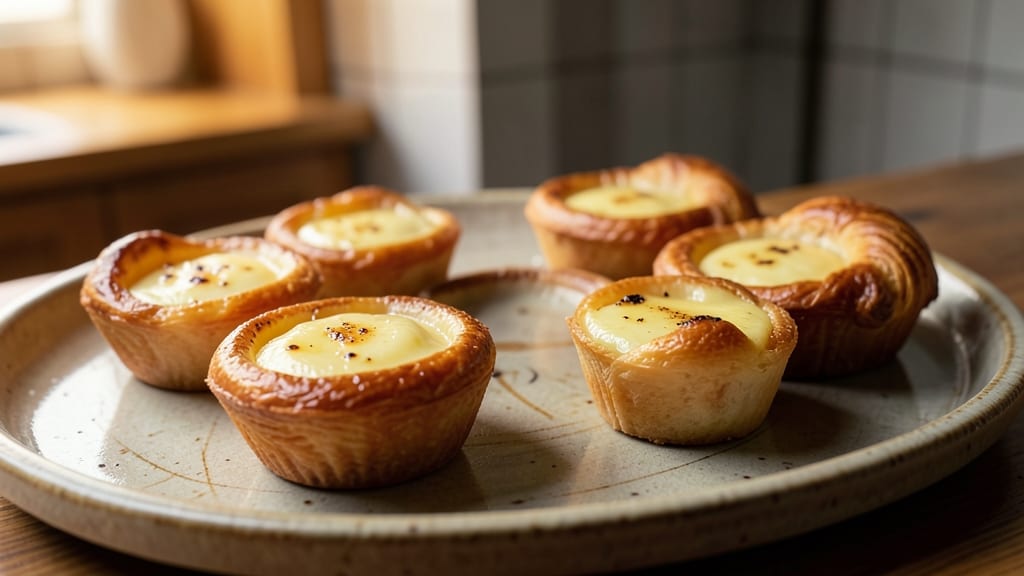
Taiwan egg tarts recipe delivers the perfect balance of crispy, caramelized shells and silky, runny yolk centers that make every bite unforgettable. 💛 The secret lies in a delicate pastry dough that bakes to golden perfection while encasing a rich custard filling that stays gloriously gooey. I've perfected this technique through countless batches, ensuring the crust achieves that signature crackly texture while the egg yolk remains perfectly liquid at the center.
The foundation of these egg tarts begins with a simple yet precise pastry dough made from flour, butter, and a touch of sugar.
The key to achieving that coveted crispy shell is baking the tarts at 375°F for the right amount of time—just enough to create a caramelized exterior without overcooking the custard inside.
The egg custard, a blend of eggs, sugar, and milk, requires careful tempering to prevent curdling, ensuring a smooth, velvety filling that contrasts beautifully with the crispy crust.
What sets these egg tarts apart is the harmony of textures—each bite offers a satisfying crunch from the shell, followed by the creamy, runny yolk that pools on your spoon.
This recipe is designed to be foolproof, with clear instructions for assembling and baking the tarts to achieve that restaurant-quality result at home. Whether you're making them for a special occasion or simply craving a taste of Taiwan, these egg tarts are sure to impress.
Once you master the classic version, you can experiment with variations like adding chocolate chips to the custard or incorporating matcha powder for a modern twist. The possibilities are endless, but the foundation remains the same—crispy shells and runny yolk magic that make every bite worth it.
Let's get started on creating these iconic treats!
Ingredients for taiwan egg tart
Crispy shells and runny yolk perfection start with these simple yet precise ingredients.
| Ingredient | Amount | Notes |
|---|---|---|
| All-Purpose Flour 🌾 | 2 ½ cups | Sifted for light texture |
| Unsalted Butter 🧈 | 1 cup | Cold, cubed for pastry |
| Granulated Sugar 🍚 | ¼ cup | Fine grain preferred |
| Large Eggs 🥚 | 4 whole | Room temperature for custard |
| Whole Milk 🥛 | ¾ cup | Full-fat for richness |
| Granulated Sugar 🍚 | ½ cup | For custard sweetness |
| Salt 🧂 | ½ tsp | Fine sea salt |
| Vanilla Extract 🌸 | 1 tsp | Pure vanilla preferred |
| Cornstarch 🌾 | 1 tbsp | For custard stability |
| Vegetable Oil 🫒 | 1 tbsp | For greasing tart molds |
| Baking Powder 🍞 | ½ tsp | For slight lift |
| Ice Water 💧 | ¼ cup | For dough elasticity |
The butter is non-negotiable here—Plugrá or Land O'Lakes work best for that rich, caramelized flavor. Grab the coldest butter from your fridge (the kind that feels like it'll never melt). For the flour, King Arthur or Gold Medal are my go-tos—they handle the cold butter better than store brands. The custard eggs should be at room temperature (about 10 minutes out of the fridge), but don't overlook the milk—whole milk from the back of the fridge (not the door) gives you that extra creaminess. If you're using pre-sifted flour, sift it again—those little lumps ruin the texture.
No vanilla extract? Vanilla bean paste works too, or skip it entirely if you're short. For the custard, if you don't have cornstarch, arrowroot powder at the same amount is a good swap. Want to make it ahead? Prep the dough and custard separately, then assemble right before baking—the dough keeps for 2 days wrapped in plastic, and the custard lasts 1 day in the fridge. The baking powder is optional but helps with that signature crackly texture—skip it if you prefer a more delicate crust. For the tart molds, I use 6-inch round pans but any shape works as long as they're at least 2 inches deep.
The dough needs to rest for 30 minutes before rolling—don't skip this! Store any leftover dough between two sheets of parchment paper in the fridge for up to 3 days. The custard can be made a day ahead and refrigerated, but let it come to room temperature before assembling. Baked tarts stay fresh for 2 days at room temperature, but the yolk gets firmer—best eaten fresh out of the oven. For freezing, bake first, then store in an airtight container for up to 1 month. Reheat in a 350°F oven for 5-10 minutes to restore that gooey magic.
Why You'll Love This Recipe
- Pantry-Friendly Magic: The only ingredients you need are already in my cabinet—flour, butter, sugar, eggs, milk. No specialty items, no last-minute grocery runs. Honestly, I’ve made these with whatever eggs were left in the fridge, and they still turn out golden and rich.
- Golden Crunch, Creamy Heart: That crispy, buttery crust with the silky egg custard inside? It’s the kind of contrast that makes you close your eyes. The sugar caramelizes just enough to give it a subtle sweetness, while the milk keeps the filling dangerously smooth.
- Breakfast or Dessert: I’ve served these cold for breakfast with coffee, warm as a snack after school, and even at dinner with tea. They’re neutral enough to pair with anything—savory, sweet, or just plain—but always hit the spot.
- Makes Ahead, Costs Less: Bake a dozen, and you’ve got snacks for the week. They reheat beautifully (or not—honestly, they’re just as good at room temp). Plus, butter and eggs are cheap staples, so you’re not breaking the bank for something this satisfying.
Step-by-step instructions for Taiwan egg tarts
Here's how to nail that iconic crispy shell and silky custard—every time.
👨🍳 Step 1: Make the Perfect Tart Dough
In a large bowl, combine the 2.5 cups all-purpose flour and 0.5 tsp salt. Cut in the 1 cup cold cubed unsalted butter using a pastry cutter or your fingers until the mixture resembles coarse crumbs with pea-sized butter pieces. This texture is crucial—it ensures flaky layers in your tart shells.
Add the 0.25 cup granulated sugar and mix lightly. Then pour in the 0.25 cup ice water all at once. Using a fork, gently stir until the dough just comes together—don't overwork it. The dough should be slightly shaggy but hold when pressed. Divide into 8 equal portions and chill for 30 minutes while you prepare the custard.
🍳 Step 2: Prepare the Signature Custard Filling
In a medium saucepan, whisk together the 4 whole large eggs, 0.75 cup whole milk, 0.5 cup granulated sugar, 1 tsp vanilla extract, and 1 tbsp cornstarch. Heat over medium-low heat, stirring constantly with a silicone spatula, until the mixture thickens to 170°F—it should coat the back of a spoon but still be pourable. This temperature ensures that silky, runny yolk center without curdling.
Real talk: Don't rush this step. If the custard gets too hot, it'll scramble. Remove from heat as soon as it reaches temperature, then strain through a fine-mesh sieve into a bowl. Let it cool to room temperature while you preheat the oven to 375°F. This cooling prevents the custard from cooking too quickly in the oven.
🥘 Step 3: Shape and Bake the Tarts
Grease 8 tart molds (about 3.5 inches in diameter) with 1 tbsp vegetable oil. Roll out one chilled dough portion between two sheets of parchment paper to ⅛-inch thickness. Cut a circle slightly larger than your tart mold, then carefully press it into the mold, trimming any excess dough. Repeat with remaining dough portions.
Fill each tart shell about ¾ full with the cooled custard mixture. Bake on the middle rack for 20-25 minutes until the edges are deep golden brown and the tops are set but still slightly jiggly in the center. Here's the thing—you want that custard to stay runny inside, so don't overbake. The center should still wobble gently when the tart is done.
⏰ Step 4: Rest and Serve for Maximum Flavor
Let the tarts cool in the molds for 5 minutes, then carefully transfer them to a wire rack. Here's where the magic happens: Serve them warm or at room temperature—never straight from the oven. The custard needs 10-15 minutes to set properly, allowing the yolk to remain perfectly runny when cut into.
For that authentic Taiwan touch, dust the tops with a little extra granulated sugar right before serving. The contrast of crispy shell, creamy custard, and that molten yolk center is what makes these tarts legendary. And don't skip the resting time—I learned the hard way that impatient eating leads to broken custards!
Pro Tips For Making Taiwan Egg Tart
- CHILL THE BUTTER FIRST: Cold butter in the crust makes all the difference—literally. Cut that unsalted butter into tiny cubes and freeze it for 10 minutes before mixing with flour. I learned this the hard way when my first batch turned out greasy instead of flaky. The butter should stay in little pea-sized lumps when you press the dough; if it melts into a paste, you’ve waited too long.
- WHISK EGGS LIKE A MANIAC: The custard’s texture hinges on how you treat the eggs. Whisk them in a heatproof bowl over simmering water for 2-3 minutes—just until the mixture reaches 70°C (160°F). Stop when it’s thick but still pourable, not scrambled. Overcooking here turns your custard into glue, and nobody wants that in their tart.
- DON’T OVERFILL THE CUPS: Half is often more. Fill your muffin cups only 2/3 full with custard—any more and it’ll spill over when the egg sets. I used to pack them tight, only to watch golden tops turn soggy as the custard oozed out. Trust me, the egg will rise; give it room to do its thing.
- BAKE IN STAGES: Start with a hot oven (200°C/400°F) for 10 minutes to set the crust edges, then drop to 160°C (325°F) for the remaining 20-25 minutes. This two-step method prevents the crust from burning while the custard cooks through. I was skeptical until I tried it—now my tarts have crisp bottoms and silky centers every time.
Wine and beer pairings for this dish
Taiwanese Tea Pairings
Taiwan egg tarts pair beautifully with traditional Oolong teas like Dong Ding or Tie Guan Yin. These teas complement the tart's sweetness with their floral, slightly nutty notes.
I recommend half-caf to full-leaf brewing at 195°F for 3-4 minutes—just enough to highlight the tea's complexity without overpowering the custard's richness. 💛
Light White Wines
For a refreshing contrast, try a dry Riesling from Germany or Austria. The wine's crisp acidity and citrus undertones cut through the egg tart's sweetness while enhancing the custard's velvety texture.
I love Dr. Loosen Blue Slate Riesling—its mineral finish balances the tart's caramelized crust beautifully. Serve slightly chilled at 50-55°F for optimal pairing.
Creamy Dessert Wines
If you prefer something richer, a late-harvest Moscato d'Asti adds a luxurious touch. The wine's effervescence and honeyed sweetness mirror the custard's runny yolk, creating a harmonious dessert experience.
Look for Saracco Moscato d'Asti—its delicate bubbles and floral notes elevate the tart's flavors without overpowering them. Serve at 45-50°F for a perfect balance.
Asian-Inspired Beer Options
For beer lovers, a light Japanese lager like Sapporo or Asahi Super Dry works surprisingly well. The beer's clean, crisp profile lets the tart's flavors shine while adding a refreshing contrast.
Alternatively, a Taiwanese craft beer like Kuan Yin Beer's Black Cat Stout (with its chocolatey notes) pairs deliciously with the caramelized crust. Serve at 40-45°F for the best experience.
Coffee Contrast
Finish your meal with a Taiwanese milk tea—either classic bubble milk tea or cheese foam tea. The creamy, sweet tea enhances the custard's richness while the tea's tannins complement the crust's crispiness.
For a modern twist, try a matcha latte if you've added matcha to your custard variation. The earthy matcha pairs perfectly with the tart's caramelized notes. 🌿
Nutrition facts
Frequently asked questions
Why does my egg tart custard come out too firm instead of runny? Overcooking is the #1 culprit! The custard should reach 170°F but not exceed it—any hotter and it'll scramble. Also,
Can I make the tart shells ahead of time?
Shape the shells and bake them empty for 12-15 minutes at 375°F until golden. Cool completely, then store in an airtight container for up to 3 days. Just add the custard and bake for 10-12 minutes before serving—this keeps the yolk perfectly runny.
How do I get that classic crackly crust texture?
The secret lies in the dough and baking technique. Use cold butter and keep everything chilled until rolling. Bake on the middle rack and rotate the tray halfway through. For extra crunch, brush the baked shells with a little melted butter before adding custard. The high heat caramelizes the sugars for that signature crackle.
What's the best way to store leftover egg tarts?
Keep them at room temperature in an airtight container for 2 days maximum—they lose their perfect runny yolk after that. For longer storage, freeze baked tarts (without custard) for 1 month. To reheat, warm in a 350°F oven for 5-7 minutes until the crust is crisp again. Never microwave—it turns the custard rubbery!
Can I substitute butter in the pastry dough?
Not recommended! Butter creates the flaky, caramelized crust that defines egg tarts. You could try lard or shortening in a pinch (1:1 ratio), but the flavor won't be the same. For a lighter texture, some bakers use half butter/half vegetable shortening, though purists swear by 100% butter. The fat content is crucial for that signature crackly shell.