
Desserts
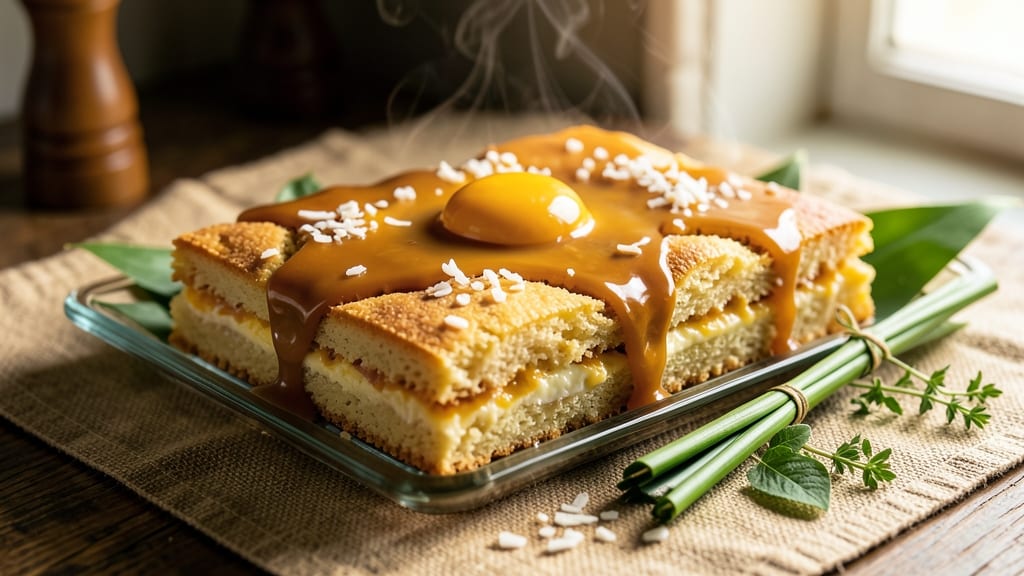
This Thai egg cake recipe delivers the perfect balance of silky coconut curd and nutty pandan crunch—an elegant dessert that feels both nostalgic and refined.
The secret lies in steaming the egg custard just until set, creating that signature velvety texture, while toasted pandan leaves add an aromatic crunch that elevates every bite.
I first discovered this dessert at a Bangkok café, where it was served warm with a dusting of coconut flakes—a moment that inspired me to recreate it at home.
The recipe combines simple ingredients like eggs, coconut milk, and sugar, but the magic happens in the technique: a gentle steam bath ensures the custard never curdles, while the pandan leaves are toasted to perfection for that signature nutty aroma.
What makes this version special is the adaptability—you can bake it in ramekins for individual servings or in a loaf pan for a crowd, all while keeping the traditional flavors intact.
The result is a dessert that’s both comforting and impressive, perfect for special occasions or when you want to treat yourself.
By the time it comes out of the oven, you’ll have a dessert that’s rich, fragrant, and impossibly tender—each slice offering a contrast of creamy coconut custard and toasted pandan crunch.
The aroma alone will have everyone gathering around the table, and the texture is so satisfying that it disappears faster than you’d expect. This is the kind of dessert that feels like a hug in every bite, blending tradition with a touch of modern convenience.
Serve it warm with a sprinkle of toasted coconut flakes or a drizzle of caramel for extra indulgence. The recipe scales beautifully, so you can make it for a small gathering or a larger celebration—just adjust the baking time slightly for individual ramekins.
Let’s get started on creating this Thai classic that’s sure to become a favorite.
Ingredients for thai egg cake
Simple ingredients transform into a Thai classic with velvety coconut custard and nutty pandan crunch.
| Ingredient | Amount | Notes |
|---|---|---|
| Large Eggs 🥚 | 6 whole | Room temperature preferred |
| Coconut Milk 🥥 | 1 ½ cups | Full-fat canned, well-shaken |
| Granulated Sugar 🍚 | 1 cup | White or light brown |
| Pandan Leaves 🌿 | 6 whole | Fresh, tied in bundle |
| Unsalted Butter 🧈 | ½ cup | Melted, full-fat preferred |
| All-Purpose Flour 🌾 | ¼ cup | For dusting ramekins |
| Vanilla Extract 🌸 | 1 tsp | Pure vanilla preferred |
| Salt 🧂 | ¼ tsp | Fine sea salt |
| Toasted Coconut Flakes 🥥 | ½ cup | For garnish, unsweetened |
| Water 💧 | ½ cup | For steam bath |
| Pandan Extract 🌿 | ½ tsp | Optional for extra aroma |
| Cornstarch 🌾 | 1 tbsp | For thickening custard |
The pandan leaves are non-negotiable for that signature aroma. Look for fresh bundles at Asian markets—they should smell sweet and grassy, not musty. If you can't find them, pandan extract is a decent backup, though it won't give the same crunch. Toast the leaves in a dry pan for 1-2 minutes until fragrant, then tie them in cheesecloth for steaming. For the coconut milk, full-fat canned brands like Thai Kitchen work best—they have that rich, creamy texture you want. If you're using a lighter version, add an extra tablespoon of coconut cream to compensate. The eggs should be at room temperature for even cooking—just take them out of the fridge 30 minutes before starting.
No pandan leaves? Substitute with 1 tsp pandan extract plus 1/4 cup toasted almonds for crunch. Running low on coconut milk? Substitute with 1 cup coconut cream plus 1/4 cup water, though the texture will be slightly thicker. The vanilla extract can be swapped for 1 tsp vanilla bean paste if you're feeling fancy. For a gluten-free version, omit the flour and use cornstarch to dust ramekins instead. The sugar can be swapped for coconut sugar for a deeper caramel note, though it'll darken the cake slightly. If you're making this ahead, pre-toast the coconut flakes and store them in an airtight container—they'll keep their crunch for weeks.
This dessert is best served warm, straight from the oven or warmed gently in the microwave. Store leftovers in the fridge for up to 3 days, but reheat them properly—they lose their silky texture if microwaved too long. For a make-ahead option, prepare the custard mixture up to 24 hours ahead and refrigerate, then steam as directed. The toasted coconut flakes can be made in bulk and stored in the freezer for up to 2 months—just toast them fresh before serving. The pandan leaves can be frozen for up to 3 months if you want to prep everything in advance. Serve with a drizzle of coconut caramel or extra coconut flakes for that authentic café touch.
Why You'll Love This Recipe
- No Fuss Setup: I swear by this recipe because it’s basically hands-off after the initial whisk. Just eggs, coconut milk, and a splash of pandan-infused water—no fancy gadgets, no last-minute grocery runs. The butter melts into a golden crust while you’re still tying your apron.
- Fragrant Magic: That pandan leaf? It’s the star. Steeped in warm coconut milk, it turns this cake into a fragrant cloud—like a cross between vanilla and tropical breeze. The sugar caramelizes just enough to give it a subtle crunch, but the inside stays tender and eggy in the best way.
- Weeknight Flex: Between us, this is my go-to for lazy Sundays or when I’m too tired to bake. It’s perfect for breakfast, dessert, or even a quick snack with tea—no one judges you for eating cake at 3 PM. Honestly, it’s the only dessert I make that actually feels like a treat without being a production.
- Budget-Friendly Luxury: Eggs, coconut milk, and sugar? That’s it for the main cast. The pandan leaves might seem fancy, but a few go a long way, and you can even use extract in a pinch. It’s the kind of recipe that stretches ingredients without stretching your wallet—leftovers? They disappear faster than I can say “second slice.”
Step-by-step instructions for Thai egg cake
This silky coconut custard with pandan-infused crunch delivers restaurant-quality texture at home.
Prepare the Pandan-Infused Coconut Mixture
In a medium saucepan, combine the 1.5 cups coconut milk, 1 cup granulated sugar, 6 whole pandan leaves (tied in a bundle), and 0.5 cup water. Bring to a gentle boil over medium heat, then reduce to a simmer for 10-12 minutes until slightly thickened and fragrant. The mixture should reduce by about ¼ and develop a subtle green tint from the pandan.
Strain through a fine-mesh sieve into a clean bowl, pressing gently on the pandan leaves to extract all the flavor. Discard the leaves. Let the mixture cool completely to room temperature—this prevents curdling when mixed with eggs later. The aroma should be sweet, coconut-forward with a hint of floral pandan.
Whisk Eggs and Butter for Silky Texture
In a separate large bowl, whisk together the 6 whole large eggs (room temperature preferred) and 0.5 cup melted unsalted butter until fully combined. Add the cooled pandan-coconut mixture, whisking gently to blend without creating bubbles. Stir in the 1 tsp vanilla extract, 0.5 tsp pandan extract (if using), and 0.25 tsp salt until smooth.
For the thickening agent, whisk together 1 tbsp cornstarch with 2 tablespoons of the egg mixture in a small bowl to create a slurry. Gradually fold this into the main mixture while whisking continuously. This step ensures the custard sets properly without becoming grainy. The batter should be smooth and slightly thicker than heavy cream.
Assemble and Steam the Cakes
Lightly grease six 6-ounce ramekins with the 0.25 cup all-purpose flour, tapping out any excess. Divide the egg mixture evenly among the ramekins, filling each ¾ full. Place the ramekins in a steamer basket over 1 inch of boiling water in a pot—never let the bottoms touch the water.
Cover the pot with a lid and steam over medium-low heat for 35-40 minutes. The custard is done when it's just set in the center (it should still have a slight wobble like gelatin). If the top browns too quickly, tent with foil. The edges should pull away cleanly from the ramekins, and the texture should be silky rather than rubbery.
Chill and Garnish for Perfect Presentation
Remove the ramekins from the steamer and let them cool at room temperature for 10 minutes. Then refrigerate for at least 2 hours (or up to overnight) to firm up completely. Run a thin knife around the edges of each ramekin to loosen the cakes before unmolding onto plates.
Top each cake generously with 0.5 cup toasted coconut flakes, pressing lightly to adhere. Serve chilled for the best texture—this contrast of creamy custard and crunchy coconut is what makes this dessert special. The pandan aroma should be delicate but noticeable, complementing the coconut sweetness perfectly.
Pro Tips For Making Thai Egg Cake
- Whisk Eggs Until Ribbon-Thick: I learned this the hard way—when the eggs aren’t whipped properly, your cake turns out dense instead of light. Beat them for at least 3 minutes until the mixture holds a ribbon shape when the whisk is lifted. No, your arm won’t thank you, but the texture will.
- Toast Pandan Leaves First: Skip the raw leaves—burnt pandan flavor ruins everything. Lightly toast the leaves in a dry pan for 30 seconds until fragrant, then steep in warm coconut milk. This extracts the aroma without bitterness, and it only takes 10 minutes.
- Stop Stirring Before It Sets: I used to overmix the batter after adding sugar, and the eggs would curdle. Once the mixture thickens (about 2 minutes on low heat), pull it off immediately—even if it looks slightly uneven. The residual heat will finish the job.
- Use Cold Butter for Layers: Melted butter makes the cake greasy; cold butter creates flaky layers. Cut chilled butter into small cubes and fold them into the batter last, letting them melt just enough to bind—not fully dissolve. Your cake will thank you with a better crumb.
Wine and beer pairings for these flavors
Sweet Thai Whites
Thai egg cake pairs beautifully with crisp, aromatic white wines that complement its coconut and pandan flavors. A Thai Gewürztraminer from the Chiang Mai region is my go-to choice—its lychee and rose notes mirror the dessert's tropical sweetness.
Look for Meiomi Gewürztraminer if you can't find Thai varieties; its floral profile enhances the pandan aroma. Serve slightly chilled at 45-48°F to keep the dessert's creamy texture intact. 🍷
Creamy Dessert Wines
For a richer pairing, opt for a Thai dessert wine like Thai Ruby Port—its caramel and dried fruit flavors harmonize with the toasted coconut crunch. If you prefer something lighter, a Moscato d'Asti from Italy offers a honeyed sweetness that balances the custard's richness.
Avoid heavy, oaked wines that will overpower the delicate pandan notes.
Light Beer Pairings
A Thai lager like Singha or Leo provides a refreshing contrast to the dessert's richness. The subtle malt sweetness and crisp finish cleanse your palate between bites.
For a fruitier option, try a Thai mango lager—its tropical notes complement the coconut beautifully. Serve beers well-chilled at 38-40°F to maintain their crispness. 🍺
Coffee and Tea Alternatives
If alcohol isn't your preference, a Thai iced coffee with condensed milk adds a creamy, caramelized contrast. For tea lovers, Thai jasmine tea with a splash of coconut milk enhances the dessert's floral and coconut flavors.
Brew the tea strongly and serve it warm or iced—either way, it pairs perfectly with the silky custard. 💛
Regional Thai Pairings
In Thailand, this dessert is often served with Thai tea (cha yen) or sweetened coconut water to balance the richness. For a modern twist, try pairing it with Thai matcha latte—the earthy matcha complements the pandan's floral notes.
If you're feeling adventurous, a Thai rum cocktail like Thai Rum Punch (made with pineapple, lime, and grenadine) adds a festive touch. 🌺
Nutrition facts
Frequently asked questions
Can I make this Thai egg cake without pandan leaves?
Yes, but the flavor will be different! Use ½ tsp pandan extract plus ¼ cup toasted almonds or macadamia nuts for crunch. For a vanilla-only version, add 1 extra tsp vanilla extract and skip the nuts, though the authentic aroma will be missing.
Why did my Thai egg cake come out rubbery instead of silky?
Overcooking or improper steaming causes this. The custard should have a slight wobble in the center when done (35-40 minutes). Check doneness by gently shaking the ramekin—it should jiggle like gelatin. If using an oven, ensure the water bath stays hot but not boiling.
Can I bake this in a regular oven instead of steaming?
Preheat oven to 325°F (163°C) and place ramekins in a baking dish with 1 inch of hot water in the bottom. Bake for 30-35 minutes—the water creates a steam bath effect. Cover loosely with foil if browning too quickly.
How do I store leftovers to keep them creamy?
Store in an airtight container in the fridge for up to 3 days. Reheat individual portions in the microwave for 10-15 seconds on low power. For best texture, serve at room temperature or lightly warmed—never reheat fully, as it breaks down the custard.
What's the best way to make this gluten-free?
Skip the flour dusting and use cornstarch instead. For extra insurance, line ramekins with parchment paper cut to fit. The custard itself is naturally gluten-free, but always double-check your coconut milk and vanilla extract labels for hidden gluten.