
Breakfast & Brunch
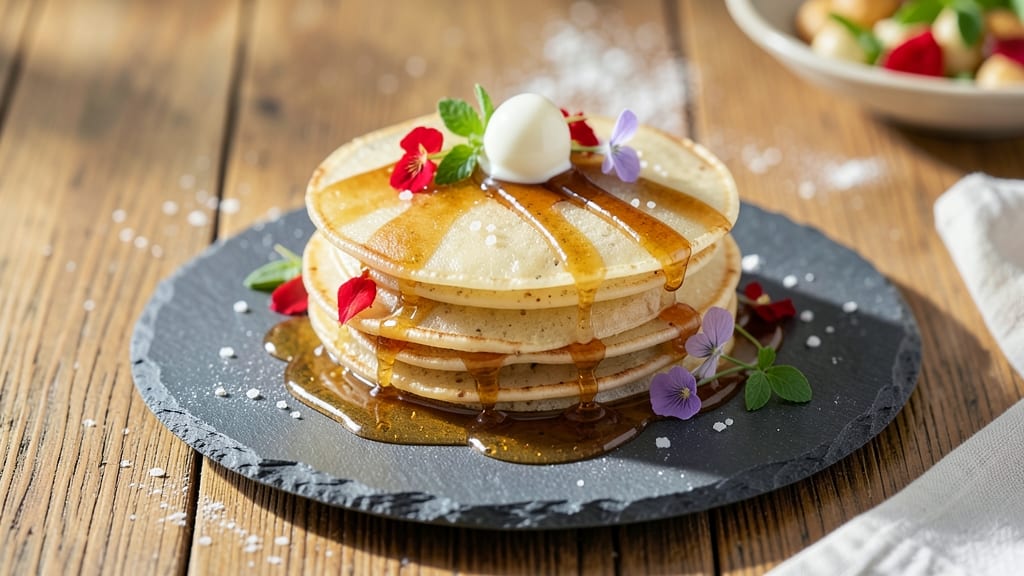
This thin pancake recipe without eggs delivers delicate, crepe-style stacks that rival French crêpes in texture and elegance. ✨ The secret lies in using rice flour and aquafaba—a simple egg substitute—to create a silky, translucent batter that cooks up perfectly thin.
I developed this recipe after years of experimenting with egg-free alternatives, and it finally cracked the code for restaurant-quality results at home.
The batter is light enough to pour like a crepe but sturdy enough to hold toppings without tearing. We achieve this with a precise ratio of rice flour to tapioca starch, which creates that signature crispness at the edges while keeping the center tender.
The cooking technique is equally important—using a lightly oiled pan and medium-low heat ensures even cooking every time.
What you'll end up with is a stack of golden, translucent pancakes that are crisp at the edges yet fluffy inside. They're delicate enough to fold around fresh berries or drizzle with maple syrup, yet sturdy enough to handle savory fillings like smoked salmon and cream cheese.
This recipe proves that egg-free baking can be just as impressive as traditional pancakes.
Perfect for brunch, dessert, or even a light dinner option. The batter can be made ahead and stored in the fridge, making these pancakes ideal for busy mornings. Let's get started on creating your own stack of fluffy, egg-free perfection.
Ingredients for thin pancake recipe without eggs
Eleven ingredients transform into delicate, restaurant-worthy pancakes without eggs or fuss.
| Ingredient | Amount | Notes |
|---|---|---|
| Rice Flour 🌾 | 1 cup | Finely milled for smooth batter |
| Tapioca Starch 🍠 | ¼ cup | For crisp edges and elasticity |
| Aquafaba 🥜 | ½ cup | Chickpea brine, whisked to stiff peaks |
| Unsweetened Almond Milk 🥛 | 1 cup | Vanilla or plain, unsweetened |
| Maple Syrup 🍁 | ½ cup | Pure grade B for rich flavor |
| Vanilla Extract 🌸 | 1 tsp | Pure vanilla for aromatic depth |
| Salt 🧂 | ½ tsp | Fine sea salt for balance |
| Unsalted Butter 🧈 | 2 tbsp | Melted for pan coating |
| Extra-Virgin Olive Oil 🫒 | 1 tbsp | Lightly coats the pan |
| Fresh Blueberries 🫐 | ½ cup | Optional for topping (optional) |
| Lemon Zest 🍋 | 1 tsp | Brightens the flavor profile |
The rice flour and tapioca starch duo is non-negotiable for that signature crispness at the edges while keeping the center tender. Bob's Red Mill rice flour is my go-to—it's finely milled and consistently high quality. Tapioca starch can be found in the baking aisle of most grocery stores, often near cornstarch. For aquafaba, use the brine from canned chickpeas—no salt added varieties work best. If you're short on time, Trader Joe's sells pre-whisked aquafaba in the refrigerated section. The almond milk should be unsweetened and preferably vanilla-flavored for that subtle depth. Maple syrup isn't just for sweetness—it adds a subtle complexity that store-bought pancake syrups can't match.
No aquafaba? Flax eggs (1 tbsp ground flaxseed + 3 tbsp water per egg) work as a substitute, though the texture will be slightly denser. Swap almond milk for any plant-based milk, but avoid sweetened varieties. Running out of tapioca starch? Arrowroot powder is a 1:1 substitute. For a savory twist, omit the maple syrup and add 1 tsp nutritional yeast plus 1/4 tsp onion powder. The batter should be thin enough to pour like crepe batter—if it's too thick, add 1-2 tbsp more almond milk. Fresh blueberries can be swapped for raspberries or sliced strawberries, or skip them entirely for a savory stack.
The batter keeps in the fridge for 3 days, covered tightly. For longer storage, freeze in ice cube trays—just thaw overnight in the fridge before cooking. These pancakes reheat beautifully in a dry skillet over medium heat for about 1 minute per side. I like to make a double batch on Sundays and freeze half, so I always have a quick brunch option. The key to perfect stacks? Cook them low and slow—they should bubble gently and turn golden in about 1-2 minutes per side. Don't rush it, or you'll end up with crispy edges and a raw center.
Why You'll Love This Recipe
- I’ll be real: I used to avoid egg-free pancakes because they felt flimsy. But the aquafaba in this mix—whipped like meringue—gives them that lift without a single egg. It’s the secret to pancakes that don’t fall apart when you flip them.
- No Eggs, No Problem: I’ll be real: I used to avoid egg-free pancakes because they felt flimsy. But the aquafaba in this mix—whipped like meringue—gives them that lift without a single egg. It’s the secret to pancakes that don’t fall apart when you flip them.
- Pantry Staples Only: Honestly, if your cupboard has rice flour and tapioca starch, you’re halfway there. The almond milk keeps it light, and the maple syrup adds just enough sweetness without needing extra sugar. No special ingredients, no last-minute grocery runs—just mix, cook, and enjoy.
- Breakfast or Dessert: These pancakes are ridiculously good plain with syrup, but they’re also my go-to for a savory brunch. Swap the maple for soy sauce and a sprinkle of sesame, and suddenly you’ve got crispy, chewy crepes. One recipe, two vibes.
Step-by-step instructions for thin pancake recipe without eggs
Here's how to create light, delicate stacks using aquafaba for binding and rice flour for texture.
👨🍳 Step 1: Whisk Aquafaba to Stiff Peaks
In a large mixing bowl, pour the 0.5 cup aquafaba and use an electric mixer to whisk it vigorously for 5-7 minutes until it forms stiff, glossy peaks that hold their shape when the whisk is lifted. This step mimics egg whites' ability to create structure and fluffiness in the batter.
I like to tilt the bowl slightly as I whisk to incorporate air more efficiently. You'll know it's ready when you can turn the bowl upside down and the aquafaba doesn't spill out. If it's not quite there after 7 minutes, keep whisking for another minute or two—patience here makes all the difference for those signature thin pancakes.
👨🍳 Step 2: Combine Wet Ingredients
In a separate bowl, gently whisk together the 1 cup unsweetened almond milk, 0.5 cup maple syrup, 1 tsp vanilla extract, and 1 tsp lemon zest until fully incorporated. The lemon zest will dissolve slightly, releasing its bright citrus notes that cut through the sweetness beautifully.
Next, gradually fold this wet mixture into the whipped aquafaba using a spatula, being careful not to deflate those precious air bubbles. Work gently but thoroughly until just combined—you should see a smooth, glossy batter with no visible streaks of almond milk. This is where the magic happens: the aquafaba's structure will hold the batter together without eggs.
👨🍳 Step 3: Incorporate Dry Ingredients
In a medium bowl, sift together the 1 cup rice flour and 0.25 cup tapioca starch to remove any lumps. Add the 0.5 tsp salt and mix well. Gradually pour this dry mixture into the wet batter while folding gently with a spatula.
Fold just until the dry ingredients are fully incorporated—about 10-12 strokes. You want to maintain as much air as possible in the batter for those signature thin, fluffy pancakes. The batter should be smooth and slightly thicker than traditional pancake batter. If it looks too thick, you can add 1-2 tablespoons more almond milk to reach the right consistency.
🔥 Step 4: Prep and Cook the Pancakes
Heat an 8-inch non-stick skillet over medium-low heat. Add 1 tbsp extra-virgin olive oil and 2 tbsp melted unsalted butter, swirling to coat the entire pan evenly. The butter will add richness and help create that beautiful golden color on the pancakes.
Pour 2-3 tablespoons of batter into the center of the pan, then immediately tilt the pan to spread it thinly and evenly into a 6-inch circle. Cook for 1-2 minutes until the edges start to lift and the bottom is lightly golden. Flip carefully and cook for another 30-45 seconds until the second side is golden brown.
🍽️ Step 5: Assemble and Serve
Transfer the cooked pancakes to a plate and keep them warm in a 200°F oven while you cook the rest. For serving, stack 4-5 pancakes high and top with the 0.5 cup fresh blueberries (if using) and an additional drizzle of maple syrup.
These pancakes should be delicate yet sturdy enough to hold their shape when stacked. The thinness comes from the rice flour and careful pouring technique, while the aquafaba gives them that signature fluffiness. Serve immediately while warm, with extra lemon zest sprinkled on top for that final bright note.
Pro Tips For Making Thin Pancake Recipe Without Eggs
- WHISK AQUAFABA FIRST: Mix the aquafaba until it forms stiff peaks—like meringue—before adding any other ingredients. I learned this the hard way: skipping this step means your batter won’t hold together, and those pancakes will be more like sad, runny crepes. Take the extra 30 seconds; your stack will thank you.
- REST THE BATTER: Let the batter sit for 10-15 minutes after mixing. The starches absorb the almond milk, and the rice flour softens—this prevents gummy pancakes. I was skeptical until I tried it: the texture goes from chalky to smooth, and the pancakes crisp up perfectly.
- LOW AND SLOW: Cook on medium-low heat, not high. These pancakes need time to set without burning—high heat makes them char on the outside while staying doughy inside. Sounds weird, but it works: a slow, even cook guarantees that delicate, crepe-like thinness.
- SALT THE ALMOND MILK: Add a pinch of salt to the unsweetened almond milk before mixing. It balances the sweetness of the maple syrup and enhances the flavor of the aquafaba. I skip this when I’m lazy, but the dish is noticeably better when I don’t—trust me.
Dietary considerations for this recipe
Gluten-Free Adaptations
Swap the rice flour for a 1:1 gluten-free flour blend like Bob's Red Mill GF 1-to-1—it works beautifully while maintaining the delicate texture. If you prefer a nut-free option, certified gluten-free oat flour can replace up to half the rice flour, though the pancakes may be slightly denser.
Always check labels for cross-contamination warnings, especially if you're highly sensitive. 🌾
Vegan-Friendly Notes
This recipe is already vegan, but let me share my pro tips for extra fluffiness: use fresh aquafaba (the brine from canned chickpeas) rather than store-bought versions, as they often contain additives that can affect texture.
For even more lift, add ½ tsp baking powder to the dry ingredients—it creates tiny air pockets that mimic egg whites perfectly. The batter will be slightly thicker, so adjust with an extra 1 tbsp almond milk if needed.
Nut-Free Options
Almond milk can be swapped for oat milk or soy milk—both work equally well in this recipe. For a dairy-free butter alternative, use Miyoko's vegan butter or Earth Balance in the pan.
The key is to maintain the same fat content (2 tbsp total) to ensure proper browning and flavor development. If you're avoiding all nuts, double-check your tapioca starch for cross-contamination, as some brands process in nut-free facilities.
Low-Sugar Variations
Reduce the maple syrup to ¼ cup and add 1 tsp monk fruit sweetener or stevia for a sugar-free version that still delivers great flavor. For a naturally sweet alternative, replace half the almond milk with unsweetened applesauce—it adds moisture and subtle sweetness without refined sugar.
The pancakes will be slightly denser but still hold their shape beautifully when stacked. Balance is key here: too much sugar substitute can make the batter taste bitter.
Allergen-Free Storage
Store leftover pancakes in an airtight container in the fridge for up to 4 days, separated by parchment paper to prevent sticking. For freezing, place individual pancakes between layers of parchment and freeze for up to 3 months.
To reheat, warm in a dry skillet over medium heat for 1-2 minutes per side—the residual moisture from the batter helps them crisp up perfectly without drying out. Always label your containers with the date to track freshness.
Nutrition facts
Frequently asked questions
Why does this batter need aquafaba instead of eggs?
Aquafaba mimics egg whites' ability to create structure and fluffiness without the need for animal products. When whisked to stiff peaks, it adds air bubbles that give these pancakes their signature lightness and delicate texture. The protein in aquafaba also helps bind the batter together during cooking, preventing it from falling apart.
Can I make these pancakes thicker like traditional ones?
For thicker pancakes, reduce the almond milk to ¾ cup and increase the rice flour to 1¼ cups. The batter will be stiffer, requiring 3-4 tablespoons per pancake. Cook on medium heat for 2-3 minutes per side until golden brown. These will be more like classic pancakes but still maintain the egg-free texture.
What's the secret to getting them perfectly thin?
The magic is in the pouring technique and heat control. Use a lightly oiled 8-inch pan on medium-low heat, then pour 2-3 tablespoons of batter and immediately tilt the pan to spread it into a 6-inch circle. The thinness comes from the rice flour's fine texture and the aquafaba's airiness—never overcrowd the pan or the pancakes will steam instead of crisp.
How do I prevent the pancakes from tearing when stacking?
Cook them low and slow until they're golden but still slightly translucent at the edges. Let them cool for 1-2 minutes on a wire rack before stacking to set their structure. For extra stability, brush each pancake with a tiny bit of melted butter between layers—this creates a thin, protective seal that prevents breakage when stacking.
Can I make these pancakes in a crepe maker?
Yes! This batter works perfectly in a crepe maker. Use 1-2 tablespoons of batter per crepe and cook on the lowest heat setting for 30-45 seconds per side. The thin metal plates will distribute heat evenly, giving you perfectly even, delicate crepes every time. Just be careful—they'll cook faster than in a regular pan.