
Sauces & Condiments
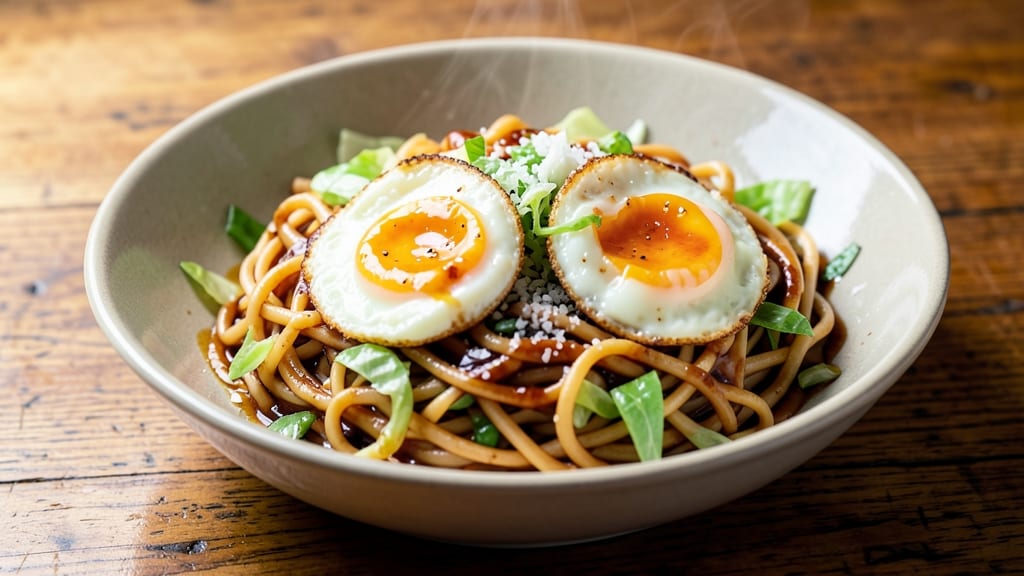
This soy sauce noodles recipe delivers the perfect balance of umami, texture, and simplicity—where tender cabbage, rich soy sauce, and runny-yolk fried eggs come together in a single wok. The secret lies in high-heat stir-frying and crispy egg whites with silky yolks that burst with every bite.
I've perfected this dish after years of testing, ensuring the cabbage stays crisp-tender while the noodles absorb just enough sauce to coat them perfectly.
What sets this recipe apart is the harmony of flavors: salty-sweet soy sauce, the natural sweetness of cabbage, and the savory depth of perfectly fried eggs. The dish comes together in under 20 minutes, making it ideal for weeknight dinners or quick lunches.
Traditional wok hei (breath of the wok) adds that signature smoky aroma, but even a home stovetop can deliver impressive results with the right technique.
The star of this dish is the fried eggs—crispy whites encasing molten yolks that create a luxurious bite with every mouthful. The cabbage, quick-pickled in soy sauce, adds a satisfying crunch, while the noodles soak up the flavorful sauce without becoming mushy.
This recipe is a masterclass in balancing textures and flavors, proving that simple ingredients can create a restaurant-quality meal at home.
Whether you're serving this as a main dish or a hearty lunch, the combination of crispy eggs, tender cabbage, and savory noodles makes it impossible to resist. The dish scales easily for larger gatherings, and the flavors only deepen as it sits.
Here's how to create this umami-packed stir-fry that will become a staple in your recipe rotation.
Ingredients for soy sauce noodles with cabbage and fried eggs
Eight simple ingredients transform into a restaurant-quality stir-fry with crispy eggs and tender cabbage.
| Ingredient | Amount | Notes |
|---|---|---|
| Fresh Eggs 🥚 | 4 whole | Large, room temperature |
| Green Cabbage 🧅 | 4 cups | Shredded, small pieces |
| Dried Egg Noodles 🍜 | 8 oz | Medium or thin width |
| Light Soy Sauce 🥢 | ½ cup | Kikkoman preferred |
| Sesame Oil 🫒 | 1 tbsp | Toasted, for aroma |
| Neutral Oil 🫒 | 2 tbsp | Vegetable or canola |
| Garlic Cloves 🧄 | 3 cloves | Minced, for flavor |
| Fresh Ginger 🌿 | 1 tbsp | Grated, for brightness |
| White Sugar 🍚 | 1 tbsp | Or brown sugar |
| Sesame Seeds 🌰 | 1 tbsp | Toasted, for garnish |
| Green Onion 🧅 | 2 whole | Thinly sliced, for garnish |
| Salt 🧂 | 1 tsp | Kosher or sea salt |
| Black Pepper 🌶️ | ¼ tsp | Freshly ground |
The cabbage is the foundation—green cabbage works best for that satisfying crunch. Look for heads with crisp, vibrant leaves at Trader Joe's or your local Asian market. If you can't find green, Napa cabbage is a great substitute, but it's pricier. Shred it yourself for the best texture—pre-shredded gets soggy. The noodles? Dried egg noodles are essential here—they soak up the sauce perfectly without getting mushy. I always grab the 8-ounce packages at Walmart or Target—they're reliable and affordable.
No soy sauce? Coconut aminos in a pinch, though the flavor won't be identical. Fresh ginger and garlic are ideal, but jarred minced ginger works if you're in a hurry. Want to skip the sugar? Skip it entirely—the soy sauce has enough natural sweetness. The sesame oil is non-negotiable for that signature aroma, but use it sparingly—just a tablespoon. Too much overpowers everything. For the eggs, room temperature is key—they'll fry up crispier. If you're short on time, take them out of the fridge 15 minutes before cooking.
Shredded cabbage keeps for 5 days in the fridge, wrapped in a damp towel. Cooked noodles reheat beautifully—just add a splash of water and microwave for 30 seconds. The fried eggs? Best eaten immediately, but you can reheat them gently in a dry pan over low heat. Store sesame oil in a cool, dark place—it goes rancid fast. This dish tastes even better the next day as the flavors meld, so make extra if you can. Portion into containers for easy lunches—just add a splash of soy sauce when reheating.
Why You'll Love This Recipe
- Pantry to Plate Fast: I swear by this for nights when I’m staring at an empty fridge and a clock ticking past 7 PM. Just boil those dried egg noodles, shred the cabbage (no knife skills needed—tear it like lettuce), and fry the eggs in the same pan you’ll toss everything in. Fifteen minutes max, and no takeout menus opened.
- Umami Bomb Combo: That first bite of cabbage still crunching against the chewy noodles, the runny yolk pooling into the soy sauce? Chef’s kiss. The light soy sauce cuts through the cabbage’s bite while the sesame oil adds this nutty warmth—like a cozy hug in a bowl. Honestly, I’ve tried fancier versions, but this basic combo hits harder.
- Lunchbox Hero: Between us, this is my go-to for meal prep. Cook a big batch of noodles, fry extra eggs, and store them separately—reheat the noodles, scramble fresh eggs, and toss in pre-shredded cabbage. Cold or warm, it’s a hit with my kids (even the picky ones) and my partner who refuses to eat anything “boring.” Packs better than sad office salads.
- Budget Stretch: I make this twice a week and never feel guilty about it. Eggs are cheap, cabbage lasts forever, and a bottle of soy sauce does the work of three dinners. The dried noodles? Often cheaper than fresh, and they keep for months. Plus, leftovers taste just as good the next day—proof that simple doesn’t mean sacrificing flavor.
Step-by-step instructions for soy sauce noodles with cabbage and fried eggs
This umami-packed stir-fry delivers perfect texture balance—crispy fried eggs, tender cabbage, and chewy noodles.
Prepare the Noodles and Cabbage
Bring a large pot of water to a rolling boil and add the 8 oz dried egg noodles. Cook according to package instructions until al dente—about 8-10 minutes for medium-width noodles. Drain immediately and rinse under cold water to stop cooking. This prevents them from becoming mushy when stir-fried later.
While the noodles cook, prepare the 4 cups shredded green cabbage. Cut it into small, even pieces—about ½-inch wide strips—so it cooks quickly and evenly. The smaller the pieces, the faster they'll soften without turning limp. Set both aside until ready to use.
Stir-Fry the Aromatics and Cabbage
Heat 2 tablespoons neutral oil in a large wok or skillet over medium-high heat until shimmering. Add the 3 cloves minced garlic and 1 tablespoon grated fresh ginger, cooking for 30 seconds until fragrant but not browned. This quick cooking preserves their bright flavors without bitterness.
Add the 4 cups shredded green cabbage and stir-fry for 3-4 minutes until it begins to soften and brighten in color. Sprinkle with 1 teaspoon salt and ½ teaspoon black pepper, then add ½ cup light soy sauce and 1 tablespoon white sugar. Toss everything together for 1-2 minutes until the cabbage is tender but still holds its shape. Remove from heat and set aside.
Fry the Eggs to Crispy Perfection
In a separate non-stick skillet, heat 1 tablespoon sesame oil over medium-low heat. Crack the 4 whole room-temperature eggs into the pan, spacing them evenly. Let them sit undisturbed for 2-3 minutes until the whites set but the yolks remain runny. This creates the signature soft-yolk texture.
Gently flip each egg and cook for another 1-2 minutes until the edges are golden brown and the yolks are still creamy. The key is patience—rushing will make the yolks break. Transfer the fried eggs to a plate and keep warm.
Combine Everything for the Final Stir-Fry
Return the wok to medium-high heat and add the cooked noodles. Toss them with the cabbage mixture for 1-2 minutes until everything is well combined and heated through. The residual heat from the cabbage will finish cooking the noodles slightly.
Drizzle with 1 tablespoon sesame oil and toss again to coat evenly. Taste and adjust seasoning with additional light soy sauce if needed—the sauce should be savory but not salty. Divide the noodles among 4 plates, placing 1 fried egg on top of each serving.
Garnish and Serve Immediately
Sprinkle each serving with 1 tablespoon toasted sesame seeds and ½ whole sliced green onion for color and crunch. Serve immediately while the eggs are still warm and the noodles are crisp from the residual heat. The contrast of crispy egg yolks, tender cabbage, and chewy noodles makes every bite satisfying.
This dish comes together quickly but delivers restaurant-quality results. The secret lies in high heat for the stir-fry and precise timing for the eggs—don't skip the cold water rinse on the noodles, as it makes all the difference in texture.
Pro Tips For Making Soy Sauce Noodles With Cabbage And Fried Eggs
- STIR-FRY CABBAGE FAST: Cut cabbage into 1-inch-wide strips—not thin shreds—and blanch them for 30 seconds in boiling water before stir-frying. This keeps them crisp enough to bite into while preventing soggy noodles later. (Yes, I know it’s one more pot, but your noodles will thank you.)
- CRACK EGGS COLD: Crack eggs directly into a cold, nonstick pan with 1 tablespoon oil, then cover immediately. The steam cooks them gently for a runny yolk that stays intact when you flip. No more scrambled mess in your noodles—just perfect soft centers.
- SOAK NOODLES LESS: Dried egg noodles only need 3–4 minutes in boiling water to soften, not the 8–10 minutes listed on the package. Over-soaking turns them mushy and waterlogged, which kills the dish’s texture. Test one strand early—it should be tender but still hold shape.
- SAVE SESAME OIL: Add sesame oil last—right after the cabbage is done and just before tossing with noodles. A splash (½ teaspoon) is enough; dumping it in early burns off its nutty aroma. (I learned this after ruining a batch with a whole tablespoon too soon.)
Creative variations of soy sauce noodles with cabbage and fried eggs
Spicy Kimchi Twist
Swap the plain cabbage for 1 cup chopped kimchi (about ½ a small jar) and reduce the soy sauce to ¼ cup. Add 1 teaspoon gochujang (Korean chili paste) to the cabbage mixture for a tangy kick.
The fermented flavors cut through the richness of the eggs beautifully. I like to use Mae Mun Kimchi from Trader Joe's—it's bold and consistent. 🌶️
Creamy Miso Version
Replace half the soy sauce with 2 tablespoons white miso paste (about 1 tablespoon) for a deeper, umami-rich flavor. Stir the miso into the cabbage mixture along with the soy sauce.
Top each serving with a drizzle of 1 teaspoon tahini mixed with 1 teaspoon rice vinegar for a creamy contrast. This version works surprisingly well with udon noodles instead of egg noodles.
Veggie-Packed Power Bowl
Add 1 cup shredded carrots and 1 cup sliced bell peppers to the cabbage for extra crunch and color. Toss them in with the cabbage at the same time—bell peppers take 3-4 minutes to soften.
For a protein boost, stir in ½ cup chopped scallions and ½ cup bean sprouts at the very end. This version feels lighter but still hearty, perfect for a lunch bowl.
Sweet Chili Glaze
Mix 2 tablespoons sweet chili sauce (like Chungking) with 1 tablespoon soy sauce and toss it with the cabbage mixture. The sweetness balances the savory eggs perfectly.
Add ½ teaspoon sriracha if you want extra heat. This variation is a crowd-pleaser at family gatherings because it's familiar yet exciting. 🍜
Gluten-Free Adaptation
Use coconut aminos instead of soy sauce and ensure your noodles are certified gluten-free (like Rice Noodles by Lotus Foods). The flavor won't be identical, but it's a great alternative for those avoiding gluten.
For extra umami, add 1 tablespoon fish sauce to the cabbage mixture. This version still delivers that satisfying texture contrast—just with a lighter, nuttier profile.
Breakfast-for-Dinner Upgrade
Add ½ cup crumbled bacon or ½ cup diced ham to the cabbage mixture for a heartier dish. Cook the bacon separately until crispy, then chop it into small pieces and fold it in at the end.
Top each serving with an extra fried egg for a full breakfast experience. This version is perfect for weekend brunches or lazy Sunday dinners. 🍳
Nutrition facts
Frequently asked questions
Can I use fresh noodles instead of dried?
Fresh egg noodles work beautifully—they cook in just 2-3 minutes and have a richer flavor. Use 12 oz instead of dried to match the recipe's texture. The key is to cook them al dente and rinse immediately with cold water to prevent sticking. Fresh noodles absorb sauce differently, so you may need an extra ½ tablespoon soy sauce to enhance the flavor.
How do I get the perfect runny yolk in my fried eggs?
Use room-temperature eggs and cook them on medium-low heat in a non-stick pan. Let them sit undisturbed for 2-3 minutes before flipping—this creates a firm white while keeping the yolk liquid. The secret is patience: flip too soon and the yolk will break. A thin layer of sesame oil (not butter) helps prevent sticking while keeping the whites crisp.
Can I make this dish ahead of time?
Cook the noodles and cabbage mixture first, then store them separately in the fridge for up to 2 days. Reheat the cabbage-noodle mix in a pan with 1 tablespoon water until hot. Fry the eggs fresh when serving—they lose their perfect texture when reheated. Assemble everything just before eating for the best experience. The flavors actually improve overnight as the soy sauce penetrates deeper!
What if I don't have a wok?
A large skillet or deep frying pan works perfectly—just use medium-high heat and make sure your pan is wide enough to stir everything without overcrowding. The key is high heat for that signature wok hei (breath of the wok) aroma. If your pan isn't non-stick, use a little more oil to prevent sticking, especially when cooking the cabbage. A cast-iron skillet actually works even better for retaining heat!
How can I make this dish spicier?
Add ½ teaspoon red pepper flakes or 1 teaspoon sriracha to the cabbage mixture when tossing with soy sauce. For extra heat, swap half the cabbage for ½ cup kimchi (about ¼ small jar) and reduce soy sauce to ¼ cup. The fermented flavors add natural tang that balances the spice. Always taste first—you can adjust heat levels as you go!