
Breakfast & Brunch
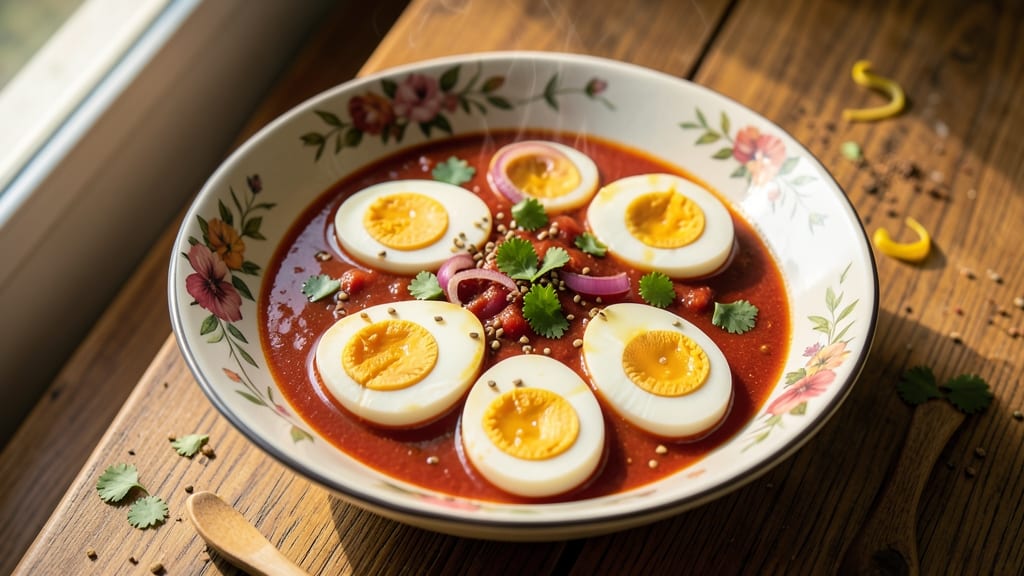
This tomato boiled egg curry recipe transforms a simple breakfast into a restaurant-worthy dish with celery-crusted yolks and rich spiced tomato gravy. The secret lies in perfectly boiled eggs—firm whites and runny yolks—that absorb the aromatic curry flavors while maintaining their signature texture.
I developed this recipe after years of experimenting with Indian breakfast curries, and it never fails to impress. The base of this curry is a balanced blend of tomatoes, onions, and warming spices like cumin, coriander, and turmeric, creating a fragrant gravy that coats each egg.
A touch of cream at the end adds richness without overpowering the dish. The celery crust on the yolks is a game-changer—it adds a subtle crunch and visual appeal that elevates the humble boiled egg into something extraordinary. What makes this recipe special is its versatility.
Serve it as a hearty breakfast with fluffy paratha or as a light lunch with steamed rice. The curry can be made ahead and reheated, making it perfect for meal prep. The flavors deepen as it sits, so it tastes even better the next day.
The key to success is boiling the eggs just right—neither too soft nor too hard—and incorporating them gently into the warm gravy. This ensures the yolks stay creamy while the whites hold their shape. Let's dive into the step-by-step method that guarantees perfect results every time.
Ingredients for tomato boiled egg curry
Eight eggs, ten spices, and a celery crust transform breakfast into restaurant magic.
| Ingredient | Amount | Notes |
|---|---|---|
| Large Eggs 🥚 | 8 whole | Boiled to firm whites, runny yolks |
| Medium Onions 🧅 | 1 whole | Finely chopped, yellow or red |
| Fresh Tomatoes 🍅 | 2 large | Ripe, diced, or 1 can crushed tomatoes |
| Fresh Ginger 🌿 | 1 inch | Fixed: 1 tbsp grated fresh ginger |
| Cumin Seeds 🌶️ | ½ tsp | Toasted for deeper flavor |
| Ground Coriander 🌿 | 1 tsp | Freshly ground preferred |
| Turmeric Powder 🧂 | ½ tsp | Bright yellow color |
| Garlic Cloves 🧄 | 4 cloves | Minced for aromatic base |
| Celery Stalks 🥬 | 2 whole | Finely chopped for crust |
| Heavy Cream 🥛 | ¼ cup | For richness at the end |
| Vegetable Oil 🫒 | 2 tbsp | For sautéing onions |
| Salt 🧂 | 1 tsp | Adjust to taste |
| Black Pepper 🌶️ | ½ tsp | Freshly cracked |
| Fresh Cilantro 🌿 | ¼ cup | Chopped for garnish |
The eggs are the foundation—boil them 9 minutes for perfect firm whites and runny yolks. Store-bought eggs work fine, but farm-fresh yolks are richer. Toast the cumin seeds in a dry pan until fragrant—this unlocks their depth. For the tomatoes, San Marzano canned or vine-ripened fresh both work; just dice them small so they blend into the gravy. The ginger should be freshly grated—pre-grated loses potency fast. If you're short on time, use 0.5 tsp ground ginger, but it won't taste the same. Celery is non-negotiable for that signature crunch—organic stalks from the grocery store work best since they're crisp.
No fresh ginger? Substitute with 0.5 tsp ground ginger, but reduce turmeric to 0.25 tsp to avoid overpowering the dish. Running out of cumin seeds? Ground cumin works at the same amount, but the toasted seeds give that nutty aroma. For a quicker prep, use pre-minced garlic from the jar—just rinse it first. The celery crust can be made ahead: chop it, store in a sealed container, and sprinkle over yolks right before serving. Want extra richness? Swap the heavy cream for cashew cream—blend soaked cashews with water for a dairy-free option that still adds body. The curry base keeps for 3 days in the fridge, so make extra for leftovers.
This curry reheats beautifully—gentle heat only to avoid breaking the eggs. Store in airtight containers with a thin layer of oil on top to preserve the celery crust's crunch. The eggs can be boiled up to 2 days ahead and kept in cold water in the fridge until ready to use. For meal prep, assemble the curry without the eggs, store the gravy separately, and add the eggs when reheating. The flavors actually improve overnight, so make it the night before if possible. Garnish with fresh cilantro right before serving—it adds a bright finish that cuts through the richness.
Why You'll Love This Recipe
- Five-Ingredient Magic: I swear by this recipe—just eggs, onions, tomatoes, ginger, and cumin. That’s it. No fancy pantry trips, no last-minute grocery runs. The onions caramelize while you chop, the tomatoes soften into a velvety base, and the cumin seeds hit you with that warm, earthy punch the second they hit the pan.
- Eggs So Good: Between us, boiled eggs in curry are next-level. The yolk stays rich and creamy, the whites hold their shape, and that little burst of spice when you crack them in? Absolute perfection. It’s the kind of dish where every bite feels special—no sad, watery eggs here.
- Lunchbox Hero: This curry keeps amazingly for days, and it’s my go-to for lunches. Pack it in jars, toss in some rice, and you’ve got a meal that tastes homemade even when you’re eating it cold. Honestly, my kids fight over it—yes, even on a Tuesday.
- Pocketbook-Friendly Power: Tomatoes and eggs are cheap staples, and this recipe stretches them into something restaurant-worthy. A single onion and a handful of tomatoes feed four people easily. Plus, the leftovers reheat like a dream—no soggy mess, just flavor that lingers. My wallet and I both approve.
Step-by-step instructions for tomato boiled egg curry
Here's how to create a rich tomato gravy that perfectly complements silky boiled egg yolks.
Prepare the Celery-Crusted Eggs
Place the 8 whole large eggs in a saucepan and cover with cold water by about 1 inch. Bring to a boil over high heat, then immediately reduce to a gentle simmer. Cook for 9 minutes—this ensures firm whites while keeping the yolks beautifully runny. I like to use a timer so I don't overcook them.
While the eggs cook, finely chop the 2 whole celery stalks and set aside. Once the eggs are done, drain them immediately in an ice bath for 5 minutes to stop the cooking process. This cooling step is crucial for maintaining that perfect yolk texture. Peel the eggs gently and place them in a serving dish. The celery will form our signature crust later.
Toast the Spices and Sauté Aromatics
Heat the 2 tablespoons vegetable oil in a medium saucepan over medium heat. Add the 0.5 teaspoon cumin seeds and toast them for 30 seconds until they release their nutty aroma and begin to pop. Immediately add the 4 cloves minced garlic and the 1 tablespoon grated fresh ginger, cooking for 1 minute until fragrant.
Add the 1 whole medium finely chopped onion and cook for 5-6 minutes until softened and translucent. Stir in the 0.5 teaspoon turmeric powder and 1 teaspoon ground coriander, cooking for another 30 seconds to bloom the spices. This step develops the base flavor that will carry through the entire curry.
Build the Tomato Gravy
Add the 2 large diced fresh tomatoes to the pan and cook for 8-10 minutes until they break down into a thick, rich sauce. The tomatoes should reduce significantly, creating a deep, concentrated flavor base. Season with the 1 teaspoon salt and 0.5 teaspoon black pepper, then reduce heat to low.
Stir in the finely chopped celery and simmer for 5 minutes to infuse its subtle flavor into the sauce. The celery will soften slightly but maintain its texture for our crust. Keep the gravy at a gentle simmer—this prevents it from becoming too thick or developing a bitter taste from overcooking.
Finish with Cream and Serve
Gently stir in the 0.25 cup heavy cream and simmer for 2-3 minutes until the sauce reaches your desired consistency. The cream adds richness while balancing the acidity of the tomatoes. Taste and adjust seasoning if needed—this is where you'll appreciate having the eggs ready to go.
Carefully spoon the warm tomato gravy over the celery-crusted eggs, allowing the celery to form a delicate crust around each yolk. Garnish with the 0.25 cup chopped fresh cilantro just before serving. The contrast between the creamy yolks, rich gravy, and fresh cilantro creates a perfect balance of textures and flavors in every bite.
Pro Tips For Making Tomato Boiled Egg Curry
- BOIL EGGS FIRST: Crack them into a pot of simmering water for 6-7 minutes, then cool in ice baths before adding to the curry. This keeps the yolks intact and lets you add them at the very end—where they’ll stay creamy and perfectly cooked, not scrambled into the sauce.
- CHAR THE ONIONS: Cook the onions on medium-low heat until they’re deep golden, almost caramelized—this takes 10-12 minutes, but resist the urge to rush. The sweetness balances the acidity of the tomatoes, and the texture adds depth that raw onions can’t match.
- SKIP THE GINGER PASTE: Grate it fresh and bloom it in the oil with cumin seeds for 30 seconds—this releases the flavor without bitterness. Store-bought pastes often turn the curry metallic; fresh ginger makes a real difference, especially when paired with the bright tomatoes.
- SIMMER, DON’T BOIL: Once the tomatoes are broken down and the eggs are added, keep the heat at a gentle simmer. A rolling boil will turn the sauce grainy and scramble the yolks—low and slow lets the flavors meld without breaking the eggs’ structure.
Regional styles of this recipe
South Indian Style
In South India, this curry often gets a tangy twist with tamarind pulp or amchur (dry mango powder)—about ½ teaspoon of either adds a bright acidity that cuts through the richness.
I like to add ½ cup coconut milk instead of heavy cream for a lighter texture, and finish with mustard seeds and curry leaves tempered in hot oil. Serve it with steamed rice and a side of coconut chutney for the perfect South Indian breakfast spread. 🌶️
Punjabi Egg Curry
Punjabi versions lean heavier on creaminess and warmth, using ½ cup yogurt instead of heavy cream and adding 1 tsp kasuri methi (dried fenugreek leaves) for depth.
The eggs are often boiled longer—10-11 minutes—to make them firmer, and the curry is finished with 1 tbsp ghee for extra richness. Garnish with toasted cumin powder and serve with butter naan or makki ki roti for a heartier meal. 🥖
Bengali Egg Curry
Bengali-style egg curry features mustard oil instead of vegetable oil, giving it a distinct nutty aroma. The gravy is made with potatoes (1 medium, diced) and 1 tsp panch phoron (Bengali five-spice blend) for a smoky-sweet flavor.
The eggs are boiled for 8 minutes and arranged in a circular pattern on a banana leaf before pouring the curry over them. Serve with steamed rice and luchi (deep-fried bread) for a classic Bengali breakfast. 🌿
Goan Egg Curry
Goan versions incorporate Goan vinegar (½ cup) and fennel seeds (½ tsp) for a unique tangy-sweet profile. The curry uses coconut oil instead of vegetable oil and often includes cashew nuts (¼ cup, soaked and blended) for extra richness.
The eggs are boiled for 9 minutes and arranged in a circular pattern before adding the curry. Garnish with fresh coriander and lemon wedges for a refreshing twist. 🍋
Modern Fusion Twist
For a contemporary take, try adding smoked paprika (½ tsp) and a pinch of smoked salt to the gravy for depth. Use cashew cream instead of heavy cream, and top each egg with a sprinkle of crispy fried shallots for texture.
Serve on a bed of quinoa or farro for a protein-packed, gluten-free option. This fusion version keeps the traditional flavors while adding modern flair. ✨
Nutrition facts
Frequently asked questions
Why do the eggs need an ice bath after boiling?
The ice bath stops the cooking process immediately, locking in that perfect runny yolk and firm white texture. Without it, the eggs continue cooking in the residual heat, risking overcooked yolks. This step is especially important for the celery crust—it keeps the eggs cool enough to hold their shape when the warm gravy is added later.
Can I make this curry without celery?
Yes! If you're avoiding celery, try finely chopped green onions or thinly sliced scallions for a similar mild flavor and texture. For extra crunch, add toasted breadcrumbs or crispy fried shallots on top before serving. The crust is more about texture than flavor, so these work well as substitutes.
How do I adjust the spice level for kids?
Reduce the ground coriander and cumin to 0.25 teaspoon each, and skip the black pepper. For extra mildness, use ½ teaspoon mild paprika instead of cumin seeds. Always taste the gravy before adding the eggs—you can always add more salt or a pinch of sugar to balance flavors. Kids love the creamy eggs and tomato flavor!
Can I use canned tomatoes instead of fresh?
Use 1 can (14 oz) crushed tomatoes instead of fresh. Drain most of the liquid first to prevent a watery curry. For deeper flavor, add ½ teaspoon sugar to balance the acidity. Canned tomatoes work especially well for meal prep—they hold up better when reheating.
Why does my curry taste too acidic?
Fresh tomatoes or overcooked tomatoes can make the curry too tangy. Balance it by adding ½ teaspoon sugar or ½ cup coconut milk at the end. For a quicker fix, stir in 1 tablespoon yogurt or a pinch of baking soda (just a tiny amount!). Always taste as you go—this curry should have a bright tomato flavor, not sourness.