
Sauces & Condiments
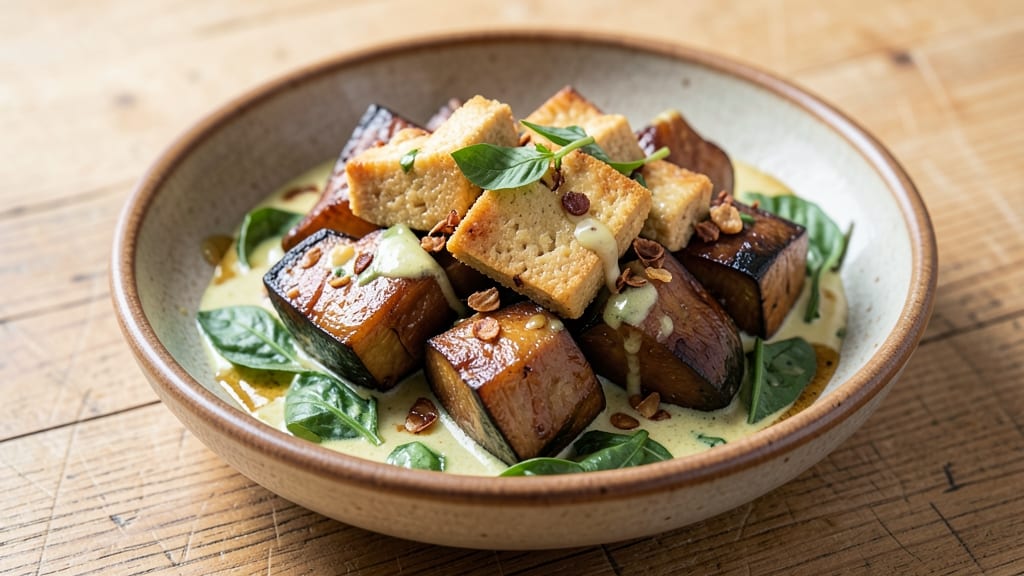
This vegan Thai basil eggplant recipe transforms humble eggplant into a fragrant, coconut-infused dish that captures the essence of Thai green curry without any animal products. The secret lies in balancing sweet, spicy, and umami flavors through careful sautéing and simmering techniques that develop deep, complex aromas.
I've refined this recipe over years of testing, ensuring every bite delivers that signature Thai basil brightness and velvety coconut richness.
The process begins with roasting eggplant to achieve tender, caramelized pieces that soak up the fragrant curry sauce beautifully. Fresh Thai basil is added at the very end to preserve its bright, aromatic qualities—this is a critical step that separates home versions from restaurant-quality dishes.
The coconut milk base creates a luxurious, creamy texture while providing the perfect canvas for the other flavors to shine.
What you'll end up with is a dish that's equally satisfying as a main course or part of a larger spread. The eggplant absorbs the vibrant green curry sauce, creating tender yet substantial bites with perfect texture contrast.
This recipe delivers restaurant-quality results with a fraction of the effort, making it ideal for weeknight dinners or when you want to impress guests without complicated techniques.
The beauty of this vegan Thai basil eggplant lies in its versatility—serve it over jasmine rice for a complete meal, or deconstruct it as a vibrant bowl with fresh herbs and lime wedges.
The balance of flavors and textures makes this one of those dishes that gets better as leftovers, with flavors deepening overnight. Let's get cooking!
Ingredients for vegan thai basil eggplant
Transform humble eggplant into a fragrant, coconut-rich dish with these carefully balanced ingredients.
| Ingredient | Amount | Notes |
|---|---|---|
| Eggplant 🍆 | 2 lb | Japanese or Italian variety preferred |
| Extra-Firm Tofu 🥛 | 1 lb | Pressed and cubed |
| Coconut Milk 🥥 | 1 can (13.5 oz) | Full-fat for creaminess |
| Thai Green Curry Paste 🌶️ | 2 tbsp | Store-bought or homemade |
| Vegetable Broth 💧 | 1 cup | Low-sodium preferred |
| Fresh Thai Basil Leaves 🌿 | ½ cup | Stems removed for garnish |
| Lime Juice 🍋 | 2 tbsp | Freshly squeezed |
| Coconut Sugar 🍯 | 1 tbsp | Or sub maple syrup |
| Red Curry Powder 🌶️ | 1 tsp | For extra depth |
| Garlic Cloves 🧄 | 4 cloves | Minced for paste |
| Fresh Ginger 🌿 | 1 tbsp | Grated, peeled |
| Jasmine Rice 🍚 | 1 ½ cups | Uncooked, for serving |
| Olive Oil 🫒 | 2 tbsp | For roasting eggplant |
| Sea Salt 🧂 | 1 tsp | Adjust to taste |
| Black Pepper 🌶️ | ½ tsp | Freshly ground |
The eggplant is the star here—Japanese or Italian varieties hold up best to roasting, staying tender without turning mushy. Whole Foods or Asian markets carry the best selection, but any grocery store eggplant works in a pinch. For the tofu, extra-firm is non-negotiable—press it between towels for 20 minutes to remove excess water. The coconut milk should be full-fat for that luxurious creaminess; Thai Kitchen or Native Forest brands are my go-tos, but any canned coconut milk will do. If you can't find Thai green curry paste, Maesri or Thai Kitchen brands are widely available in Asian grocery aisles or the international section of most supermarkets.
No Thai basil? Regular basil plus a pinch of lemongrass powder gets you close, though the flavor won't be identical. Short on coconut sugar? Maple syrup or agave works at a 1:1 ratio, but coconut sugar adds that subtle caramel note. The red curry powder is optional but recommended—it deepens the earthy complexity. For the ginger, fresh is best, but if you must use powdered, cut the amount to 1/4 teaspoon. The lime juice should be freshly squeezed; bottled lime juice lacks the bright acidity needed to balance the dish. If you're making this ahead, add the basil and lime juice just before serving to keep their vibrant qualities intact.
Roasted eggplant keeps well in the fridge for 3 days if stored in an airtight container. The curry sauce can be made a day ahead—flavors meld beautifully overnight. For best results, reheat gently on the stove with a splash of water or coconut milk. Freezes for up to 3 months if stored in a sealed container. The jasmine rice is best served fresh, but you can cook extra and reheat with a spritz of water. Portion the sauce into containers for easy lunches—it reheats beautifully and tastes even better the next day as the flavors deepen.
Why You'll Love This Recipe
- One-Pan Magic: I swear by this recipe—just slice the eggplant, press the tofu, and toss it all in one pan. The curry paste and coconut milk do the heavy lifting while you sip your drink (or finish that last bite of dinner).
- Umami Bomb: That Thai green curry paste? Chef’s kiss. It turns the eggplant into something rich and caramelized, while the tofu soaks up all the creamy, spicy goodness. Honestly, it’s the kind of flavor that makes you want to eat it straight from the pan.
- Lunchbox Hero: Between us, this is my go-to for meal prep. The leftovers reheat beautifully—just a quick microwave or stovetop—and the flavors only get better the next day. Pack it in containers, and you’ve got restaurant-quality takeout for days.
- Budget-Friendly Luxe: Eggplant and tofu are cheap, but this dish tastes like a fancy Thai restaurant. I’ll be real: I’ve made it for date nights, potlucks, and even my picky teenage nephew (who now asks for seconds). It’s the kind of meal that feels special without breaking the bank.
Step-by-step instructions for vegan Thai basil eggplant
This aromatic green curry delivers rich coconut milk flavors and tender eggplant in every bite.
Roast the Eggplant Until Tender
Preheat your oven to 400°F and line a baking sheet with parchment paper. Cut the 2 lb eggplant into 1-inch cubes, ensuring they're uniform in size for even cooking. Place them on the prepared baking sheet in a single layer.
Drizzle the eggplant with 2 tablespoons olive oil and sprinkle with ½ teaspoon sea salt. Toss gently to coat evenly. Roast for 25-30 minutes, flipping halfway through, until the eggplant is golden brown and tender when pierced with a fork. The edges should be slightly crispy while the centers remain soft—this texture is perfect for absorbing the curry sauce.
Remove the eggplant from the oven and set aside. If you notice any excess oil pooling on the sheet, blot it with a paper towel before proceeding. This step ensures your eggplant won't make the sauce too greasy later.
Prepare the Tofu and Aromatics
While the eggplant roasts, press the 1 lb extra-firm tofu between two sheets of paper towels or a clean kitchen towel. Place a heavy object like a cast-iron skillet on top and let it drain for 15 minutes. This removes excess moisture so the tofu absorbs flavors better and doesn't turn mushy.
Cut the pressed tofu into ½-inch cubes and set aside. In the same baking sheet you used for the eggplant (no need to wash it), heat 1 tablespoon olive oil over medium-high heat in a large skillet. Add the tofu cubes and cook for 5-6 minutes, stirring occasionally, until they develop a light golden crust. Remove the tofu and set aside with the eggplant.
In the same skillet, add the remaining 1 tablespoon olive oil and sauté the 4 cloves minced garlic and 1 tablespoon grated fresh ginger for 30 seconds until fragrant. Immediately add the 2 tablespoons Thai green curry paste and 1 teaspoon red curry powder, stirring constantly for 1 minute until the paste darkens slightly and becomes aromatic. This builds the flavor foundation for your curry.
Simmer the Curry Sauce
Pour in the 1 can (13.5 oz) coconut milk and scrape up any browned bits from the bottom of the skillet with a wooden spoon. Add the 1 cup vegetable broth and bring the mixture to a gentle simmer over medium heat. Stir in the 1 tablespoon coconut sugar and let the sauce reduce slightly for 3-4 minutes until it thickens enough to coat the back of a spoon.
Add the roasted eggplant and tofu to the skillet, stirring gently to combine. Simmer uncovered for 10-12 minutes, stirring occasionally, until the eggplant absorbs the flavors and the sauce coats the vegetables evenly. The sauce should be thick enough to cling to the eggplant without being gluey—this is where the magic happens. If it's too thin, simmer uncovered for an additional 2-3 minutes to reduce further.
Season with the remaining ½ teaspoon sea salt and ½ teaspoon black pepper. Taste and adjust the seasoning if needed—this is your chance to balance the flavors before adding the basil. The curry should be rich, aromatic, and slightly sweet with a subtle heat from the curry paste.
Finish and Serve
Remove the skillet from heat and stir in the 2 tablespoons lime juice and ½ cup fresh Thai basil leaves. The basil should wilt slightly as it incorporates into the sauce, releasing its bright, herbal notes. Let the curry sit off the heat for 2-3 minutes to allow the flavors to meld completely.
While the curry rests, cook the 1.5 cups jasmine rice according to package instructions until tender and fluffy. Divide the rice among serving plates and top each portion generously with the Thai basil eggplant curry. Garnish with additional Thai basil leaves if desired, and serve immediately while the flavors are at their peak.
Each bite should deliver a harmonious blend of creamy coconut milk, aromatic curry spices, tender eggplant, and fresh basil. The lime juice brightens the dish, cutting through the richness while enhancing the overall flavor profile. Enjoy with a side of steamed greens or a simple cucumber salad for a complete meal.
Pro Tips For Making Vegan Thai Basil Eggplant
- Char Eggplant First: Cut the eggplant into ½-inch slices and sear them skin-side down in a dry pan over medium-high heat for 3-4 minutes until deeply browned. I used to skip this step, thinking it was optional—until I realized it’s what makes the texture rich and caramelized, not soggy. The skin stays intact if you don’t move it around.
- Press Tofu Like a Pro: Wrap the extra-firm tofu in a clean towel, place a heavy pan or book on top, and let it sit for 15 minutes before cubing. I learned this the hard way—dry tofu absorbs sauce like a sponge, and you’ll end up with a watery curry. Pressing removes enough moisture to keep it firm without sacrificing texture.
- Bloom the Paste: Heat the Thai green curry paste in the same pan you used for the eggplant for 30 seconds before adding coconut milk—just until it fragrant and slightly darkened. This step unlocks the paste’s depth of flavor instead of letting it sit blandly in the background. (Yes, even if you’re impatient like me.)
- Simmer, Don’t Boil: Keep the coconut milk and broth at a gentle simmer, not a rolling boil, once everything’s combined. I was skeptical until I tried it—I used to crank the heat, and the tofu would turn rubbery while the eggplant stayed undercooked. Low and slow keeps the sauce creamy and the veggies tender.
Dietary considerations for these flavors
Gluten-Free Adaptations
This recipe is naturally gluten-free since it relies on fresh vegetables, coconut milk, and tofu as its base ingredients. The key is ensuring all pantry staples—like Thai green curry paste and vegetable broth—are certified gluten-free.
Brands like Thai Kitchen or Maesri make excellent gluten-free curry pastes, while Pacific Foods or Imagine offer reliable gluten-free broth options. Always double-check labels, as cross-contamination can occur in shared facilities. 🌱
Nut-Free Considerations
While this dish doesn’t contain nuts, coconut milk is derived from coconuts, which are technically tree nuts. For a nut-free version, substitute coconut milk with full-fat oat cream or cashew-free plant-based milk like soy or hemp milk. Both provide creaminess without the coconut allergy risk.
I’ve tested this swap and found Silk Unsweetened Soy Milk works beautifully—just use the same 1:1 ratio as coconut milk. The texture remains rich, though the flavor profile shifts slightly toward neutral.
Soy-Free Substitutions
The recipe includes extra-firm tofu, which contains soy. To make it soy-free, replace the tofu with firm tempeh or hearts of palm for a similar texture. Tempeh, fermented soybeans, is a great alternative if you’re avoiding soy protein but can tolerate fermented soy products.
For a completely soy-free option, use chickpeas or white beans—simmer them in the curry sauce for 15-20 minutes until tender. They absorb flavors well and add a hearty texture. 🥜
Allergen Cross-Contamination
If you’re cooking for someone with multiple allergies, take extra precautions. Use separate utensils, cutting boards, and skillets for this dish if other allergenic ingredients (like nuts or dairy) are being prepared nearby.
For example, if you’re also making a dish with peanut sauce, wash your hands and tools thoroughly before handling the eggplant and curry. I keep a dedicated set of wooden spoons for allergen-free cooking—it’s a small investment that prevents cross-contamination risks.
Always communicate with guests about their specific needs to ensure safety.
Nutrition facts
Frequently asked questions about vegan Thai basil eggplant
Can I substitute regular basil for Thai basil in this recipe?
Regular basil works in a pinch, but Thai basil adds that signature anise-like sweetness and bright aroma. For the closest substitute, use a mix of regular basil plus 1/4 teaspoon lemongrass powder or a pinch of anise seeds. Add the basil at the very end to preserve its freshness, just like in the recipe.
How do I make this dish spicier?
For extra heat, add 1/2 teaspoon of red chili flakes or fresh chili paste when sautéing the curry paste. You can also stir in 1-2 thinly sliced bird's eye chilies with the lime juice at the end. Adjust to taste—start with less and add more gradually.
Can I make this recipe ahead of time?
The curry sauce keeps well for 3 days in the fridge and freezes beautifully for 3 months. Store it in an airtight container, and reheat gently on the stove with a splash of water or coconut milk. Add fresh Thai basil and lime juice just before serving to maintain their vibrant flavors.
What's the best way to cook the eggplant for maximum flavor?
Roasting is ideal for developing deep, caramelized flavors, but you can also pan-sear or air-fry the eggplant. For pan-searing, cook at medium-high heat for 8-10 minutes per side until golden. For air-frying, use 375°F for 12-15 minutes, shaking the basket halfway. All methods work, but roasting gives the most even cooking.
Can I use this curry sauce for other vegetables?
Yes! This versatile sauce works beautifully with bell peppers, zucchini, or mushrooms. Add them to the sauce during the final 10-minute simmer to avoid overcooking. For heartier options, try cauliflower florets or chickpeas—they hold up well to the rich coconut flavors.