
Breakfast & Brunch
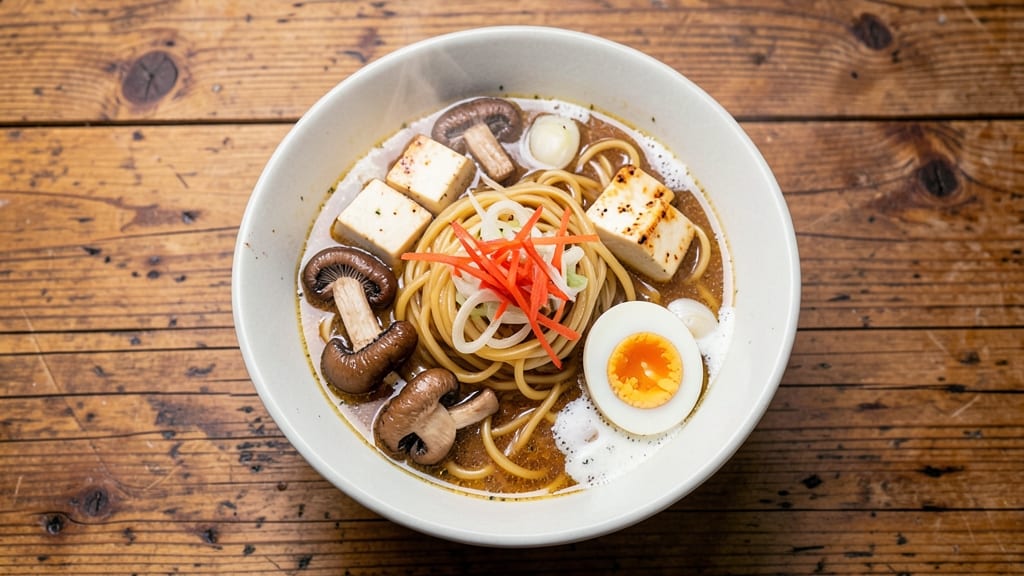
This vegetarian ramen with egg transforms a simple bowl into a luxurious breakfast experience where silky broth meets the magic of a perfectly soft-boiled yolk.
The secret lies in a rich, umami-packed broth that simmers for hours, infused with mushrooms, tofu, and aromatic spices—while the egg adds a velvety, runny center that ties everything together.
What makes this dish special is how it balances traditional ramen techniques with modern vegetarian twists, ensuring depth of flavor without relying on meat.
The broth is the heart of this recipe, where miso and coconut milk create a velvety base that’s both comforting and complex. You’ll simmer shiitake mushrooms, tofu, and garlic until the flavors meld into a harmonious blend, then finish with a splash of sesame oil for that signature ramen aroma.
Meanwhile, the egg—soft-boiled to perfection—becomes the star, its yolk blending seamlessly with the broth when you take the first slurp.
What you’ll end up with is a bowl that looks and tastes like it came from a high-end ramen shop: silky noodles floating in a fragrant broth, topped with crisp mushrooms, tender tofu, and a runny yolk that you can swirl into every bite.
The contrast of textures—chewy noodles, creamy egg, and crisp toppings—makes this dish impossible to resist. It’s the kind of meal that turns a weekday breakfast into a moment of indulgence.
Ready in about 45 minutes (with prep time included), this recipe is perfect for weekend brunches or a cozy weeknight dinner. The best part? Every component comes together in one pot, leaving your kitchen clean and your taste buds satisfied. Let’s get cooking!
Ingredients for vegetarian ramen recipe with egg
Here’s the ingredient lineup for your luxurious vegetarian ramen with egg—where umami broth meets velvety yolk perfection.
| Ingredient | Amount | Notes |
|---|---|---|
| Ramen Noodles 🍜 | 2 packages | Fresh or high-quality dried, uncooked |
| Dried Shiitake Mushrooms 🍄 | 10 whole | Rehydrated in hot water |
| Extra-Firm Tofu 🥬 | 1 lb | Pressed and cubed |
| Fresh Garlic Cloves 🧄 | 6 cloves | Minced for depth of flavor |
| Fresh Ginger 🌿 | 1 ½ tbsp | Grated, not powdered |
| White Miso Paste 🍶 | ½ cup | High-quality, unsweetened |
| Coconut Milk 🥥 | 1 can (13.5 oz) | Full-fat for creaminess |
| Dashi Powder 🍲 | 1 tbsp | Vegetarian-friendly |
| Sesame Oil 🫒 | 1 tbsp | Toasted for aroma |
| Large Eggs 🥚 | 4 whole | Fresh for perfect yolk |
| Green Onions 🧅 | 3 whole | Thinly sliced, white and green parts |
| Vegetable Oil 🫒 | 2 tbsp | For soft-boiling eggs |
| Diamond Crystal Kosher Salt 🧂 | 1 ½ tsp | For seasoning broth |
| Black Pepper 🌶️ | ½ tsp | Freshly cracked |
The mushrooms and tofu are flavor powerhouses—shiitake mushrooms from Asian markets or the bulk section pack the most umami, but store-bought dried works too. Press that tofu like your life depends on it (wrap in a towel, place a heavy pan on top for 15 minutes). The miso matters—White miso gives a cleaner flavor than red, and Hokkaido brand is the gold standard if you’re splurging. For the broth, coconut milk adds richness, but if you’re avoiding dairy, full-fat coconut milk is still vegan-friendly. The dashi powder? Vegetarian dashi is a must—regular versions often contain fish. Fresh ginger and garlic? Organic if possible, but conventional works fine if you peel it well.
No shiitake mushrooms? Cremini or oyster mushrooms work in a pinch, but they won’t have the same depth. Tofu hater? Swap for extra-firm tempeh—it holds up better to long simmering. Miso substitute? White soy sauce plus a pinch of sugar, but you’ll lose some complexity. The eggs are non-negotiable for that runny yolk, but if you’re avoiding them entirely, silken tofu marinated in soy sauce mimics the texture. For the noodles, fresh ramen noodles are ideal, but high-quality dried (like Nongshim) work too. Just don’t skimp on the quality—cheap noodles turn mushy. The sesame oil is for aroma, not cooking—add it last for that signature ramen fragrance.
Broth keeps for 4 days in the fridge or 3 months frozen—portion it into containers for quick lunches. The tofu and mushrooms can be prepped ahead and stored separately for 3 days. For the eggs, boil them just before serving (they’re best fresh). If you’re meal prepping, cook the noodles last and store them separately to avoid sogginess. The broth actually tastes better the next day as flavors meld—double batch it if you can. And if you’re serving this for guests, keep the eggs in a separate pot until right before eating so the yolks stay perfectly runny.
Why You'll Love This Recipe
- No-Soaking Needed: I keep a pack of dried shiitake in my pantry just for this—no need to soak them overnight. Toss them in boiling water for 10 minutes, and they soften right up, releasing that deep umami punch into the broth. (Yes, even on a Tuesday night when I’m too tired to remember to soak anything.)
- Umami Bomb: That crispy fried tofu paired with rehydrated shiitake mushrooms? It’s like a flavor explosion in your mouth. The garlic and ginger hit just right, but the mushrooms and tofu carry the whole dish—rich, savory, and satisfying without a single drop of meat.
- Lunchbox Hero: Between us, this is my go-to for meal prep. Cook a big batch of noodles, store the broth separately, and assemble with prepped tofu and mushrooms. Cold or reheated, it’s always a hit—my daughter picks out the softest tofu cubes first, but still asks for seconds.
- Budget Magic: I make this twice a month and never break the bank. Ramen noodles, dried shiitake, and a block of tofu stretch across multiple meals, and the ingredients are cheap enough to experiment with. Honestly, it’s the kind of recipe that makes pantry staples feel luxurious.
Step-by-step instructions for vegetarian ramen with egg
Here's how to craft a rich, umami-packed ramen where silky broth meets perfectly soft-boiled eggs.
Rehydrate and Prepare the Shiitake Mushrooms
Place the 10 whole dried shiitake mushrooms in a heatproof bowl and pour 4 cups of hot water over them. Let them soak for 20-30 minutes until fully rehydrated and plump. This step is crucial—the mushrooms will develop deep, savory notes that form the broth's foundation.
While soaking, prepare the mushrooms for cooking by removing stems (save for broth) and slicing the caps into ¼-inch thick pieces. The stems contain concentrated umami, so don't discard them—add them to your broth later. The rehydrated mushrooms should yield about 2 cups of sliced caps plus stems.
Build the Umami-Packed Broth
In a large pot, combine the rehydrated mushrooms (caps and stems), 6 cloves minced fresh garlic cloves, 1.5 tbsp grated fresh ginger, 0.5 cup white miso paste, 1 tbsp dashi powder, 1 can (13.5 oz) coconut milk, and 8 cups water. Bring to a gentle simmer over medium heat and cook uncovered for 25-30 minutes, stirring occasionally.
As it simmers, you'll notice the broth develop a rich, golden color and aromatic steam. The miso and dashi work together to create that signature ramen depth. Taste the broth after 20 minutes—it should be deeply savory but not overly salty. If needed, adjust with ½ tsp diamond crystal kosher salt at a time. Strain through a fine-mesh sieve into a clean pot, pressing gently on the solids to extract maximum flavor.
Cook the Tofu and Prepare the Noodles
While the broth simmers, press the 1 lb extra-firm tofu for 15 minutes between paper towels to remove excess water. Cut into 1-inch cubes and heat 1 tbsp vegetable oil in a separate skillet over medium-high heat. Add the tofu and cook for 5-6 minutes, turning occasionally, until golden brown on all sides. This step adds protein and texture contrast.
In the same pot where you strained the broth, bring to a boil and add the 2 packages ramen noodles. Cook according to package instructions until al dente (usually 3-4 minutes), then drain, reserving 1 cup of the starchy noodle water. This water is liquid gold—it helps emulsify the broth and adjust consistency later.
Soft-Boil the Eggs for Perfect Yolk Magic
Fill a small saucepan with 4 cups water and bring to a gentle simmer. Carefully lower the 4 whole large eggs into the water using a slotted spoon. Cook for exactly 6 minutes and 30 seconds for a perfectly runny yolk with just-set whites. This timing is critical—any longer and the yolk becomes firm.
Immediately transfer the eggs to an ice bath for 2 minutes to stop cooking. The shock stops the cooking process instantly and makes peeling easier. Crack each egg open directly into individual bowls, reserving the shells. Save the egg whites for garnish if desired.
Assemble and Finish the Ramen
Divide the cooked ramen noodles among 4 bowls. Ladle the hot broth over the noodles, then add the golden brown tofu cubes and 3 whole thinly sliced green onions (white and green parts). The contrast of textures—silky broth, chewy noodles, tender tofu—is what makes this dish sing.
Place a soft-boiled egg on top of each bowl, then drizzle with 1 tbsp sesame oil and finish with an additional sprinkle of green onions and a crack of black pepper. The egg should be at room temperature when served—this allows the yolk to blend beautifully with the first spoonful of broth. Serve immediately while the noodles are hot and the egg yolk remains perfectly runny.
Pro Tips For Making Vegetarian Ramen Recipe With Egg
- SOAK SHIITAKES 20 MINUTES: Dried shiitakes are tough little devils when rushed. I learned this the hard way—toss them in cold water for at least 20 minutes before slicing, or they’ll fight you like overcooked pasta. Use that soaking water later for broth (it’s packed with umami), but strain it well.
- PRESS TOFU UNTIL IT SINGS: Extra-firm tofu still hides moisture that’ll turn your broth into soup. Wrap it in a towel, place a heavy pan on top, and let it sit for 10 minutes. This isn’t just about dryness—it’s about getting that crispy edge when you sear it. Trust me, your future self will hear you screaming at the pan if you skip this.
- STOP STIRRING THE BROTH: The second you add garlic and ginger, walk away. Stirring constantly turns your aromatic base into mush. Let it bloom over medium heat for 2-3 minutes—just until the raw smell fades. This is where the flavor actually develops, not when you’re babysitting it.
- USE THE RAMEN PACKAGE WATER: That salty, greasy water from boiling the noodles? Don’t dump it. Stir it back into your broth at the end—it’s the secret to balancing flavors and making the noodles taste like they’re supposed to. (Yes, even if it looks gross. Your taste buds will thank you.)
Pro cooking tips for great vegetarian ramen recipe with egg
Broth Simmering Secrets
Simmer your broth at a gentle bubble—never a rolling boil—to preserve delicate flavors and prevent cloudiness. I use a large Dutch oven (like Le Creuset) because it maintains even heat distribution.
Stir occasionally with a wooden spoon to prevent scorching at the bottom, where miso and coconut milk can stick. 🌡️
For maximum umami, don’t rush the simmering time. The 25-30 minutes allows the mushrooms and miso to release their full depth of flavor. If your kitchen runs hot, reduce heat to low-medium and add ½ cup water if the broth reduces too quickly.
The goal is a rich, velvety consistency—not a thin, watery broth.
Egg Perfection Timing
That 6 minutes and 30 seconds for soft-boiled eggs is non-negotiable for a perfectly runny yolk. Use a timer—I place mine right next to the stove—and start counting from the moment water returns to a gentle simmer (not a rolling boil).
The ice bath is crucial: it stops cooking instantly and makes peeling easier. 🥚
Pro tip: Room temperature eggs boil more evenly. Take them out of the fridge 30 minutes before cooking. If your eggs float in the water, they’re too old—replace them with fresh ones from the middle of the carton (they’re less likely to crack).
Noodle Water Magic
Never throw away that starchy noodle water—it’s the secret to a silky broth. Reserve 1 cup and stir it into your broth just before serving. The starch helps emulsify the broth, giving it a luxurious mouthfeel similar to high-end ramen shops.
If your broth is too thick, add ¼ cup hot water to reach your desired consistency. 🍜
Cook noodles al dente—they’ll finish cooking in the hot broth. Overcooking turns them mushy. I rinse mine briefly under cold water after draining to stop cooking, then toss with a little sesame oil to prevent sticking while assembling bowls.
Tofu Texture Tips
Pressing tofu is about removing moisture, not crushing it. Wrap the block in a clean kitchen towel, place a heavy pan on top (or use a tofu press), and let it sit for 15 minutes.
This ensures crispy edges when searing. Cut into 1-inch cubes for even cooking—smaller pieces absorb broth better. 🥬
For extra flavor, marinate the pressed tofu in 1 tbsp soy sauce and ½ tsp grated ginger for 10 minutes before cooking. This adds depth without overpowering the broth. I use a non-stick skillet (like GreenPan) to prevent sticking—no oil needed if your pan is well-seasoned.
Nutrition facts
Frequently asked questions
Can I make this vegetarian ramen without eggs?
The egg is the star here, but you can absolutely adapt it! Replace the soft-boiled eggs with silken tofu marinated in soy sauce and sesame oil for a similar creamy texture. For extra protein, add crispy baked tofu cubes or marinated tempeh as a topping. The broth and noodles will still be the showstoppers!
How do I get the perfect runny yolk every time?
Timing is everything! Use room-temperature eggs (take them out 30 minutes before cooking) and cook them in simmering water (not boiling) for exactly 6 minutes and 30 seconds. The ice bath stops cooking instantly—don't skip this step! For extra insurance, use eggs from the middle of the carton (they're less likely to crack).
Can I make the broth ahead of time?
Yes! The broth actually tastes better the next day as flavors meld. Store it in the fridge for up to 4 days or freeze in portions for 3 months. Reheat gently on the stove—never microwave it, as this can make it cloudy. The tofu and mushrooms can be prepped separately and stored for 3 days in the fridge.
What if I don't have shiitake mushrooms?
No problem! Use cremini or oyster mushrooms for a similar texture, though they won't have the same umami depth. For extra flavor, add 1 tbsp soy sauce or ½ tsp mushroom powder to the broth. If you're avoiding mushrooms entirely, boost umami with 1 extra tbsp miso paste or 1 tsp dried kombu (seaweed) while simmering.
How do I prevent the noodles from getting mushy?
Cook them al dente (1 minute less than package instructions), then rinse briefly under cold water to stop cooking. Toss with a little sesame oil before assembling bowls. The hot broth will finish cooking them perfectly. For extra insurance, cook noodles fresh when serving—don't prep them ahead of time.