
Sauces & Condiments
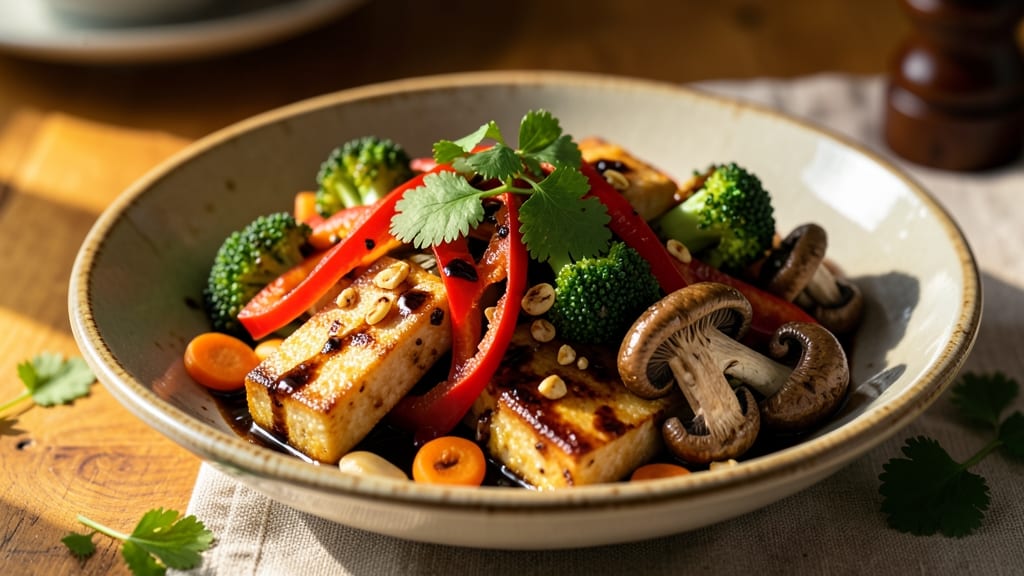
This veggie stir-fry recipe with soy sauce delivers umami-packed wok perfection in just 20 minutes, proving that vegetarian meals can be bold, balanced, and restaurant-worthy. The secret lies in high-heat stir-frying—where crisp-tender vegetables meet the deep, savory punch of soy sauce, garlic, and ginger.
I developed this recipe after realizing most stir-fries either taste bland or rely too heavily on meat substitutes. This version keeps the protein plant-based but satisfying, with tofu or tempeh adding structure while the vegetables shine.
The beauty of this recipe is its flexibility—swap in seasonal vegetables, adjust the protein, or customize the sauce to your taste.
Soy sauce is the flavor anchor here, but it’s balanced with a touch of sweetness (from honey or brown sugar) and acidity (rice vinegar or lime) to create a sauce that’s complex yet approachable. The key technique?
Cooking the aromatics until fragrant, then working in quick batches of vegetables to maintain their crisp-tender texture. This isn’t just a side dish; it’s a complete, protein-rich meal that pairs effortlessly with steamed rice or noodles.
What you’ll end up with is a vibrant, aromatic stir-fry that’s bursting with texture—crisp bell peppers, silky mushrooms, and tender greens all coated in a glossy, umami-rich sauce. The tofu or tempeh adds a satisfying chew, while the vegetables retain their natural brightness.
This recipe is perfect for weeknights, meal prep, or impressing guests—because it proves that vegetarian stir-fries can be just as dynamic and flavorful as their meat-heavy counterparts. Let’s get cooking.
For extra depth, garnish with sesame seeds, sliced green onions, or a sprinkle of chili flakes. The sauce can be made ahead and stored in the fridge for up to 5 days, making this a foolproof recipe for busy schedules.
Whether you’re a stir-fry beginner or a seasoned pro, this method ensures perfect results every time.
Ingredients for veggie stir fry recipe soy sauce
High-heat stir-fry essentials—where umami meets crisp-tender vegetables and plant-based protein shine.
| Ingredient | Amount | Notes |
|---|---|---|
| Extra-Firm Tofu 🥬 | 14 oz | Pressed and cubed |
| Bell Peppers 🌶️ | 2 whole | Assorted colors, sliced |
| Broccoli Florets 🥦 | 2 cups | Cut into bite-sized pieces |
| Baby Carrots 🥕 | 1 cup | Whole or sliced in half |
| Shiitake Mushrooms 🍄 | 8 whole | Stemmed and sliced |
| Garlic Cloves 🧄 | 4 cloves | Minced for aromatics |
| Fresh Ginger 🌿 | 1 tbsp | Grated finely (about 1-inch piece) |
| Vegetable Oil 🫒 | 3 tbsp | High smoke point preferred |
| Low-Sodium Soy Sauce 🥢 | ½ cup | For balanced umami |
| Rice Vinegar 🍶 | 2 tbsp | For acidity balance |
| Brown Sugar 🍚 | 1 tbsp | Light or dark variety |
| Sesame Oil 🫒 | 1 tbsp | Toasted for aroma |
| Toasted Sesame Seeds 🌾 | 1 tbsp | For garnish |
| Green Onions 🧅 | 3 whole | Sliced for garnish |
| Diamond Crystal Kosher Salt 🧂 | ½ tsp | For seasoning |
The tofu and vegetables are the foundation, so prioritize quality. Extra-firm tofu holds up best to high heat—press it for 15 minutes before cubing to remove excess moisture. For vegetables, freshness matters: broccoli should snap when bent, mushrooms should feel firm, and bell peppers should be crisp. Whole Foods or local farmers markets often carry the freshest produce, but don’t overlook the grocery store’s pre-washed veggie bins for convenience. The garlic and ginger are non-negotiable for that aromatic depth—freshly grated ginger (about 1-inch piece) delivers more punch than powdered substitutes. If you’re short on time, pre-minced garlic works, but fresh is always better.
No low-sodium soy sauce? Regular soy sauce plus extra brown sugar balances the saltiness. Substituting tofu? Tempeh adds a nutty depth—just marinate it first for 15 minutes. Short on sesame oil? Avocado oil at half the amount works in a pinch, though it lacks the toasted aroma. The brown sugar can be swapped for honey or maple syrup if you prefer a different sweetness profile. For extra heat, add red pepper flakes or sriracha to taste. The key is balancing the sauce’s components—salt (soy sauce), sweet (brown sugar), acid (rice vinegar), and fat (sesame oil)—to create that restaurant-quality umami punch.
Prep the vegetables in advance to save time—store them in airtight containers in the fridge for up to 3 days. The sauce can be made ahead and stored for 5 days in the fridge, though the flavors meld even better after a night’s rest. For meal prep, stir-fry the vegetables and tofu separately, then combine with the sauce just before serving to maintain crisp-tender texture. Garnishes like sesame seeds and green onions add freshness—store them separately until ready to serve. The entire dish reheats beautifully; just add a splash of water or soy sauce to deglaze the pan and restore moisture.
Why You'll Love This Recipe
- Foolproof Prep: I swear by the "press-to-crisp" tofu trick—no fancy equipment, just a pan and 10 minutes. The bell peppers and baby carrots stay bright and crunchy (thanks to a quick blanch), while the shiitakes soak up the soy sauce like sponges. Honestly, I’ve made this on days I forgot to grocery shop—it’s that unfussy.
- Umami Bomb: That first bite? The crispy tofu edges paired with the deep, savory shiitakes and a splash of soy sauce—it’s like a flavor explosion without the fuss. The broccoli florets add a little peppery bite, and the garlic? Oh, it’s there in the best way. Between us, this tastes like a restaurant dish, not a weeknight hack.
- Lunchbox Hero: This is my secret for stress-free lunches. Double the batch, pack it in containers, and boom—you’ve got four easy meals. The tofu holds up, the veggies stay fresh, and it reheats like a dream. My daughter picks out the mushrooms first (she’s weird about texture), but she still asks for seconds every time.
- Budget Flex: A block of extra-firm tofu and a bag of frozen shiitakes? That’s my wallet’s best friend. Bell peppers and carrots last forever, and broccoli’s one of those "always on sale" veggies. I’ll be real: this feeds four for under $10, and the leftovers? Even better the next day. Not the prettiest, but the taste makes up for it.
Step-by-step instructions for veggie stir fry with soy sauce
Master this wok technique for vibrant, umami-rich stir fry with perfectly tender vegetables and crisp tofu.
Press and Prepare the Tofu
Wrap the 14 oz extra-firm tofu in a clean kitchen towel and place a heavy object like a cast iron skillet on top. Let it press for at least 20 minutes to remove excess moisture. This ensures crisp edges when stir-frying later.
Cut the pressed tofu into 1-inch cubes. Spread them on a plate and lightly toss with the 0.5 tsp diamond crystal kosher salt. Let them sit for 5 minutes while you prep the vegetables—this enhances their texture and flavor without overpowering the dish.
Prep All Vegetables
Slice the 2 whole bell peppers into thin strips, removing seeds and membranes. Cut the 2 cups broccoli florets into bite-sized pieces, and halve the 1 cup baby carrots lengthwise. Stem and slice the 8 whole shiitake mushrooms into ¼-inch pieces.
Finely mince the 4 cloves garlic and grate the 1 tbsp fresh ginger. Keep all prepped vegetables separate in bowls until ready to cook—this prevents premature wilting. The mushrooms and carrots will cook faster than the bell peppers and broccoli, so plan your cooking order accordingly.
Build the Stir-Fry Base
Heat a wok or large skillet over high heat until smoking. Add 2 tablespoons of the 3 tbsp vegetable oil and swirl to coat. Add the tofu cubes in a single layer and let them sear undisturbed for 2-3 minutes until golden brown on all sides. Remove tofu and set aside.
In the same wok, add the remaining 1 tbsp vegetable oil. Add the mushrooms and carrots first, cooking for 2 minutes. Then add the garlic and ginger, stirring constantly for 30 seconds until fragrant. This sequential cooking prevents overcrowding and ensures even browning.
Combine and Sauce the Vegetables
Return the tofu to the wok and add the bell peppers and broccoli florets. Stir-fry for 3-4 minutes until all vegetables are tender-crisp but still vibrant in color. Push the vegetables to one side of the wok and add the 0.5 cup low-sodium soy sauce, 2 tbsp rice vinegar, and 1 tbsp brown sugar.
Stir everything together, letting the sauce coat the vegetables evenly. Cook for another 1-2 minutes until the sauce reduces slightly and clings to the vegetables. The dish should smell deeply aromatic with notes of umami from the soy sauce and brightness from the vinegar.
Finish and Serve
Remove the wok from heat and stir in the 1 tbsp sesame oil. This adds a nutty aroma and rich depth of flavor. Taste and adjust seasoning with additional soy sauce or vinegar if needed, remembering that the dish will continue to develop flavor as it rests.
Transfer the stir fry to serving plates and garnish with sliced green onions and 1 tbsp toasted sesame seeds. Serve immediately over steamed rice or noodles to soak up the flavorful sauce. The vegetables should be vibrant, the tofu crisp, and the sauce perfectly balanced between savory, sweet, and tangy.
Pro Tips For Making Veggie Stir Fry Recipe Soy Sauce
- CUT TOFU IN HALF: Extra-firm tofu needs a good press—wrap it in a towel, place a heavy pan on top for 10 minutes, then slice into ½-inch cubes. I used to skip this, and the tofu would turn to mush. Trust me, the texture change is night and day.
- STIR-FRY IN BATCHES: Don’t crowd the pan—cook mushrooms and tofu first, then set aside. Add bell peppers and broccoli in the last 2 minutes. I learned this the hard way: overcrowding steams veggies instead of searing them.
- USE DARK SOY SAUCE LAST: Toss your stir-fry with a splash of light soy first, then finish with dark soy sauce. This keeps the veggies vibrant and adds that glossy sheen without overpowering the flavor. (Yes, even if you’re impatient like me.)
- SALT THE CARROTS FIRST: Baby carrots stay bland if you toss them in raw. Toss them with ½ teaspoon salt and a drizzle of oil 10 minutes before cooking—they’ll absorb flavor and stay crisp. My grandmother swore by this, and she was right.
Creative variations of these flavors
Spicy Thai-Inspired Twist
Transform your stir-fry into a Thai-inspired dish by adding 1 tbsp red curry paste (like Maesri) and 1 tsp fish sauce to the sauce mixture. Swap the bell peppers for 1 cup sliced Thai eggplant and add 1 cup snap peas for extra crunch.
Stir in 1 tbsp lime juice and 1 tsp palm sugar at the end for a tangy-sweet balance. Garnish with crushed peanuts and cilantro for authentic Thai flair. 🌶️
Mediterranean Herb Version
Infuse your stir-fry with Mediterranean flavors by replacing soy sauce with ½ cup olive oil and 3 tbsp lemon juice. Add 1 tsp dried oregano, 1 tsp smoked paprika, and ½ tsp cinnamon to the sauce.
Use zucchini and cherry tomatoes instead of broccoli, and top with feta cheese crumbles and kalamata olives. The result is a bright, herby dish with a Middle Eastern twist. 🌿
Buffalo Cauliflower Crunch
For a spicy, protein-packed variation, replace tofu with 1 large head cauliflower cut into florets. Toss the cauliflower in 2 tbsp hot sauce (like Frank’s RedHot) and 1 tbsp melted butter before stir-frying.
Use ½ cup hot sauce instead of soy sauce in the sauce mixture, and add ½ cup crumbled blue cheese at the end. Serve with ranch dressing for dipping. 🔥
Sweet and Smoky BBQ
Give your stir-fry a smoky-sweet profile by using ½ cup BBQ sauce (like Sweet Baby Ray’s) instead of soy sauce. Add 1 tbsp smoked paprika and ½ tsp liquid smoke to the sauce. Swap mushrooms for 1 cup sliced pineapple and broccoli for 1 cup corn kernels.
Garnish with pickled jalapeños and cilantro for a tangy kick. This version works perfectly with grilled corn on the side. 🍖
Sesame-Ginger Miso Glaze
Elevate your stir-fry with a rich miso glaze by combining ¼ cup white miso paste, 2 tbsp mirin, and 1 tbsp honey in a small saucepan. Simmer for 3 minutes until smooth, then stir into the cooked vegetables.
Add 1 tsp grated ginger and 1 tbsp toasted sesame seeds for extra depth. This umami-rich glaze pairs beautifully with steamed bok choy and edamame. 🥢
Nutrition facts
Frequently asked questions
Can I use regular soy sauce instead of low-sodium?
Yes, but reduce the amount by half to avoid over-salting. For example, use ¼ cup regular soy sauce instead of ½ cup low-sodium. If you don’t have low-sodium, balance it with 1 extra tablespoon of brown sugar to counteract the saltiness. The key is achieving a savory depth without making the dish taste flat or overly salty.
What’s the best way to keep my vegetables crisp-tender?
Cook vegetables in batches, not all at once, to prevent steaming. Start with harder veggies like carrots and broccoli, then add softer ones like bell peppers last. Use a wok or large skillet and keep the heat at high—medium heat makes veggies soggy. Stir constantly and cook for 2-3 minutes max per batch.
How do I make this recipe gluten-free?
Replace soy sauce with tamari or coconut aminos (both are naturally gluten-free). Tamari has a richer flavor, while coconut aminos add a subtle sweetness. Check labels to ensure no cross-contamination if you’re highly sensitive. The rest of the recipe stays the same—just adjust the sauce ratio to taste.
Can I prep this ahead of time for meal prep?
Prep all vegetables and press the tofu 1 day ahead. Store them separately in airtight containers in the fridge. When ready to cook, stir-fry the veggies and tofu separately, then combine with the sauce just before serving. This keeps the texture crisp, not mushy. The sauce can also be made ahead and stored for 5 days.
What’s the secret to getting crispy tofu?
Press the tofu for at least 20 minutes (or overnight for extra crispiness) to remove moisture. Cut into 1-inch cubes and pat dry with a paper towel before cooking. Use high heat and cook undisturbed for 2-3 minutes until golden brown. A light toss with ½ tsp salt before cooking enhances flavor and texture.