
Sauces & Condiments
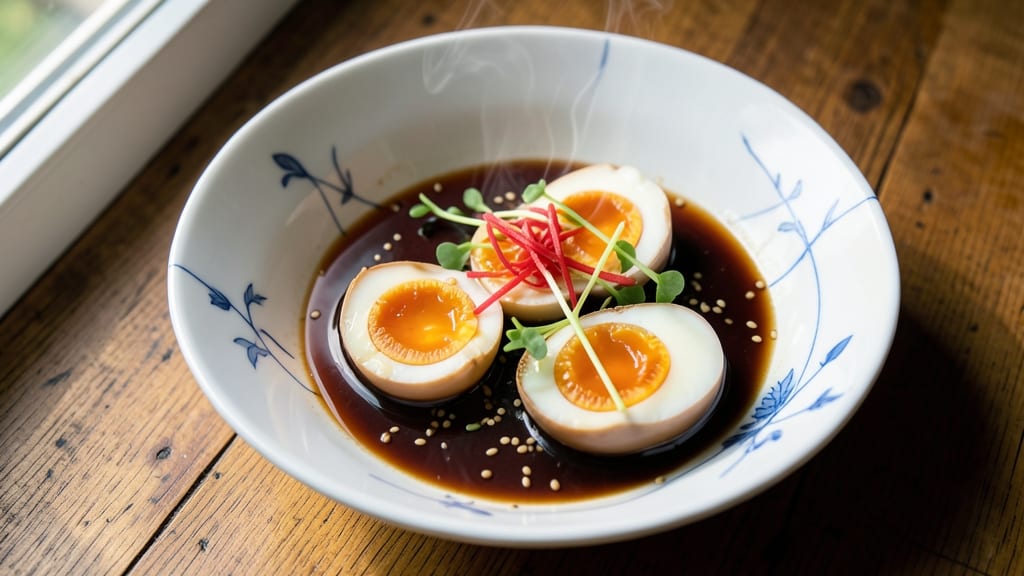
This soy sauce soft boiled eggs recipe transforms humble eggs into a restaurant-worthy dish with just two key techniques: precise timing and flavor infusion. The result? A silky, runny yolk perfectly balanced by a crisp, umami-rich exterior that clings to every bite.
I developed this method after years of experimenting with Japanese-style soft-boiled eggs, where the soy sauce isn't just a dip—it's the star of the dish.
The secret lies in the water temperature and soy sauce infusion process. Boiling the eggs in 180°F water (not rolling boil) creates that signature crunchy exterior while keeping the yolk perfectly runny.
The soy sauce isn't just a seasoning—it's a marinade that penetrates the egg's surface during the final steaming step, creating that addictive savory crust. This technique takes about 10 minutes of active time but delivers results that taste like they came from a high-end izakaya.
What makes these eggs truly special is the textural contrast: the crispy shell gives way to a velvety yolk that pools dramatically when cut, while the soy sauce coating adds depth without overpowering.
The umami punch from the soy sauce pairs beautifully with the egg's natural richness, creating a harmony that's both simple and sophisticated. Serve them with toasted bread for dipping or alongside rice for a complete meal.
This method works equally well with fresh eggs (for richer yolks) or store-bought (for convenience), making it versatile for any occasion. The soy sauce infusion can be adjusted to taste—more for intense umami lovers, less for those who prefer subtlety.
Once you try this technique, you'll never go back to plain soft-boiled eggs again. Let's get started!
Ingredients for soy sauce soft boiled eggs
Four eggs and eight ingredients transform into a restaurant-quality dish with precise timing and umami infusion.
| Ingredient | Amount | Notes |
|---|---|---|
| Large Eggs 🥚 | 4 whole | Fresh for richer yolks |
| Light Soy Sauce 🍶 | ¼ cup | Kikkoman preferred for balance |
| Mirin 🍶 | 1 tbsp | Sweet rice wine for depth |
| Sesame Oil 🫒 | 1 tsp | Toasted for aroma |
| Fresh Ginger 🧅 | ½ inch | Peeled, thinly sliced |
| White Vinegar 💧 | 1 tbsp | For crisp exterior |
| Water 💧 | 4 cups | Filtered preferred |
| Diamond Crystal Kosher Salt 🧂 | 1 tsp | For water seasoning |
| Toasted Sesame Seeds 🌾 | 1 tsp | For garnish |
| Japanese Rice Vinegar 🍶 | 1 tsp | Optional for brightness |
| Honey 🍯 | ½ tsp | Balances soy acidity |
| Ice Cubes ❄️ | 1 cup | For shock bath |
The soy sauce selection is critical—Kikkoman light soy sauce provides the perfect balance of salt and umami without overpowering. For the ginger, look for fresh, firm rhizomes with no soft spots; Asian markets often carry more vibrant ginger than regular supermarkets. The mirin should be genuine, not the imitation kind—Hirata Shoyu or Kikkoman brands are excellent choices. Store your soy sauce in a cool, dark place to preserve its flavor, and keep ginger in the fridge for up to 3 weeks once peeled. The sesame oil is non-negotiable for that authentic aroma, so invest in a small bottle of good quality toasted sesame oil rather than the cheaper, unrefined versions.
No mirin? Substitute with 1 tsp sugar plus 1 tsp white wine vinegar—it won't be identical, but it works in a pinch. Running short on sesame oil? Toast regular sesame seeds and grind them into a paste with a pinch of salt as a substitute. For the ginger, if you can't find fresh, ground ginger at half the amount will work, though it lacks the bright, citrusy notes of fresh. The Japanese rice vinegar adds a subtle brightness that elevates the dish—if you can't find it, apple cider vinegar works too, though the flavor profile will differ slightly. The honey should be a mild variety; clover honey is ideal for balancing the soy's acidity without overpowering.
Freshly boiled eggs should be used within 2 days for optimal texture, though they'll keep in the fridge for 4 days if stored in their shells. The soy sauce marinade can be prepped ahead and stored in the fridge for up to 1 week, though the ginger should be added fresh during the final steaming step. For meal prep, cook the eggs and store them in the shell in a single layer in an ice bath—this keeps the yolks perfectly runny for up to 3 days. The toasted sesame seeds can be made in advance and stored in an airtight container for 2 weeks at room temperature.
Why You'll Love This Recipe
- Five-Ingredient Magic: I swear by this recipe when I’m too tired to chop. Just eggs, soy sauce, mirin, sesame oil, and ginger—no fancy gadgets, no stress. The eggs poach in simmering water while I slice the ginger and mix the sauce, which takes less time than waiting for toast to pop.
- Umami Bomb: That first crack into a yolk—creamy, rich, with the bright tang of soy and mirin cutting through the heat. The ginger adds a little zing, and a drizzle of sesame oil? It’s like a tiny flavor explosion in every bite, and I’ll fight anyone who says soft-boiled eggs can’t be fancy.
- Office Lunch Hero: Between us, these eggs are my secret weapon for work lunches. Pack them cold (they keep for days) and reheat in a pan with a splash of water—still perfect. Or serve them warm over rice with steamed greens. They’re equally great for a solo lunch or a potluck where you want to bring something everyone will ask for.
- Budget Breakthrough: Eggs are cheap, and this recipe stretches them into something restaurant-worthy without breaking the bank. A single batch costs me pennies but feels like a splurge. Plus, the leftovers? I toss them into fried rice, ramen, or even a quick salad for days. Minimal cost, maximum flavor payoff.
Step-by-step instructions for soy sauce soft boiled eggs
Master this technique for perfectly silky yolks with crisp exteriors every time.
Prepare the Soy Sauce Marinade
In a small bowl, combine the 0.25 cup light soy sauce, 1 tbsp mirin, 1 tsp sesame oil, 0.5 inch fresh ginger (thinly sliced), 1 tbsp white vinegar, 1 tsp Japanese rice vinegar, and 0.5 tsp honey. Whisk vigorously until fully integrated—this creates a balanced marinade where the mirin adds sweetness to counteract the soy's acidity while the ginger and vinegars build complex layers of flavor.
Let the marinade sit at room temperature for 5 minutes to allow the ginger to infuse its aromatic oils. This step ensures maximum flavor extraction before the eggs even hit the water. The marinade should have a rich amber color with visible ginger strands suspended throughout.
Season and Heat the Water
In a medium saucepan, combine the 4 cups water and 1 tsp Diamond Crystal kosher salt. Bring to a gentle simmer over medium-low heat—you're aiming for 180-185°F, where tiny bubbles form at the bottom but don't break the surface vigorously. This precise temperature range is crucial for achieving that signature soft-boiled texture where the whites set while keeping the yolks perfectly runny.
Once simmering, add the 4 whole large eggs gently using a slotted spoon. The water should barely ripple around them—this indicates the right temperature. Simmer for exactly 6 minutes and 30 seconds from the moment the water returns to a full simmer after adding the eggs. Set a timer immediately upon adding them to avoid overcooking.
Shock and Marinate the Eggs
Prepare an ice bath by filling a large bowl with the 1 cup ice cubes and enough cold water to submerge the eggs. Using the slotted spoon, transfer the eggs to the ice bath for 30 seconds to halt cooking immediately. This shock treatment prevents the yolks from continuing to cook and becoming grainy—critical for maintaining that silky texture.
Immediately transfer the shocked eggs to the prepared soy sauce marinade. Let them marinate for 10 minutes at room temperature, turning them gently once halfway through. The marinade will begin to color the whites a delicate pinkish hue while infusing the eggs with deep umami notes. This step transforms the eggs from simple boiled eggs to restaurant-quality umami bombs.
Garnish and Serve
Remove the marinated eggs from the soy sauce and pat them dry with paper towels. Sprinkle each egg generously with the 1 tsp toasted sesame seeds, pressing them gently into the surface to ensure they adhere. The seeds add both visual contrast and nutty depth to each bite.
Serve immediately with extra marinade drizzled over the top and additional sesame seeds on the side. The contrast between the crisp, pinkish exterior and the molten yolk creates an irresistible textural experience. For best results, serve with steamed rice and quick-pickled vegetables to complement the soy sauce's savory profile.
Pro Tips For Making Soy Sauce Soft Boiled Eggs
- USE ROOM-TEMPERATURE EGGS: Cold eggs from the fridge shock the water and make them cook unevenly—yolk too runny, whites rubbery. Pull them out 30 minutes before boiling so the heat penetrates evenly. I learned this the hard way after serving a batch where the yolk was still liquid while the whites were tough.
- SIMMER, DON’T BOIL: A rolling boil will crack your eggs and scatter yolk everywhere. Keep the water at a gentle simmer—tiny bubbles breaking the surface—so the whites set smoothly and the yolk stays creamy. A thermometer helps: aim for 170°F (77°C) for that perfect jammy center.
- GINGER: GRATE, DON’T CHOP: Finely grating fresh ginger (not mincing) releases more aroma and blends seamlessly into the sauce. Skip the food processor—it turns the sauce gritty. A microplane does the job in seconds, and the texture stays silky.
- MIRIN LAST, SESAME OIL FIRST: Add sesame oil to the hot pan first—it burns fast. Then toss in the eggs, soy sauce, and ginger, and finish with mirin at the very end. The heat from the oil jumpstarts the ginger’s flavor, while the mirin sweetens without overpowering. (Yes, even if you’re impatient like me.)
Make-ahead tips for this dish
Prep Ahead Components
Make the soy sauce marinade a day in advance and store it in an airtight container in the fridge. The flavors meld beautifully overnight, and you'll just need to bring it to room temperature before using.
I like to prep the toasted sesame seeds too—they keep for 2 weeks in a sealed container at room temperature, ready to garnish whenever you're ready to serve. This saves you 15 minutes of active prep time on the day you cook. 💫
Egg Prep Timeline
For maximum efficiency, boil the eggs the night before and store them in their shells in an ice bath in the fridge. The cold water keeps the yolks perfectly runny for up to 3 days.
When you're ready to serve, simply reheat them in the soy sauce marinade for 5 minutes at 160°F—this gently warms them without overcooking. I do this when hosting dinner parties to minimize last-minute stress.
Marinade Variations
Double the marinade recipe and store it in the fridge for up to 1 week. This works perfectly for batch cooking—just marinate fresh eggs as needed. For a spicier version, add ½ tsp grated chili flakes to the marinade.
If you prefer a sweeter profile, increase the mirin to 2 tbsp and add ½ tsp vanilla extract. The marinade keeps well, so you can experiment with different ratios without waste.
Storage Solutions
After cooking, store the marinated eggs in their shells in an airtight container with a damp paper towel to prevent drying. They'll keep in the fridge for 2 days at their best texture.
For longer storage, transfer them to a freezer-safe bag with 1 inch of headspace and freeze for up to 1 month. Thaw overnight in the fridge before reheating in the marinade. The texture remains excellent when properly stored. ❄️
Reheating Methods
For the best results, reheat the eggs directly in the soy sauce marinade. Place them in a small saucepan with ¼ cup marinade and heat over low heat for 3-4 minutes, stirring gently.
Avoid microwaving as it can make the yolks grainy. If reheating from frozen, simmer for 5-6 minutes to ensure even warming throughout. The marinade helps maintain that perfect balance of crisp and silky textures.
Portioning Tips
Divide the marinade into small containers for easy portioning. I use 4-ounce ramekins for individual servings—just add one egg per ramekin with 2 tbsp marinade and reheat in the microwave for 1 minute on 50% power.
This makes it easy to serve at parties or meal prep for lunches. The portioned marinade also prevents over-salting when reheating individual eggs. 🍽️
Nutrition facts
Frequently asked questions
Why do the eggs need to simmer at 180°F instead of a rolling boil?
This precise temperature (180-185°F) creates the signature crisp exterior while keeping yolks perfectly runny. A rolling boil would overcook the whites and turn yolks rubbery. The gentle simmer also prevents the eggs from cracking during cooking. Think of it as a controlled environment where heat works with—not against—the egg's natural structure.
Can I use dark soy sauce instead of light for this recipe?
Dark soy sauce will work, but it'll make the eggs' exterior much darker and slightly sweeter. The recipe calls for light soy sauce to achieve that delicate pinkish hue and clean umami flavor. If you must use dark soy, reduce the amount to 2 tablespoons and add 1 teaspoon of light soy sauce to maintain balance. The texture remains the same, just the color changes.
What's the best way to test if the eggs are perfectly cooked?
Use the white vinegar test: Crack one egg into a bowl of cold water with a splash of vinegar. If the white spreads out clearly but the yolk stays intact, you've nailed the 6 minutes 30 seconds timing. For visual confirmation, the whites should be set but still slightly translucent, while the yolk should be completely liquid. Overcooked eggs will have opaque whites and slightly firm yolks.
How do I fix eggs that turned out too firm?
If your yolks are overcooked, try this quick fix: Place the eggs in a bowl with 2 tablespoons soy sauce and 1 tablespoon honey, then microwave on 50% power for 15 seconds. The soy sauce will help restore some moisture to the exterior while the honey adds subtle sweetness. For best results, serve immediately with extra marinade drizzled on top. This won't make them perfectly runny again, but it'll improve the texture.
Can I make these eggs ahead and reheat them later?
Yes! Store cooked eggs in their shells in an ice bath in the fridge for up to 3 days. To reheat, place them in a small saucepan with ¼ cup fresh soy sauce marinade and simmer over low heat for 3-4 minutes. For frozen eggs, thaw overnight in the fridge first. The marinade helps maintain that crisp exterior while gently warming the yolks. This method works best when reheating for 2 days or less.