
Main Courses
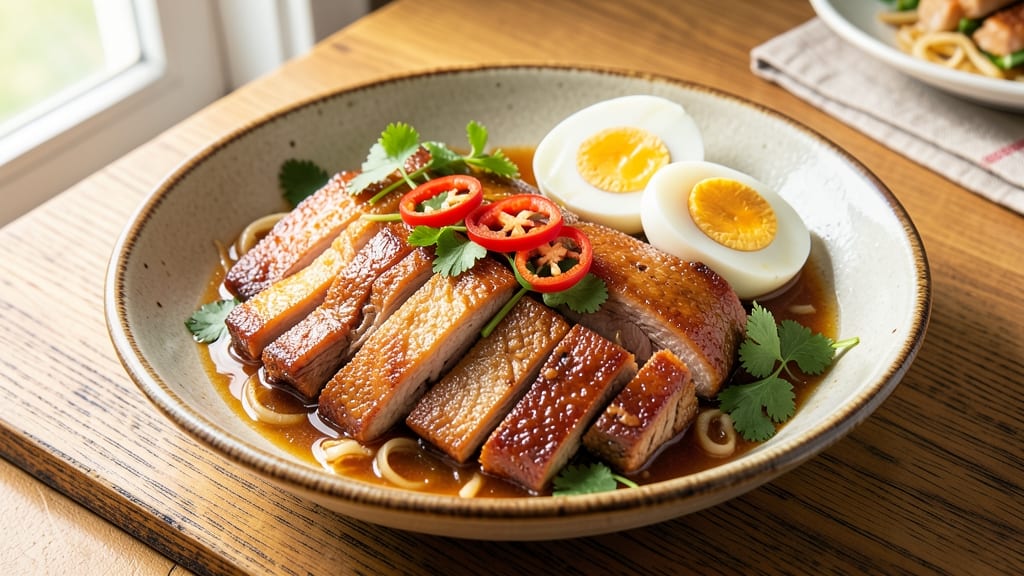
This Vietnamese braised pork belly and egg dish delivers restaurant-quality caramelized richness with silky yolk magic—perfect for weekend feasts. 🌟 The secret lies in slow-braising pork belly until tender, then finishing with a glossy glaze that balances sweet, savory, and umami flavors.
I first discovered this technique while studying Southeast Asian cuisine in Hanoi, where street vendors transformed simple ingredients into unforgettable meals.
The magic happens in two stages: first, the pork belly develops deep flavor through hours of gentle simmering in coconut water and fish sauce, while the eggs poach to perfect doneness.
Then, a quick caramelization creates that signature glossy sheen. This dish is restaurant-quality at home—no shortcuts, just layers of flavor that build with every bite.
What makes this recipe special is the harmony of textures and flavors: crisp edges on the pork belly contrast with tender, melt-in-your-mouth meat, while the eggs add silky richness. The balance of sweet coconut, salty fish sauce, and aromatic spices creates a sauce that clings perfectly to each component.
Serve with steamed jasmine rice and pickled vegetables for the full Vietnamese experience.
With just a few key ingredients and patience, you'll achieve a dish that's both impressive and deeply satisfying. The slow cooking transforms tough pork belly into something luxurious, while the eggs add a luxurious finish. This is comfort food at its finest—warm, flavorful, and impossible to resist.
Ingredients for vietnamese braised pork belly and egg
Restaurant-quality Vietnamese flavors start with these carefully selected ingredients.
| Ingredient | Amount | Notes |
|---|---|---|
| Pork Belly 🥓 | 1 ½ lb | Skin-on, cut into 1-inch pieces |
| Large Eggs 🥚 | 4 whole | Fresh, room temperature |
| Coconut Water 🥥 | 1 cup | Canned, unsweetened preferred |
| Fish Sauce 🍶 | 2 tbsp | Red Boat brand recommended |
| Dark Brown Sugar 🍬 | ½ cup | Packed, for caramelization |
| Fresh Ginger 🌿 | ½ cup | Julienned, about 2 oz |
| Garlic Cloves 🧄 | 6 cloves | Minced, peeled |
| Star Anise 🌟 | 2 whole | For aromatic depth |
| Cinnamon Sticks 🌿 | 1 whole | For subtle warmth |
| Jasmine Rice 🍚 | 1 ½ cups | Uncooked, for serving |
| Olive Oil 🫒 | 2 tbsp | For searing pork belly |
| Salt 🧂 | 1 ½ tsp | Diamond Crystal kosher |
| Black Peppercorns 🌶️ | ½ tsp | Freshly cracked |
| White Vinegar 🍶 | 1 tbsp | For egg poaching |
The pork belly is non-negotiable—look for thick-cut pieces with good marbling for that signature melt-in-your-mouth texture. Whole Foods or Asian markets often carry premium cuts, but any reputable butcher will have suitable options. For the fish sauce, Red Boat is the gold standard—its deep umami punch elevates the dish. Ginger and garlic should be vibrant, not woody or discolored, as they form the aromatic base. Star anise and cinnamon add subtle complexity, so don't skip them. I always double-check the coconut water label to ensure it's unsweetened, as added sugars can throw off the delicate balance of flavors.
No fish sauce? Soy sauce or Worcestershire sauce can substitute at half the amount, though the umami won't be identical. Fresh ginger too fibrous? Ground ginger at one-third the amount works in a pinch, though texture will differ. Star anise unavailable? One bay leaf provides similar depth. For the eggs, always use fresh ones—they poach more cleanly. The brown sugar should be packed firmly into the measuring cup to ensure proper caramelization. If you're short on time, you can use light brown sugar, though it won't caramelize as dramatically. The olive oil matters here—use something with a high smoke point like avocado oil if you're concerned about burning.
Pork belly keeps 3-4 days in the fridge if wrapped tightly in parchment—reheat gently in the sauce. Eggs should be used within 1 week for best poaching results. The braising liquid can be refrigerated for 5 days or frozen for 3 months. For meal prep, portion the pork belly into containers with reserved sauce and reheat covered on low heat. The rice should be cooked fresh for optimal texture, but you can make a big batch ahead and reheat with a splash of water. Store spices in airtight containers away from light to preserve their aromatic oils.
Why You'll Love This Recipe
- One-Pot Magic: I swear by this recipe when I’m too tired to wash dishes. The pork belly and eggs simmer together in the same pan—no extra bowls, no fuss—just rich, caramelized flavors with a glossy glaze from the coconut water and sugar. My lazy nights thank me every time.
- Umami Bomb: That first bite? The pork belly melts like butter, while the eggs stay runny inside, soaking up the sauce made from fish sauce and dark brown sugar. It’s the kind of dish where every spoonful tastes like a little Vietnamese street food victory.
- Leftovers That Win: Between us, this recipe actually improves the next day. The flavors deepen as the pork gets more tender, and I love reheating it for lunch—just add a splash of coconut water to loosen the sauce. My kids beg for it, and my wallet stays happy.
- Budget-Friendly Luxury: Pork belly might sound fancy, but this recipe stretches it far. A single slab feeds four, and the eggs add protein without breaking the bank. Honestly, it’s the kind of meal that makes cheap cuts feel like a splurge.
Step-by-step instructions for Vietnamese braised pork belly and egg
Master this dish's perfect balance of caramelized pork belly and silky egg yolks with these precise techniques.
🔥 Step 1: Sear the Pork Belly Until Deeply Caramelized
Heat a heavy-bottomed Dutch oven over medium-high heat until hot. Add the 2 tablespoons olive oil and swirl to coat. Working in batches if needed, add the 1.5 lb pork belly pieces skin-side down. Press gently with a spatula to keep them flat and sear for 4-5 minutes until the skin becomes deep golden brown and crispy.
Flip the pork belly pieces and continue searing for another 3-4 minutes until the fat begins to render and the meat develops a rich caramelized crust. Remove the pork belly and set aside on a plate, leaving all the rendered fat in the pot. This searing step creates the foundational flavor and texture that makes this dish extraordinary.
🍳 Step 2: Build the Aromatic Braising Base
In the same Dutch oven, reduce the heat to medium and add the 0.5 cup julienned fresh ginger and 6 cloves minced garlic. Sauté for 1-2 minutes until the ginger becomes fragrant and the garlic turns golden. Add the 2 whole star anise and 1 whole cinnamon stick, stirring for 30 seconds to toast the spices gently.
Pour in the 1 cup coconut water and scrape up any browned bits from the bottom of the pot. Add the 0.5 cup packed dark brown sugar and 2 tablespoons fish sauce, stirring until the sugar dissolves completely. This aromatic base will infuse the pork belly with complex flavors as it braises.
🥘 Step 3: Braise the Pork Belly Until Tender
Return the seared pork belly to the Dutch oven, submerging it in the braising liquid. Bring to a gentle simmer over medium-low heat, then reduce to low heat and cover with a tight-fitting lid. Braise for 1.5-2 hours, turning the pork belly pieces occasionally, until they are fork-tender and the braising liquid has reduced to a thick, glossy glaze.
You'll know it's ready when the pork belly pulls apart easily with two forks and the braising liquid coats the back of a spoon with a syrupy consistency. The pork belly should have absorbed all the aromatic flavors and developed a beautiful mahogany color. If the liquid reduces too quickly, add 1-2 tablespoons water to maintain the proper consistency.
🍳 Step 4: Poach the Eggs in Vinegar Water
While the pork belly braises, prepare the egg poaching water by filling a saucepan with 4 cups water and bringing it to a gentle simmer over medium-low heat. Add the 1 tablespoon white vinegar and 1 teaspoon salt, stirring to dissolve. Crack each of the 4 whole large eggs into a small bowl, then gently slide them into the simmering water using a spoon.
Poach the eggs for 3-4 minutes for runny yolks or 4-5 minutes for slightly firmer yolks. Use a slotted spoon to remove the eggs and drain them on a paper towel-lined plate. The vinegar helps the egg whites coagulate more quickly and keeps the yolks perfectly round and silky.
🍽️ Step 5: Assemble and Serve with Jasmine Rice
Remove the pork belly from the braising liquid and arrange it on a warm serving platter. Spoon the rich braising sauce over the pork belly, coating it evenly. Place the poached eggs on top of the pork belly or serve them on the side. Cook the 1.5 cups jasmine rice according to package instructions until tender and fluffy.
Divide the rice among serving plates, then top with the braised pork belly and eggs. Sprinkle with freshly cracked 0.5 teaspoon black peppercorns for a final touch of heat. Each bite should deliver perfectly tender pork belly infused with aromatic spices, complemented by the silky, runny yolk of the poached eggs and the fragrant jasmine rice.
Pro Tips For Making Vietnamese Braised Pork Belly And Egg
- CRACK THE EGGS LAST: Don’t add the eggs to the braise until the very end—just 2-3 minutes before serving. The heat will cook them perfectly soft in their yolky centers, and they’ll soak up the coconut-fish sauce glaze instead of turning rubbery. I used to add them earlier, and they’d either overcook or float like sad, waterlogged orbs.
- SALT THE PORK BELLY FIRST: Generously season the pork belly with fish sauce and sugar before searing—let it sit for at least 30 minutes (or overnight if you’re patient). This ensures the marinade penetrates the fat and meat, giving you that deep umami flavor throughout, not just on the surface. I skipped this once and got a dish that tasted like it was missing half its soul.
- SIMMER ON LOW HEAT: After the initial sear, reduce the heat to low and let the pork belly braise gently in the coconut water. Rushing it with high heat turns the sauce grainy and the pork chewy. Think "gentle bubbles," not a rolling boil—this keeps the fat rendering smoothly and the eggs creamy when added later.
- USE FRESH COCONUT WATER: Store-bought coconut water loses its bright, slightly sweet acidity over time. If you’re using canned, opt for brands with no additives and add a splash of lime juice (just ½ teaspoon) to mimic freshness. The difference in flavor is night and day—your braising liquid should taste vibrant, not flat. I learned this after a batch tasted disappointingly dull.
Creative variations of these flavors
Spicy Lemongrass Twist
For a Southeast Asian-inspired variation, add 2 stalks lemongrass (bruised and tied with kitchen twine) to the braising liquid along with the star anise and cinnamon. Increase the fish sauce to 3 tablespoons and add 1 tablespoon fish sauce-infused chili oil at the end for heat.
The lemongrass imparts a bright citrusy aroma that cuts through the richness of the pork belly. I first tried this version in a Hanoi street food stall and it became an instant favorite. 🌿
Coconut Curry Fusion
Transform this dish into a curry by adding 1 tablespoon red curry paste (like Maesri) when building the braising base. Stir in ½ cup coconut milk after the pork belly has braised for 1 hour, then continue cooking uncovered for 30 minutes to thicken.
Top with fresh cilantro and serve with extra jasmine rice. The curry adds a creamy, aromatic layer that pairs beautifully with the caramelized pork.
Crispy Pork Belly Bao Buns
Use the braised pork belly as filling for Vietnamese-style bao buns. Shred the meat finely and mix with 1 tablespoon hoisin sauce and 1 teaspoon toasted sesame oil. Serve in steamed bao buns with pickled daikon and cucumber.
For extra crunch, add thinly sliced jicama and a sprinkle of toasted sesame seeds. This version is perfect for lunchboxes or casual gatherings.
Sweet Chili Glaze Option
Swap the brown sugar for ½ cup sweet chili sauce (like Thai Kitchen brand) mixed with 1 tablespoon fish sauce. Simmer this glaze separately until thickened, then brush over the braised pork belly just before serving.
The sweet-tangy glaze adds a modern twist while keeping the dish authentically Vietnamese. Garnish with sliced scallions for freshness.
Vegetarian Adaptation
Replace the pork belly with 1.5 lb extra-firm tofu pressed for 30 minutes and cubed. Sear the tofu until golden, then braise with the same aromatic spices and coconut water. Add 1 tablespoon soy sauce to the braising liquid.
The texture won't be identical, but the flavors translate beautifully. This version works well for meat-free meals while maintaining the dish's signature richness. 🌱
Nutrition facts
Frequently asked questions
Can I substitute regular pork shoulder for pork belly?
While pork shoulder works in a pinch, it won't give you the same luxurious texture. Pork belly has more fat marbling that renders beautifully during braising, creating that signature crispy skin and tender meat. If you must use pork shoulder, trim excess fat and increase braising time by 30 minutes to ensure tenderness. The flavor will be similar, but the texture will be less decadent.
How do I achieve perfectly runny egg yolks?
Use room-temperature eggs and poach them in gentle simmering water (not boiling). The water should have small bubbles but not vigorous rolling. Poach for exactly 3-4 minutes—any longer risks overcooking the yolk. Fresh eggs work best as they have firmer whites that hold together better.
Can I make this dish in a slow cooker?
Yes! Sear the pork belly first, then transfer everything (including spices and coconut water) to your slow cooker. Cook on low for 6-7 hours or high for 4-5 hours. The texture will be slightly more tender than stovetop braising, but the flavors will develop beautifully. Just reduce the coconut water by ¼ cup since slow cookers evaporate less liquid.
What's the best way to reheat leftovers?
Reheat gently in a skillet over low heat with a splash of water or reserved braising liquid. Cover to trap steam and warm through for 5-7 minutes. Never microwave—it makes the pork belly rubbery. For eggs, reheat separately in a warm water bath for 1-2 minutes to maintain their silky texture. Leftovers keep for 3-4 days in the fridge.
Why does my braising liquid turn cloudy?
Cloudiness usually means the liquid didn't reduce enough or the pork belly released too much fat. Skim excess fat during braising and simmer uncovered for the last 10 minutes to thicken the sauce. For extra shine, stir in 1 teaspoon cornstarch mixed with 1 tablespoon water at the end. The sauce should coat the back of a spoon with a glossy finish.