
Main Courses
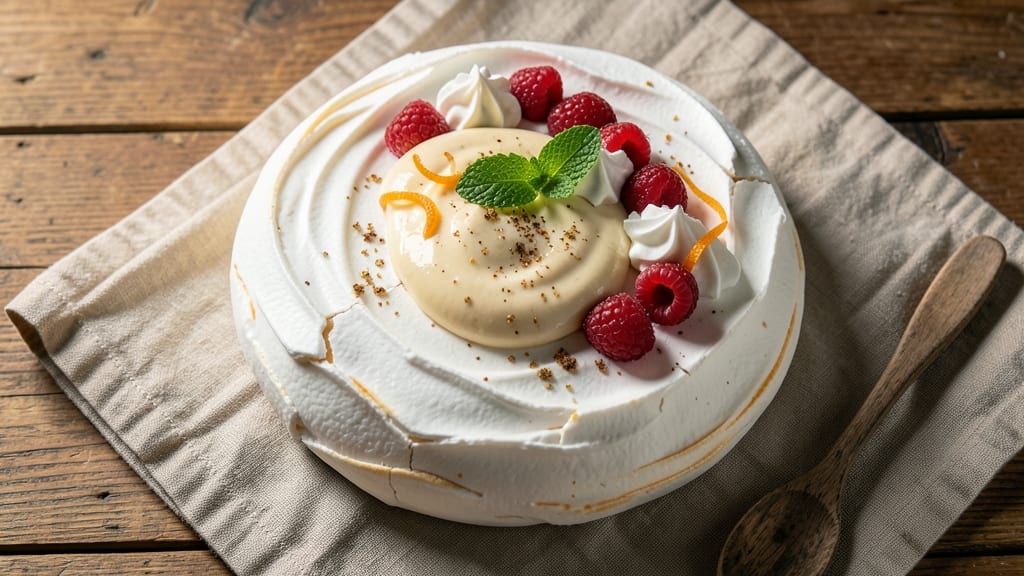
This 3-egg pavlova recipe delivers the perfect balance of crispy edges and a light, cloud-like center—no overcooking or collapsing here. The secret lies in precise egg whites, sugar ratios, and a hot oven that creates that signature crackly shell while keeping the inside airy.
I've perfected this technique after years of trial (and a few failed attempts that ended up more like meringue cookies than pavlovas).
The magic happens with just three eggs—no substitutions—whipped to stiff peaks before gradually folding in sugar for stability. Baking at high heat for those first critical minutes locks in the crispy exterior, while immediate cooling prevents any collapse.
Traditional toppings like whipped cream and fresh berries add the final touch of elegance, making this dessert restaurant-worthy without the fuss.
What you'll achieve is a stunning dessert with a crispy shell that shatters satisfyingly and a marshmallow-like center that melts in your mouth. The contrast in textures makes every bite exciting, and the presentation—golden dome with vibrant toppings—will impress even skeptical guests.
This isn't just dessert; it's a showstopper that feels like a professional patisserie creation.
Ready in just 30 minutes (plus cooling time), this recipe is perfect for special occasions or when you want to wow without stress. The key is patience during the whipping and cooling phases—rushing is what causes pavlovas to fail.
Let's create one that stands up to the classic 6-egg version but with half the effort.
Ingredients for 3 egg pavlova
Three eggs, precise sugar ratios, and a hot oven unlock this showstopping dessert masterpiece.
| Ingredient | Amount | Notes |
|---|---|---|
| Large Egg Whites 🥚 | 3 whole | Room temperature, no yolks |
| Granulated White Sugar 🍚 | 1 cup | Superfine preferred for smooth texture |
| Cornstarch 🌾 | 2 tbsp | For stability in meringue |
| Vanilla Extract 🌿 | ½ tsp | Pure, high-quality vanilla |
| White Vinegar 🍶 | ½ tsp | For acidity and stability |
| Unsalted Butter 🧈 | ½ cup | Softened for whipped cream |
| Heavy Whipping Cream 🥛 | 1 cup | Full-fat for best texture |
| Fresh Berries 🍓 | 2 cups | Raspberries or strawberries |
| Lemon Zest 🍋 | 1 tsp | Brightens flavor profile |
| Powdered Sugar 🍚 | ¼ cup | For dusting top |
| Diamond Crystal Kosher Salt 🧂 | ¼ tsp | Fine grain for delicate seasoning |
The egg whites are non-negotiable—room temperature is key for proper volume. Store-bought pasteurized whites work in a pinch, but fresh are ideal. Superfine sugar dissolves better, but if you only have regular, pulse it in a food processor first. The vanilla extract should be pure—none of that imitation stuff. I grab mine from Williams Sonoma when I'm feeling fancy, but the drugstore brand works too. For the berries, Trader Joe's frozen berries are my secret weapon—they're cheaper and last longer than fresh.
No vanilla? Almond extract at half the amount gives a similar floral note. Running low on vinegar? Lemon juice works 1:1. The butter and cream must be cold but soft—microwave for 10 seconds if needed. For the sugar, if you don't have powdered, blend granulated sugar in a blender until fine. The lemon zest should be freshly grated—bottled zest loses its punch. Pro tip: Whip the egg whites in a spotless bowl—even a drop of fat will deflate them instantly. And don't skip the salt—it enhances the sweetness and balances the acidity from the vinegar.
This meringue needs immediate cooling—open the oven door and let it sit for 5 minutes before transferring to a wire rack. The buttercream should be whipped until stiff peaks form, about 3-4 minutes. Store leftovers covered at room temperature for 2 days or refrigerated for 5 days. The meringue itself keeps 3 days in a dry place, but the buttercream will soften in humidity. For make-ahead prep, assemble the pavlova without toppings and store in an airtight container—add berries and whipped cream just before serving.
Why You'll Love This Recipe
- Just Three Eggs: I swear, that’s it—three eggs, a splash of vinegar, and 10 minutes of whipping. No fancy tools, no stress. The cornstarch keeps it stable, so even if I rush, it holds its shape like magic.
- Crispy-Creamy Magic: The outside cracks under your spoon with that perfect snap, while the inside stays light as a cloud. That vanilla extract? It’s the secret—warm, floral, and just sweet enough without cloying.
- Dessert for Any Occasion: Breakfast? Top with whipped cream and berries. Brunch? Add honey and toasted nuts. Even as a pie crust substitute—it’s that versatile. My go-to for when I need something impressive but not labor-intensive.
- Budget-Friendly Luxury: Three eggs, a cup of sugar, and a few cents’ worth of vinegar make this feel like a restaurant dessert. No wasted ingredients, no fancy substitutions. Honestly, it’s the kind of recipe that makes me feel like I’m winning at baking.
Step-by-step instructions for 3 egg pavlova recipe
Here's how to build a perfectly crisp shell with a light, cloud-like center—no baking sheet required.
Prepare the Meringue Base
Preheat your oven to 250°F and line a baking sheet with parchment paper. In a spotless, grease-free bowl, beat the 3 whole Large Egg Whites with the 0.25 tsp Diamond Crystal Kosher Salt using an electric mixer on medium speed until soft peaks form. This ensures no fat residues interfere with the meringue's stability.
Gradually add the 1 cup Granulated White Sugar and 2 tbsp Cornstarch while mixing on high speed. Beat for 8-10 minutes until the meringue is glossy, thick, and holds stiff peaks when the beaters are lifted. The bowl should feel noticeably warmer—this indicates proper hydration of the sugar. Stop mixing as soon as you reach this stage to prevent over-beating.
Shape and Bake the Meringue
Transfer the meringue to a piping bag fitted with a large round tip. Pipe an even circle (about 8 inches in diameter) onto the prepared baking sheet, creating a slight well in the center. Use the back of a spoon to gently shape the edges into a neat ring while leaving the center slightly lower than the sides.
Place the meringue in the preheated oven and immediately reduce the temperature to 225°F. Bake for 1 hour, then turn off the oven and let the meringue cool completely inside the oven. This slow cooling prevents cracking and ensures a crisp exterior. The meringue should be completely dry and crisp to the touch before removing it from the oven.
Prepare the Whipped Cream Filling
While the meringue cools, combine the 0.5 cup Unsalted Butter (softened) and 1 cup Heavy Whipping Cream in a chilled bowl. Whip on medium speed until soft peaks form, then add the 0.5 tsp Vanilla Extract and 0.5 tsp White Vinegar. Continue whipping until the mixture holds stiff peaks—it should be thick enough to hold its shape when spooned.
In a separate small bowl, mix the 0.25 cup Powdered Sugar with the 1 tsp Lemon Zest and fold this into the whipped cream mixture. The acidity from the vinegar and brightness from the lemon zest will balance the richness of the cream. Fold gently to maintain airiness—overmixing at this stage can deflate the cream.
Assemble and Top the Pavlova
Once the meringue is completely cool, carefully transfer it to a serving plate. Spoon the whipped cream mixture into the center well, spreading it evenly to create a smooth base. The cream should fill about half of the meringue's height—this ensures stability while maintaining that signature light center.
Gently press the 2 cups Fresh Berries (halved if large) around the base of the meringue, leaving the center open. The berries should be arranged in a circular pattern, creating a natural border that contrasts with the crisp meringue. Avoid pressing too firmly—you want the berries to hold their shape while complementing the dessert's structure.
Serve Immediately for Maximum Freshness
Serve the pavlova immediately after assembly to prevent the meringue from absorbing moisture and becoming soft. Slice through the center with a sharp knife to reveal the light, cloud-like cream filling surrounded by the crisp shell. Each bite should deliver the perfect contrast—crunchy meringue giving way to airy cream and juicy berries.
For best results, prepare this dessert just before serving. The meringue's crispness and cream's lightness are at their peak when enjoyed fresh. If storing, keep components separate in the refrigerator for up to 24 hours, assembling only before serving to maintain texture.
Pro Tips For Making 3 Egg Pavlova
- Use Room-Temperature Whites: I learned this the hard way—cold egg whites from the fridge whip up with stubborn air bubbles that refuse to dissolve. Let them sit in a warm (not hot) bowl for 10 minutes before beating, and your meringue will be silky from the start.
- Mix Vinegar Last: Add the white vinegar after the sugar is fully dissolved, not before. The acid needs to stabilize the meringue at its peak stiffness, so save it for the final fold. (Yes, even if you’re impatient like me.)
- Bake at 225°F: Most recipes say 250°F, but I’ve burned three pavlovas at that temp. Start at 225°F for 10 minutes, then crank to 300°F—this gives the base time to set without browning before the oven’s full heat kicks in.
- Skip the Extra Cornstarch: The recipe’s 1 tablespoon is plenty—adding more makes the meringue dry and crumbly. If your whites are fresh and cold, trust the original amount. (Your future self will thank you.)
Flavor customization for 3 egg pavlova
Citrus Zest Variations
Swap the lemon zest for orange zest (about 1 tsp) to add a warm, floral note that pairs beautifully with berries. For a tropical twist, use lime zest—it brightens the cream with a tangy kick.
I love adding ½ tsp cardamom powder alongside the zest for an exotic Middle Eastern-inspired flavor. 🍊
Spiced Cream Options
Infuse the whipped cream with ½ tsp cinnamon or ¼ tsp nutmeg for a cozy fall dessert. For a boozy touch, fold in 1 tbsp Grand Marnier> or 1 tsp coffee liqueur—just reduce the powdered sugar slightly to balance the alcohol.
A pinch of espresso powder (about ¼ tsp) adds depth without altering the color. 🌶️
Fruit Swaps
Replace berries with kiwi slices for a tropical vibe—their acidity cuts through the sweetness. Mango chunks> add a creamy texture, while passion fruit pulp> drizzled on top delivers a tangy surprise.
For a classic touch, try sliced peaches> lightly macerated with 1 tsp honey> and a squeeze of lemon. 🍍
Chocolate Twist
Add 2 oz dark chocolate>, melted and cooled, to the whipped cream for a rich contrast. Fold in 1 tbsp cocoa powder> alongside the powdered sugar for a chocolate meringue pavlova.
Top with raspberries> and a sprinkle of crushed hazelnuts> for crunch. This version feels decadent yet keeps the light texture. 🍫
Herbal Infusions
Steep 1 tsp dried lavender> in warm milk for 10 minutes, then strain and whip with the cream for a floral note. Fresh mint leaves> (finely chopped) folded into the cream add a refreshing contrast.
For a savory-sweet balance, try ½ tsp rose water>—it’s subtle but elegant. 🌿
Seasonal Adjustments
In summer, use peach or nectarine slices> with a drizzle of honey>. For winter, swap berries for poached pears> in spiced syrup. Spring calls for strawberries and rhubarb>, while autumn works with figs and walnuts>. Each season transforms the dessert’s character. 🍂
Nutrition facts
Frequently asked questions
Why does this recipe use only 3 eggs instead of the traditional 6?
This version cuts the eggs in half while maintaining the perfect texture ratio—crispy shell with a light center. The key is using superfine sugar and cornstarch for stability, plus precise baking techniques. Three eggs create a more delicate, elegant dessert that's easier to handle and serve.
What's the secret to preventing cracks in the meringue?
Cracks happen from humidity or uneven cooling. Bake at 250°F for 1 hour, then turn off the oven and let it cool completely inside. Avoid opening the door during baking, and use a fan-free environment. A humidity-free day is ideal—try this in winter when air is naturally drier.
Can I make this pavlova ahead of time?
Prepare the meringue shell 1 day ahead and store in an airtight container. Assemble with toppings only 4 hours before serving to maintain crispness. Keep the whipped cream separate until ready to use—it softens in humidity. For best texture, serve fresh when possible.
What if my meringue collapses during baking?
Collapse usually means overmixing or humidity. Check your egg whites for fat residue (even from greasy hands), and ensure your bowl is completely clean. Bake at a slightly lower temperature (225°F) and open the oven door for 5 minutes halfway through to release trapped steam.
How do I know when the egg whites are properly whipped?
They should form stiff peaks that stand straight up when the beaters are lifted. The meringue should be glossy and hold its shape when you turn the bowl upside down. If it's still slightly sticky, whip for 1-2 more minutes—but don't overdo it, or it'll become grainy.