
Breakfast & Brunch
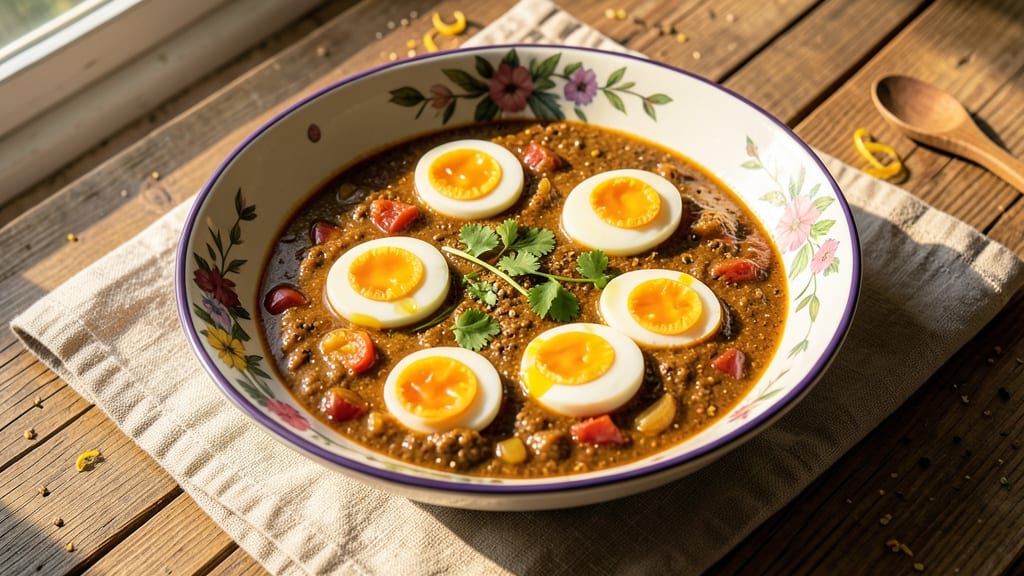
This thick egg curry recipe transforms simple eggs into a restaurant-worthy dish with a velvety, spiced yogurt base that clings perfectly to each bite. The secret lies in tempering whole spices in hot oil, then blending them into a smooth, aromatic paste that forms the heart of the curry.
Unlike watery versions, this recipe delivers a rich, almost gravy-like consistency that coats every ingredient—eggs, potatoes, and tomatoes—while keeping them tender.
The process begins with a traditional spice tempering technique that unlocks deep, toasty flavors, then builds to a creamy yogurt-tomato base thickened just enough to hold its shape. Whether you use hard-boiled, scrambled, or poached eggs, they absorb the aromatic sauce beautifully, creating a dish that’s both comforting and sophisticated.
This method also allows for flexibility—swap in chickpeas or paneer for a vegetarian twist, or keep it classic with just eggs and potatoes.
By the time you plate it, you’ll have a curry that’s rich yet balanced, with a velvety texture that’s impossible to resist. The yogurt base adds a subtle tang that cuts through the spices, while the coconut milk (or cream) at the end ensures a luxurious finish.
Serve it with basmati rice or warm roti to soak up every last drop of that velvety sauce—this is the kind of curry that turns a simple breakfast into a memorable meal.
Perfect for brunch, a hearty lunch, or even a comforting dinner, this recipe proves that thick, flavorful curries don’t require hours of simmering. The key is patience in the spice tempering and a light hand with the thickening agents. Let’s get cooking—your taste buds will thank you.
Ingredients for thick egg curry
Transform simple eggs into a restaurant-worthy curry with these 15 carefully chosen ingredients.
| Ingredient | Amount | Notes |
|---|---|---|
| Large Eggs 🥚 | 8 whole | Hard-boiled or scrambled for texture |
| Plain Yogurt 🥛 | 1 cup | Full-fat for creaminess |
| Vegetable Oil 🫒 | ½ cup | For spice tempering |
| Yellow Onions 🧅 | 1 whole | Finely chopped for base |
| Medium Tomatoes 🍅 | 2 whole | Ripe, peeled and chopped |
| Garlic Cloves 🧄 | 6 cloves | Minced for aromatic depth |
| Fresh Ginger 🌿 | 1 inch | OR 0.5 oz grated |
| Medium Potatoes 🥔 | 2 whole | Peeled and cubed for texture |
| Coconut Milk 🥥 | ½ cup | Full-fat for richness |
| Whole Spices 🌶️ | 1 tbsp | Cumin seeds, coriander seeds, black peppercorns |
| Ground Cumin 🌿 | 1 tsp | For additional depth |
| Ground Turmeric 🌿 | ½ tsp | Freshly ground preferred |
| Garam Masala 🌶️ | 1 tsp | For finishing touch |
| Salt 🧂 | 1 tsp | Diamond Crystal preferred |
| Fresh Cilantro 🌿 | ¼ cup | Chopped for garnish |
The yogurt forms the velvety base, so full-fat plain yogurt is essential—low-fat versions won't deliver the same creaminess. For the whole spices, Penzeys Spices or bulk bins at Indian markets offer the freshest options. The ginger should be bright yellow inside, not fibrous or green-tinged. Potatoes need to be waxy varieties like Yukon Gold for best texture. Coconut milk should be full-fat canned, not the carton kind—it makes all the difference in richness.
No fresh ginger? Powdered ginger at half the amount works in a pinch, though it lacks the same depth. Substitute tomatoes with 1 cup tomato purée for convenience. For a vegetarian twist, add 1 cup paneer or chickpeas alongside the eggs. The whole spices should be toasted in oil until fragrant—this unlocks their full flavor. If you can't find garam masala, blend equal parts cinnamon, cardamom, and cloves as a substitute. The cilantro can be omitted if you dislike it, but it adds a bright finish.
Store the spice tempering paste in an airtight container for up to 3 months in the pantry. The curry reheats beautifully—simmer gently on low heat to maintain its velvety texture. Portion into containers with basmati rice for easy grab-and-go meals. The yogurt base can be made 1 day ahead and stored separately, saving time on cooking day. Garnish with extra cilantro and a drizzle of coconut milk before serving for maximum appeal.
Why You'll Love This Recipe
- Minimal Chopping Required: I swear by this trick—just dice the onions and tomatoes once, then let them soften in the oil until they practically melt into the pan. No small prep, no fuss, just deep, caramelized flavor building while you stir.
- Creamy Without the Heavy Lift: That yogurt base makes it rich but not greasy, and the eggs? They soak up all the spiced tomato-onion goodness until they’re tender but still hold their shape. Honestly, it’s the kind of curry where every bite feels like a hug—warm, satisfying, and not an ounce of guilt.
- Lunchbox Magic: Between us, this is my secret weapon for packed lunches. The thick texture means it won’t spill, and the eggs stay plump even after a day in the fridge. Toss it with rice or flatbread, and suddenly you’ve got a meal that’s way more exciting than sad desk salads.
- Budget Breakfast for Dinner: Eggs and onions are cheap, tomatoes are versatile, and a splash of yogurt stretches the richness. I’ll be real: this curry costs me pennies to make but feels like a restaurant dish. Plus, leftovers reheat like a dream—no dry eggs, no sad textures, just pure, creamy comfort the next day.
Step-by-step instructions for thick egg curry with yogurt base
Mastering this velvety curry relies on precise technique and layering flavors—here's how to achieve that signature thick, spiced texture.
Prepare the Yogurt Base for Creamy Texture
In a medium saucepan, combine the 1 cup plain yogurt, 0.5 cup vegetable oil, 1 tsp ground cumin, and 0.5 tsp ground turmeric. Warm over low heat for 5-7 minutes, stirring constantly until the mixture reaches 120°F—just warm enough to melt the spices without curdling. This gentle heating develops the yogurt's natural tang while creating a stable base for the curry.
Here's the thing—if you heat yogurt too quickly, it will split. Watch for small bubbles forming at the edges and a slight thickening of the mixture. Remove from heat immediately once you see these signs, then strain through a fine-mesh sieve to remove any lumps. This step ensures your curry will have that luxurious, velvety consistency rather than a watery finish.
Build the Spice Foundation with Onions and Whole Spices
Heat 1 tablespoon vegetable oil in a deep skillet over medium heat until shimmering. Add the 1 whole yellow onion (finely chopped) and cook for 8-10 minutes until deep golden brown—this caramelization forms the flavor backbone. Add the 1 tablespoon whole spices (cumin, coriander, peppercorns) and toast for 1 minute until fragrant.
I press down on the onions with a wooden spoon during the last minute of cooking—this prevents them from burning while maximizing flavor extraction. The spices should sizzle audibly and release their essential oils. Immediately add the 6 minced garlic cloves and 1 inch fresh ginger (finely grated), cooking for 30 seconds until aromatic. This aromatic trio forms the sensory foundation of your curry.
Develop the Tomato-Potato Base for Thickness
Add the 2 whole medium tomatoes (chopped) and 2 whole medium potatoes (cubed) to the skillet. Cook for 10-12 minutes until the tomatoes break down into a thick paste and the potatoes begin to soften. Stir occasionally to prevent sticking, adding 1 tablespoon water if needed to deglaze any browned bits.
This is where the magic happens—the tomatoes release their natural pectin while the potatoes begin to break down, creating a thick, gravy-like consistency. The potatoes will continue cooking in the curry, so they don't need to be fully tender yet. When you can see the bottom of the pan clearly through the reduced tomato mixture, you're ready for the next step.
Incorporate Eggs and Yogurt for Rich Velvety Texture
Gently fold the 8 whole large eggs (hard-boiled or scrambled) into the tomato-potato mixture using a silicone spatula. The eggs should be at room temperature to prevent the curry from curdling. Slowly pour in the prepared yogurt mixture while stirring continuously over low heat for 5-7 minutes.
Watch the curry carefully—it should begin to thicken noticeably as the yogurt blends in. If it becomes too thick, add 2-3 tablespoons water to maintain a spoonable consistency. The eggs should be fully coated in the sauce, absorbing all the spiced flavors. This is the moment that matters: the combination of eggs and yogurt creates that signature creamy, velvety texture that defines this curry.
Finish with Coconut Milk and Garnish
Stir in the 0.5 cup coconut milk and 1 tsp garam masala, then simmer for 3-5 minutes until the flavors meld completely. Taste and adjust seasoning with the 1 tsp salt, adding more if needed. The curry should be rich, well-balanced, and thick enough to coat the back of a spoon.
Remove from heat and let rest for 5 minutes before serving. Garnish with 0.25 cup chopped fresh cilantro just before serving—this adds freshness and visual appeal. The curry should be thick enough to sit on top of rice without soaking in immediately, with each bite delivering layers of spiced yogurt, tender eggs, and aromatic vegetables.
Pro Tips For Making Thick Egg Curry
- CRACK EGGS FIRST: Whisk the eggs with a splash of yogurt before adding them to the pan—this keeps them from scrambling into rubbery chunks. I used to drop them in raw, and they’d either stick or turn into a sad, watery mess. A quick 30-second mix with a fork makes all the difference.
- SAUTÉ ONIONS LOW: Cook the onions on medium-low heat until they’re soft and golden, not browned. I learned this the hard way—burnt onions make the whole curry taste bitter, and no amount of tomato masala can fix it. Patience here means flavor later.
- STRAIN THE YOGURT: Skip the watery yogurt—strain it through a clean cloth or fine sieve for 10 minutes before using. Thick yogurt binds better, prevents a runny curry, and gives that creamy texture you actually want. (Yes, it’s extra work, but your future self will notice.)
- SIMMER THE TOMATOES: After adding tomatoes, let the mixture bubble gently for 5 minutes before stirring in the eggs. This breaks down the tomatoes into a smooth paste, which thickens the curry naturally. Rushing this step means a thinner, less cohesive dish—don’t skip it.
Troubleshooting perfect results
Yogurt Splitting
If your yogurt base curdles or separates, it’s usually from heating too quickly. The fix? Warm the yogurt over low heat for no more than 5-7 minutes while stirring constantly. For next time, strain the yogurt through a fine-mesh sieve after warming to remove any lumps that could cause splitting.
If it happens mid-cooking, whisk in 1-2 tablespoons cold water to stabilize the mixture. 💡
Sauce Too Thin
A watery curry often means the yogurt wasn’t warmed enough or the tomatoes weren’t reduced properly. Simmer the sauce uncovered for 5-10 extra minutes to thicken naturally.
If it’s still too thin, mix 1 tablespoon cornstarch with 2 tablespoons water, then stir into the curry until it reaches your desired consistency. For prevention, always cook onions until deep golden brown—this caramelization helps bind the sauce.
Burnt Onions or Spices
Dark, bitter flavors from burnt onions or spices ruin the delicate balance of this curry. Keep heat at medium when cooking onions and remove them just before they turn dark brown. Toast whole spices for only 1 minute—they should sizzle but not darken.
If you notice burning, immediately add 1 tablespoon water to deglaze and scrape up any browned bits. A wooden spoon helps press onions down to prevent burning while maximizing flavor.
Eggs Overcooking
Eggs in curry should be tender but not rubbery. If they turn out dry or tough, reduce the cooking time when adding them to 3-4 minutes instead of 5-7. For hard-boiled eggs, use 10-minute eggs (slightly undercooked) for better texture.
When folding eggs into the sauce, use room-temperature eggs and stir gently to avoid breaking them. If they begin to look overdone, remove the pan from heat immediately and let the residual heat finish cooking them.
Spice Imbalance
Too much heat? Balance it with 1 teaspoon sugar or 1 tablespoon yogurt to mellow the spices. If the curry tastes bland, add ½ teaspoon cayenne or a pinch of asafetida (hing) for depth. The key is adjusting spices gradually—taste as you go.
For a smoother finish, blend the whole spices into a paste after toasting (using a mortar and pestle) before adding to the onions. This creates a more cohesive flavor profile.
Potatoes Too Hard
Undercooked potatoes happen when the sauce isn’t simmered long enough. After adding potatoes, cook them for 10-12 minutes until they’re 80% tender. If they’re still firm, simmer the curry uncovered for 5 extra minutes to let the potatoes finish cooking in the reduced sauce.
For even cooking, cut potatoes into even 1-inch cubes and add them after the onions and spices have developed flavor. 🥔
Nutrition facts
Frequently asked questions
Can I make this egg curry without yogurt?
Yes, you can substitute the yogurt with ½ cup coconut milk blended with 1 tablespoon cornstarch for thickening. For a dairy-free option, use 1 cup vegetable broth reduced by half with 1 tablespoon tomato paste instead. The texture will be slightly lighter but still flavorful. The yogurt adds that signature velvety quality, so if you omit it, focus on extra spice toasting for depth.
How do I adjust the spice level for kids or sensitive eaters?
Start by reducing the whole spices to ½ tablespoon and omitting cayenne or black peppercorns. For extra mildness, blend the spices into a paste after toasting (using a mortar and pestle) to mellow their intensity. Add 1 teaspoon sugar or 1 tablespoon yogurt at the end to balance any remaining heat. Always taste as you go—you can add more spices later if needed.
What’s the best way to reheat leftovers?
Reheat gently on the stovetop over low heat for 3-5 minutes, stirring occasionally to prevent sticking. Avoid microwaving as it can make the yogurt base separate. For best texture, add 1-2 tablespoons water while reheating if the curry seems too thick. Store leftovers in an airtight container for up to 3 days in the refrigerator—the flavors actually improve overnight!
Can I use frozen eggs in this recipe?
Frozen eggs work but may release water when thawed, potentially thinning the sauce. For best results, use fresh eggs or thaw frozen eggs in the fridge overnight. If using frozen, pat them dry thoroughly before adding to the curry. The texture won't be quite as velvety, but the flavor will still be delicious. For extra insurance, simmer the curry uncovered for 5 extra minutes to reduce any excess moisture.
What are the best sides to serve with this curry?
This rich curry pairs perfectly with steamed basmati rice or warm naan/roti to soak up the sauce. For a lighter option, serve with a cucumber-raita (yogurt dip) or a simple mixed greens salad>. The cooling contrast balances the spiced curry beautifully. In India, it's often served with papadums> (crispy lentil crackers) for added texture.